Senegal’s Cotton Mill Shows What African Industry Can Do — Now It Needs the Capital
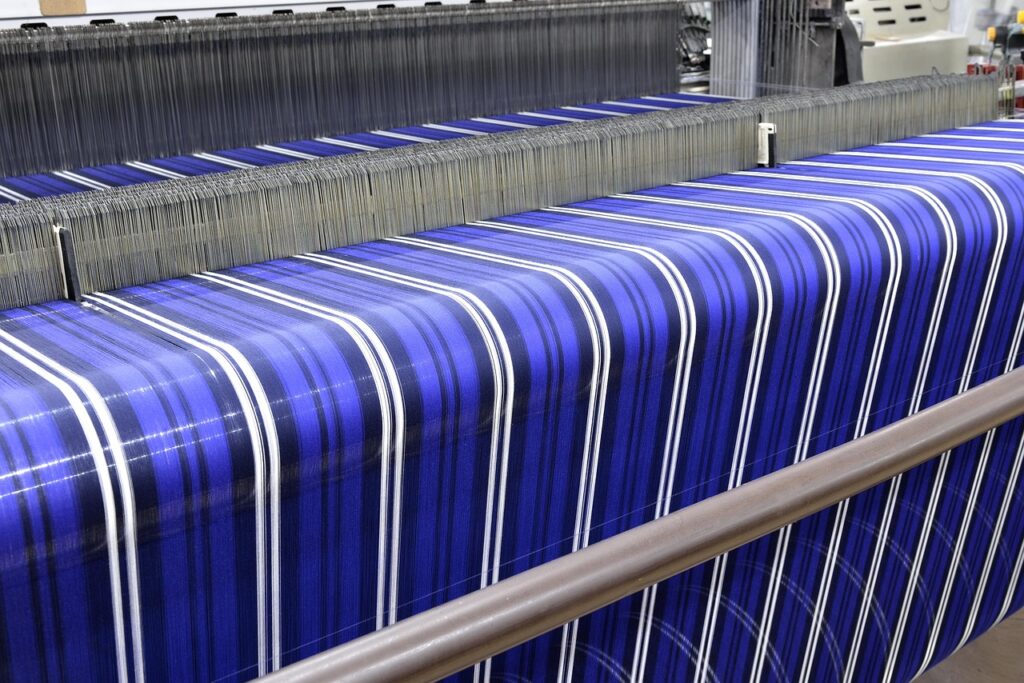
In the heart of Senegal’s groundnut basin, a textile factory in Kaolack is quietly challenging one of the oldest assumptions in African development: that raw materials must leave the continent before value can be added. The Domitexka mill has built markets, technical capacity and international partnerships. What it has not yet secured, according to observers of Africa’s industrial landscape, is the kind of long-term financing that allows a factory to survive the years between launch and profitability.
A model with global ambitions
Domitexka operates in a region long associated with cash crops exported in their rawest form. Cotton grown in West Africa has traditionally been shipped to mills in Asia or Europe, where it is spun, woven and finished into garments that return to African markets at a significant markup. The Kaolack facility was designed to interrupt that pattern, transforming locally grown cotton into finished or semi-finished textile products within Senegalese borders.
Industry analysts note that the mill brings together the ingredients African policymakers have long pointed to as essential for industrial success: a skilled workforce, a reliable supply of raw material, established buyers and modern equipment. The challenge, observers say, lies less in production than in the financial architecture that supports it.
The patient capital problem
Manufacturers across Africa routinely describe the same obstacle: a shortage of patient capital. The term refers to long-duration investment that accepts lower returns over a longer period, the kind of money that allows a factory to weather early losses, invest in training and upgrade machinery before revenues stabilise. African textile projects typically require several years before reaching break-even, a horizon that many commercial banks and short-term investors are unwilling to fund.
Development finance institutions and impact investors have stepped in to fill part of the gap, but the scale remains modest compared with the estimated investment needed to expand processing capacity across the continent. African governments have also experimented with special economic zones, tax incentives and local-content rules, with mixed results.
A wider continental question
Domitexka’s situation echoes that of food processors, cement makers, technology assemblers and other manufacturers stretching from Lagos to Nairobi. The continent imports a large share of the goods it consumes, and efforts to reverse that dependency often run into the same wall: productive assets are expensive to build and slow to pay back.
Proponents of African industrialisation argue that the financial sector must adapt, with new instruments such as blended finance, sovereign-backed industrial funds and longer-tenor loans tailored to manufacturing cycles. Critics counter that policy and infrastructure — reliable electricity, transport corridors and skilled labour — must improve before capital will flow at scale.
What comes next
For now, mills like Domitexka continue to operate in a holding pattern: capable of competing, but constrained by the pace at which money arrives. Whether the model spreads will depend less on whether African factories can produce competitively — many already can — and more on whether financiers, governments and development partners can build the longer, quieter pipeline of investment that industry requires.
Source: AllAfrica — read the original report.