Nigeria debates state police as Tinubu seeks answer to deepening security crisis
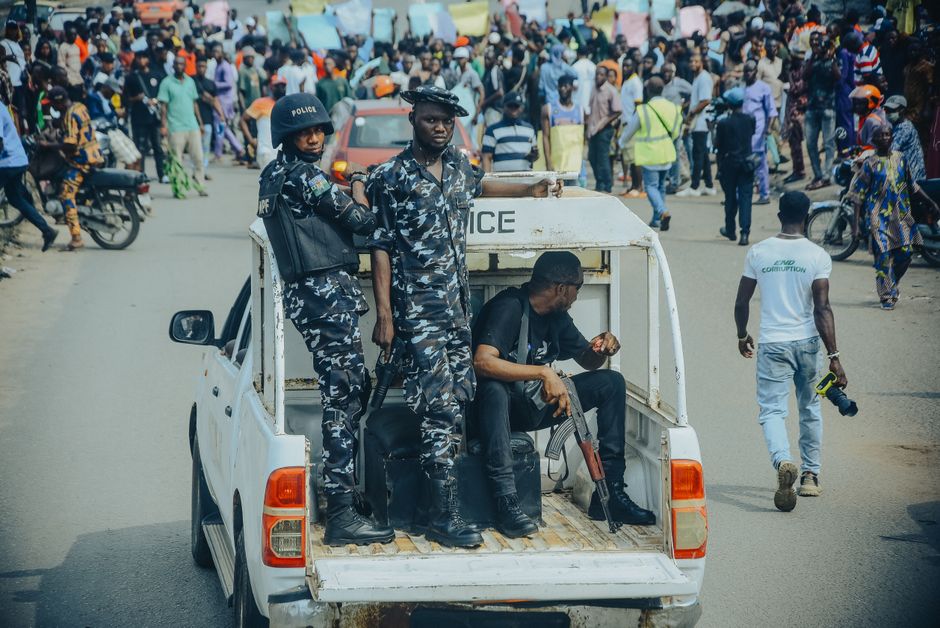
Nigeria is once again grappling with the long-debated question of how to reorganise its internal security apparatus, as calls grow for the creation of state-level police forces to complement the country’s central policing institution. The push comes amid widespread public distrust of the existing force and a security environment that many observers describe as having deteriorated significantly in recent years.
A decades-old debate
For several decades, successive Nigerian governments have struggled to restructure the architecture of the country’s internal security. Critics argue that a single, centralised national police force is poorly suited to a federation of 36 states with vastly different security challenges, ranging from insurgency in the northeast to banditry in the northwest and separatist tensions in the southeast. Proponents of reform contend that state-controlled police units would be more responsive to local conditions and more accountable to the communities they serve.
Constitutional hurdles remain
The idea of establishing state police forces is not new, but it has repeatedly stalled. The 36 states of the federation have yet to ratify the legal framework needed to allow sub-national policing arrangements under their own responsibility. Constitutional amendments of this kind require broad political consensus, which has so far proved elusive amid concerns that state-controlled forces could be politicised or used to suppress opposition groups.
Tinubu’s security push
The renewed debate has been framed by some commentators as part of President Bola Ahmed Tinubu’s broader effort to address the country’s worsening security situation. A dual structure, comprising both a federal police force and locally managed units, has been presented as one possible response. Supporters say such a model could ease the burden on overstretched federal resources, while critics warn it risks fragmenting oversight and creating parallel chains of command.
Public trust at stake
Beyond questions of structure, the reform debate is also shaped by public perception. Surveys and anecdotal evidence have long pointed to deep mistrust between ordinary Nigerians and the country’s security services, with complaints ranging from extortion to excessive use of force. Any restructuring effort will ultimately be judged on whether it delivers tangible improvements in safety and accountability, rather than simply reshuffling institutional responsibilities.
Looking ahead
With no state having moved to ratify the necessary legislation, the path to a reformed policing system remains uncertain. What is clear, however, is that the pressure on Nigeria’s leaders to act — whether through decentralisation, better training, stronger accountability mechanisms, or a combination of all three — is unlikely to ease while insecurity persists across large parts of the country.
Source: FRANCE 24 — read the original report.
More From Politics & Governance
U.S. House Passes Bill Linking Nigerian Foreign Aid to Protection of Christian Communities

Ethiopia Launches National Dialogue Conference in Addis Ababa