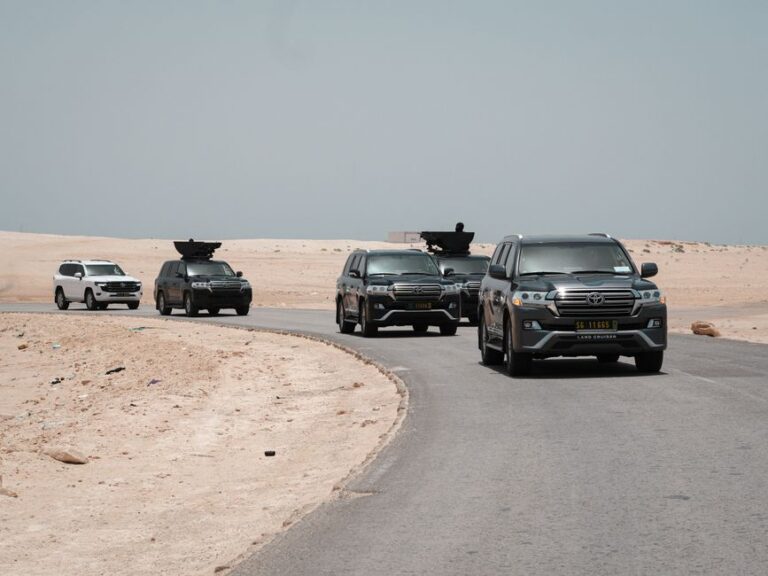
DRC Government and M23 Rebels Commit to Civilian Protection Framework After Switzerland Talks

The government of the Democratic Republic of the Congo and the M23 rebel group have jointly committed to a framework for protecting civilians and facilitating humanitarian aid deliveries, following five days of mediated talks in the Swiss Riviera town of Montreux. The agreement, announced in a joint statement issued through the United States Department of State, represents a fragile but concrete step forward in a conflict that has defied resolution for more than four years.
Under the agreed framework, both parties pledged not to take any action that would impede the delivery of humanitarian assistance to conflict-affected territories, and to refrain from targeting civilians directly. The two sides also committed to releasing prisoners within ten days as a confidence-building measure, and signed a memorandum of understanding for a ceasefire monitoring mechanism to be overseen by international mediators.
Long-Standing Conflict
The M23 group, named after a defunct peace accord, first emerged in 2021 and has since seized large swathes of territory in eastern DRC North Kivu and South Kivu provinces. The rebels are widely assessed by UN investigators and Western intelligence sources to receive significant military support from neighbouring Rwanda — a charge Kigali denies. Rwanda involvement would constitute a violation of DRC sovereignty and of UN Security Council resolutions, but enforcement has proved elusive.
The conflict has created one of Africa largest humanitarian crises. UN agencies estimate that more than 6 million people are internally displaced in the DRC eastern provinces — a figure that has grown steadily as M23 advances have forced communities from their homes. Fighting has spread into South Kivu highland areas previously considered relatively stable, and aid organisations report that access to vulnerable populations is increasingly blocked by both M23 fighters and, in some areas, pro-government militia.
Ceasefire Monitoring Gaps
Human Rights Watch issued a statement last week noting that both parties have obstructed aid deliveries and prevented civilians from fleeing the South Kivu highlands, where fighting has been heaviest. The organisation called on mediators to ensure that any ceasefire framework includes enforceable access guarantees — a condition that has been absent from previous agreements.
The Montreux round included representatives from Qatar, the United States, Switzerland, the African Union Commission, and Togo, which currently holds the AU mediatory mandate for the Great Lakes region. The mediators stated goal is to build on the December US-brokered ceasefire agreement, which collapsed almost immediately after it was signed as fighting continued in North Kivu and spread to South Kivu.
International Dimension
The involvement of the United States signals continued American engagement in the DRC file, despite competing priorities arising from concurrent conflicts in the Middle East and Ukraine. Washington has sought to use diplomatic leverage — including the distribution of humanitarian assistance funding — to encourage both sides toward the negotiating table.
The DRC government has long insisted that any durable resolution must address the external dimension of the conflict, specifically Rwanda alleged support for M23. Kigali, for its part, maintains that the M23 is a Congolese internal matter driven by grievances of the Congolese Tutsi community. That framing is rejected by Kinshasa and by most independent analysts who track the military flow of equipment and personnel across the DRC-Rwanda border.
More From Conflict & Security
South Africa probes death of Nigerian man who collapsed during arrest
Arrest of Nigerian soldier over alleged links to criminals deepens scrutiny of military conduct