Africa’s Shifting Security Map: A Decade of Conflict, Transformation, and Persistent Strain
Ten years ago, the narrative around African security was one of cautious optimism. A wave of democratic transitions, declining interstate conflicts, and the rise of continental institutions like the African Union’s standby force suggested the continent was turning a corner. A decade later, that optimism has been replaced by something far more sobering: Africa finds itself in the midst of a deepening security crisis that spans from the Sahel to the Horn of Africa.
The shift has been tectonic. What once were localized insurgencies have metastasized into transnational threats. What were once governance problems have become full-blown humanitarian catastrophes. And what was once American and European willingness to invest in African security solutions has been overtaken by great-power competition that often makes things worse.
The Sahel: From Crisis to Catastrophe
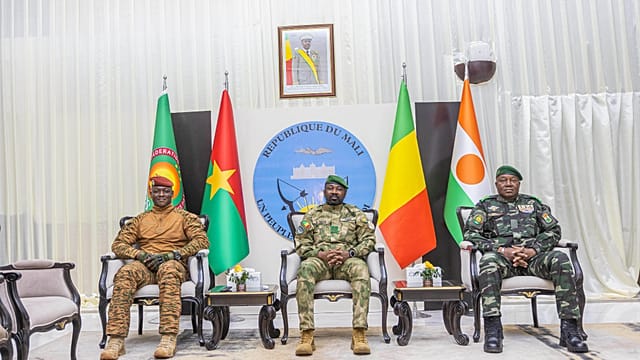
The Sahel remains the most acute security failure on the continent. Since the 2020 coup in Mali, the region has seen an accelerating breakdown of state authority. Military governments in Mali, Burkina Faso, and Niger have come to power on waves of anti-French and pro-Russian sentiment, expelling French forces and inviting in Moscow’s Wagner Group — now rebranded as the Africa Corps.
The results have been catastrophic. Despite the presence of Russian military advisors, jihadist groups affiliated with Al-Qaeda and the Islamic State have expanded their reach across the region. Violence has killed tens of thousands and displaced millions more. Civilian casualties are at record levels. The humanitarian cost is staggering.
The irony is that the very forces that promised to deliver security — nationalist military governments backed by Russian mercenaries — have failed to contain the threats they inherited. If anything, the departure of Western counterterrorism forces created a vacuum that jihadist groups have exploited with devastating effect.
The Horn of Africa: Old Wars, New Dimensions
In the Horn of Africa, the picture is more complex but no less troubling. Somalia’s conflict with Al-Shabaab grinds on with no end in sight. Ethiopia’s war in Tigray, which ended in 2022, left a shattered region and deep ethnic wounds that have not healed. South Sudan, independent since 2011, remains mired in a chronic struggle for power between rival factions.
The Sudan conflict that erupted in April 2023 has become the world’s largest humanitarian crisis. Two rival generals — Abdel Fattah al-Burhan of the Sudanese Armed Forces and Mohamed Hamdan Dagalo of the Rapid Support Forces — have turned the country into a battlefield, killing tens of thousands and displacing more than eight million people. Famine is now approaching in multiple regions.
Despite repeated ceasefires that have been ignored, the international community has struggled to bring the parties to account. The UN Security Council remains paralyzed by geopolitical competition, and the great powers that might push for a resolution have other priorities.
The Great-Power Dimension
Perhaps the most alarming trend of the past decade is the way Africa has become a theater for great-power competition. The United States, China, Russia, Turkey, and Gulf states are all pursuing strategic interests on the continent, often at cross-purposes. Arms are flowing in. Proxies are being cultivated. Alliances are shifting.
China’s footprint has grown steadily, with investments in ports, railways, and telecommunications across the continent. Russia has cultivated military relationships with several Sahel states, offering security services in exchange for geopolitical alignment. The United States, despite reducing its military presence in Africa, continues to conduct drone operations and intelligence sharing from bases in the Horn.
For African governments, this competition creates both opportunity and danger. Opportunity, because multiple suitors means leverage. Danger, because when great powers see Africa primarily as a chessboard for their own rivalries, African interests can end up subordinated to those of the external powers.
What Comes Next
The security map of Africa in 2026 looks grimmer than it did a decade ago. The institutional responses — the African Union’s peace and security architecture, the regional economic communities, the peacekeeping missions — have been tested and found wanting in the face of the scale and complexity of the challenges.
Yet within the darkness, there are flickers of light. African civil society is more dynamic than ever. Youth movements are pushing for accountability. Some governments are finding local solutions to local problems. And the continent’s demographic bulge — its greatest long-term asset — is also its greatest pressure valve.
The question is whether Africa’s security architecture can evolve fast enough to meet the moment. On current form, the answer is uncertain at best.
More From Conflict & Security

The anxious money wait: Why African soccer fans dread payment disputes before major tournaments like the Fifa World Cup
How the US-Israel-Iran conflict is reshaping South Africa’s coal exports