From Growth to Greatness: How Africa’s Economy Is Rewriting Its Own Story
Africa’s economic story in 2026 is one of contradictions and transformation. On one hand, the continent continues to face structural challenges — debt vulnerabilities, infrastructure deficits, and dependence on commodity exports. On the other hand, a new generation of entrepreneurs, innovators, and policymakers is writing a different chapter, one that is reshaping how the world sees African economies.
The numbers tell part of the story. Africa’s combined GDP has grown substantially over the past decade, driven by a handful of large economies — Nigeria, Egypt, South Africa, Kenya, and Ethiopia — but also by a growing cohort of smaller, fast-growing economies. The African Development Bank estimates that six African economies will grow at more than 6% in 2026, outpacing many Asian peers.
Fintech as the Engine of Change
The most visible symbol of Africa’s economic transformation is fintech. Kenya’s M-Pesa, which launched in 2007, was the pioneer. Today, a new wave of African fintech companies is moving far beyond mobile money to reshape financial services across the continent.
Nigeria has become a fintech powerhouse, with companies like Flutterwave and Paystack serving millions of businesses across Africa. In South Africa, TymeBank has brought digital banking to millions of underserved customers. In Ghana, Kenya, and Cote d’Ivoire, innovative credit-scoring models are extending loans to people who never had a bank account.
What makes African fintech remarkable is its focus on solving real problems for real people. Across the continent, millions remain outside the formal financial system. African fintech companies are reaching them directly, using mobile phones and creative data models to assess risk and deliver services at a scale that traditional banks never imagined.
The Urbanization Dividend
Africa is urbanizing faster than any other continent. By 2050, the United Nations estimates that nearly 60% of Africans will live in cities. That mass movement from rural to urban areas is creating both enormous challenges — congestion, housing shortages, strain on public services — and enormous opportunities.
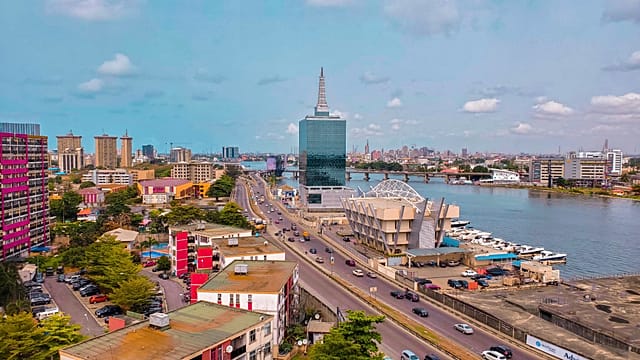
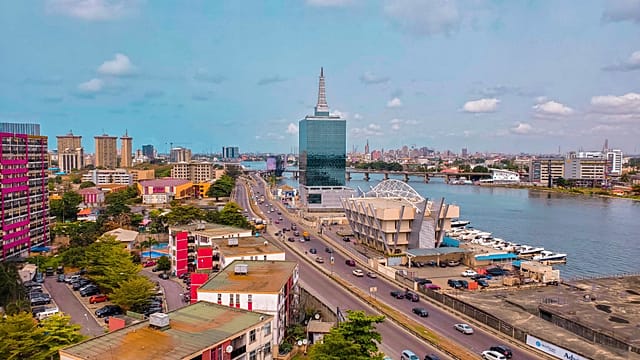
African cities are becoming centers of innovation in their own right. Lagos, Nairobi, Accra, and Dakar are generating consumer markets that global companies can no longer ignore. A growing African middle class is driving demand for everything from smartphones to insurance to higher education.
The urbanization dividend is also creating new economic models. Informal economies — which employ the vast majority of urban Africans — are being formalised through technology. Ride-hailing apps like Uber and Bolt have created new industries. E-commerce platforms are connecting African consumers and businesses across borders.
Manufacturing and Industrialization: The Long March
For all the excitement about fintech and services, Africa’s long-term economic future depends on industrialization. The continent imports most of what it consumes, exporting raw commodities and importing finished goods — a dynamic that keeps African economies dependent and vulnerable to external shocks.
Some countries are making real progress. Ethiopia has built a nascent manufacturing sector, attracting Chinese and other foreign investment in textiles and apparel. Rwanda has positioned itself as a hub for high-value services, including in emerging fields like data centers and business process outsourcing. Morocco has become a significant automotive manufacturing hub, supplying European markets.
But the scale of transformation required is enormous. Africa needs hundreds of billions of dollars in infrastructure investment — in ports, railways, power grids, and broadband — to compete globally. The Africa Continental Free Trade Area, which came into force in 2019, offers a framework for building regional supply chains, but implementation has been slow.
Debt and the Fiscal Challenge
No discussion of Africa’s economic trajectory would be complete without addressing the debt challenge. Several African countries are struggling with debt servicing, and the risk of a new wave of sovereign defaults — similar to what happened in the 1990s and 2000s — is real.
Zambia, Ghana, and Sri Lanka have already restructured their debts. Others — including Ethiopia and Kenya — have approached or are approaching similar crossroads. China, which holds a large share of Africa’s bilateral debt, has been inconsistent in its willingness to participate in debt restructuring processes.
The financial architecture designed to help debt-distressed countries — the G20’s Common Framework, the IMF’s lending facilities — has been widely criticized as too slow and too insufficient. Africa’s creditors, both public and private, will need to do better if the continent is to avoid a wave of economic crises that could set back decades of progress.
The Human Capital Imperative
Behind every economic statistic is a human story. Africa’s greatest long-term asset is its people — the fastest-growing, youngest workforce in the world. By 2050, Africa will have the largest workforce of any continent, a demographic dividend that could power decades of growth.
But that dividend will only be realized if Africa invests in its people. Education, healthcare, and skills training are not optional — they are the foundation on which everything else is built. Across the continent, millions of children remain out of school. Health systems are underfunded and understaffed. The gap between the skills available and the skills needed by growing economies is wide and growing.
Africa’s economic story in 2026 is one of potential and challenge in equal measure. The continent is moving, sometimes chaotically, sometimes brilliantly, toward a different future. Whether that future becomes one of prosperity and inclusion depends on choices being made today — in boardrooms and government offices, but also in classrooms and clinics across the continent.