€23 Billion and a New Chapter: How France and Kenya Are Redrawing Africa’s Investment Map
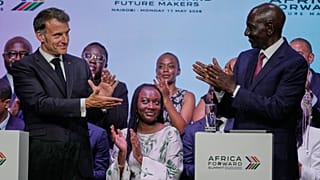
Nairobi, Kenya — When French President Emmanuel Macron stepped onto the podium at the Kenya International Conference Centre on May 11, 2026, he carried with him the largest bilateral investment commitment any European leader has made to Africa in recent memory. The Africa Forward Summit — co-hosted by Kenya and France over two days — culminated in the announcement of a €23 billion investment package, with €14 billion earmarked from French institutions and the remainder from private-sector partners across the continent.
The summit, themed around co-investment, technology transfer, and mutual respect, drew heads of state from at least a dozen African nations, senior executives from Paris-based multinationals, and representatives from pan-African financial institutions. It was, by any measure, the most ambitious French diplomatic event in Sub-Saharan Africa since the promises made at the 2022 Paris Summit on Africa.
What the Money Funds
According to the framework announced by Macron and his Kenyan counterpart President William Ruto, the €23 billion envelope will be distributed across three principal axes: the energy transition, digital infrastructure and artificial intelligence, and agricultural value chains. A significant portion — estimated at around €8 billion — will flow toward renewable energy projects across West and East Africa, with particular focus on green hydrogen initiatives in Kenya, Senegal, and Côte d’Ivoire.
The digital component is equally ambitious. France’s development finance institution, Proparco, alongside private banks, will back the construction of data centres in Nairobi, Lagos, and Abidjan. The aim, participants were told, is to reduce Africa’s dependence on overseas cloud infrastructure and keep more of the continent’s data — and by extension its economic activity — on African soil.
Agricultural modernization accounts for the third pillar, targeting post-harvest loss technologies and expanded irrigation schemes in the Sahel band countries of Burkina Faso, Mali, and Niger — nations that have borne the brunt of climate-driven food insecurity in recent years.
A Diplomatic Reset
The Africa Forward Summit was never just about money. It was, at its core, a calculated effort by France to reposition itself in a changed Africa — one where Beijing, Ankara, Riyadh, and even India have each carved out growing influence without the colonial baggage that France carries in certain circles. The summit’s branding, its “co-investment” language, and the prominent placement of African heads of state alongside French business leaders all signaled an intent to present a different face.
Macron, in his keynote address, spoke explicitly about the need to move beyond “a certain idea of assistance” toward genuine economic partnership. “Africa Forward is not about France coming to Africa with solutions,” he said. “It is about France and Africa building together, with mutual respect as the foundation.” The phrase became something of a tagline for the summit, repeated by delegates and captured in social media posts from Nairobi to Dakar.
Winners and Skeptics
Not everyone was swept by the optimism. Several African civil society representatives attending the summit’s side events pointed out that previous French investment pledges had arrived with conditions — on procurement, on hiring, on technology lock-in — that limited the local economic knock-on effects. Whether the Africa Forward framework avoids these pitfalls will depend on contract details that have yet to be made public.
Among African governments, reactions were largely positive, even where historical grievances with France run deep. Senegal’s President Faye, whose country has been navigating a sometimes turbulent reset with Paris, sent a senior minister rather than attending personally — a signal of measured engagement rather than full embrace. Mali’s transitional authorities did not attend at all, citing ongoing security concerns.
For Kenya, the summit was a diplomatic triumph. The country has been working deliberately to position itself as East Africa’s gateway for global investment, and the optics of hosting such a landmark event reinforce that strategy.
Image: Kenya and France diplomatic partnership — Wikimedia Commons.