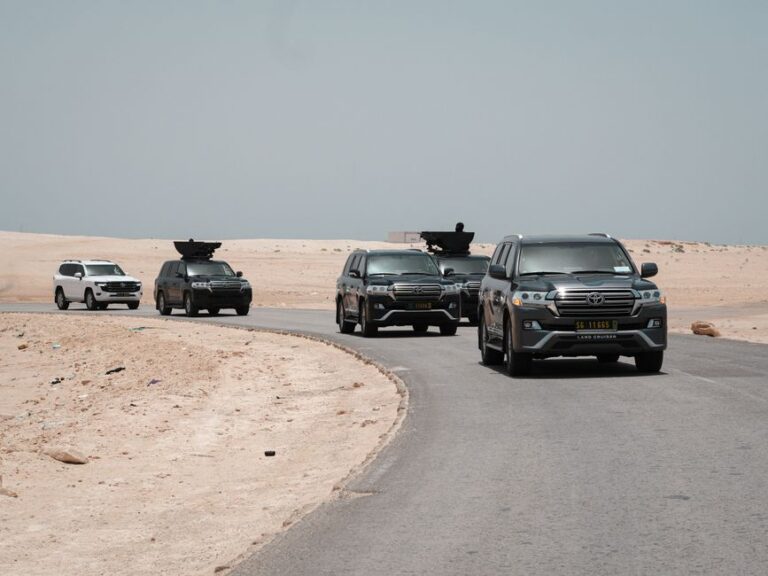
Mali’s Defence Minister Sadio Camara Killed in Car Bomb Attack Near Bamako

Mali’s military junta has been dealt a devastating blow after Defence Minister General Sadio Camara — the powerful figure widely seen as the architect of the regime’s security strategy and its closest link to Moscow — was killed in a car bomb attack at his residence in Kati, the garrison town just outside the capital Bamako.
The attack, which took place on Sunday, April 26, 2026, was followed by a second day of heavy fighting across multiple cities, raising fears that the chaos surrounding Camara’s death could unravel the foundations of the military government that has ruled Mali since 2020.
A Powerful Figure Falls
General Sadio Camara was one of the most recognisable faces of Mali’s ruling junta. A former army chief who rose to prominence during the 2012 Tuareg rebellion that first brought jihadist insurgents into the country’s north, Camara was known for his iron grip over the armed forces and his deep relationship with Russia’s Africa Corps — the successor to the Wagner Group mercenary network that has become the backbone of the junta’s war against Islamist militants.
His death removes not just a military commander but the political linchpin connecting the junta’s survival strategy to its foreign backers. “He was the regime’s brain,” said one regional analyst who requested anonymity. “Every major decision went through him. Without him, the cohesion of the military council is suddenly in question.”
A Week of Unprecedented Violence
Camara’s killing caps an extraordinary week of bloodshed in Mali. On Friday, coordinated attacks struck both Bamako and the northern city of Kidal, where Tuareg rebel forces — who had largely been pushed back in recent years — claimed a bold resurgence. The insurgents said they had seized Kidal after battling Malian troops and their Russian allies.
French and other Western diplomatic sources said the attacks represented the most serious challenge to the Bamako junta since the military seized power in 2020. French Foreign Minister Jean-Noël Barrot expressed concern over the weekend, warning that the “terrorist threat” in the Sahel remained acute, even as France has withdrawn its forces from the region under a broader exit arrangement with the ruling juntas of Mali, Burkina Faso, and Niger.
‘We Do Not Feel Safe’
Mali has been trapped in a deepening spiral of violence since the military government broke with former colonial power France and turned to Russia for security support. Human rights groups and journalists on the ground have documented widespread abuses by both the Russian mercenaries and the Malian army — against a civilian population caught between jihadist insurgents, Tuareg separatists, and state forces.
Camara himself had been named in multiple reports documenting these abuses. He was among the Malian officials targeted by international rights organisations over alleged involvement in atrocities committed during previous cycles of the conflict.
Questions Over Succession
With Camara gone, analysts are now watching closely to see whether the power vacuum triggers a struggle within the military council. The junta is already dealing with an expanding insurgency that now reaches well beyond the traditional northern heartland, with attacks reported this week in the central Mopti region and even around the capital.
Mali’s junta has been battling to contain multiple armed groups — jihadist organisations linked to al-Qaeda and the Islamic State, as well as the Tuareg-led CSP and various other militias — simultaneously. Without the coordination that Camara provided, some observers fear the security situation could deteriorate rapidly.
Regional neighbours and international partners are watching with alarm. The African Union has called for an emergency contact, while the United States and several European governments have urged their citizens to evacuate where possible. The attack on Camara, and the broader resurgence of armed groups across Mali, underscores the continuing — and perhaps deepening — fragility of the Sahel security landscape, even as the junta’s Russian allies remain firmly embedded in the country’s war.
More From Conflict & Security
South Africa probes death of Nigerian man who collapsed during arrest
Arrest of Nigerian soldier over alleged links to criminals deepens scrutiny of military conduct