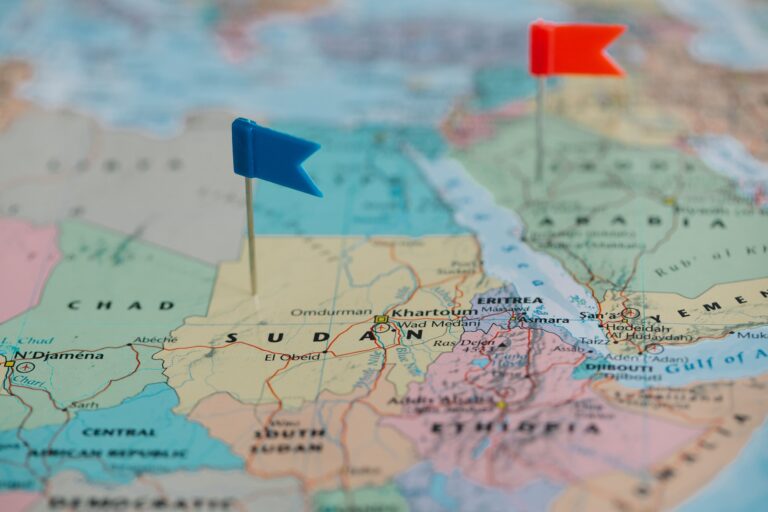
TPLF Restores Tigray Government as Fears Grow Over Ethiopia’s Fragile Peace Agreement

# TPLF Restores Tigray Government as Fears Grow Over Ethiopia’s Fragile Peace Agreement
*The Tigray People’s Liberation Front has re-established administrative control over Ethiopia’s Tigray region following a political agreement that has left many questioning whether the Pretoria peace deal signed in November 2022 can hold. Observers warn the restored government faces immediate challenges in a region devastated by two years of war.*
—
The Tigray People’s Liberation Front (TPLF) has begun restoring its regional government structure in Mekelle, the capital of Ethiopia’s northern Tigray region, following a political agreement that marks the formal end of the movement’s five-year exclusion from power. The move, confirmed on April 20, 2026, comes four years after the devastating Tigray war that killed an estimated hundreds of thousands of people and displaced millions more.
The restoration of TPLF governance in Tigray is a direct consequence of the Nairobi Agreement of October 2024, which addressed the administrative status of the region following the collapse of the previous federal arrangement. That agreement, negotiated under intense regional and international pressure, opened the door to the rehabilitation of Tigray’s regional institutions—including, critically, the police and civil administration structures that the federal government had dismantled following its victory in the Tigray war.
## A Fragile Peace, Further Tested
Ethiopia’s federal government, led by Prime Minister Abiy Ahmed, has maintained a studied public silence on the TPLF restoration. State media has not carried formal commentary, and official briefings have deflected questions by referring to “ongoing implementation of national reconciliation frameworks.”
But privately, senior federal officials acknowledge significant concerns. The peace agreement that ended the active fighting in Tigray was always more of a ceasefire than a reconciliation. The TPLF’s return to governance represents a vindication of its political position—and a reminder that the federal government lacked the capacity to govern Tigray directly even with military victory.
“The TPLF controlled Tigray for three decades before the war. It has deep roots there that federal administrators never matched,” said a Horn of Africa analyst at a major European think tank. “The question was never whether they would return to some form of governance. The question was on whose terms.”
## Immediate Challenges
The restored TPLF administration faces an extraordinarily difficult set of challenges. Tigray’s infrastructure remains devastated by war. Agricultural production has not recovered to pre-conflict levels. Hundreds of thousands of people remain displaced, many living in camps for internally displaced persons in towns across the region.
The demobilization of various armed groups—including the former “Tigray Defence Forces” and the federal-aligned ENDF troops—has been incomplete and contentious. Clashes between TPLF-aligned militias and federal security forces in the region have been reported in recent months, though neither side has officially acknowledged them.
Reports from Mekelle suggest that ordinary Tigray residents are cautiously hopeful but deeply wary. The war left deep scars—not only in the physical destruction of communities but in the widespread reports of atrocities committed by all sides, including famine used as a weapon of war, systematic sexual violence, and attacks on civilian infrastructure.
“The people of Tigray want peace and normalcy more than anything,” said a human rights researcher based in Addis Ababa who monitors conditions in the north. “But they also want justice, accountability, and assurance that what happened to them will not happen again. The TPLF has to deliver on all three fronts simultaneously.”
## International Dimensions
Ethiopia’s neighbours have been watching the Tigray situation closely, particularly Eritrea, whose forces fought alongside the federal government during the war. The continued presence of Eritrean forces in parts of northern Ethiopia—officially denied by Asmara but confirmed by multiple UN sources—was a persistent source of tension throughout the post-war period.
The African Union has expressed cautious support for the implementation of the Nairobi Agreement, though internal disagreements about the peace process have been acknowledged publicly by senior AU officials.
For the TPLF, the restoration of government represents a political resurrection that few would have predicted at the height of federal military success in late 2021 and early 2022. At that point, with Mekelle retaken and TPLF leadership scattered and isolated, many analysts wrote off the movement as finished.
Instead, the TPLF survived as an armed political force, maintained cohesion through the demobilization process, and re-emerged as a negotiating partner that the federal government could not bypass. How effectively it governs now will determine whether Ethiopia’s fragile northern peace can hold.
—
*Photo: Ethiopia landscape — Photo by Erik Hathaway on Unsplash*
More From Politics & Governance

At inaugural lecture, Prof Adeniyi calls for stronger digital governance amid technological shifts in migration
Nigeria’s economic reforms yielding gains, but poverty levels remain high – IMF