Burkina Faso Dissolves 118 NGOs in Escalating Clampdown on Civil Society
# Burkina Faso Dissolves 118 NGOs in Escalating Clampdown on Civil Society
*Amnesty International has condemned the dissolution of more than a hundred non-governmental organizations as a blatant attack on freedom of association. The move is the latest in a series of measures that human rights groups say are systematically destroying civil society in the West African nation.*
—
The government of Burkina Faso has dissolved 118 non-governmental organizations and associations in a single decree, in what rights groups say represents the most severe attack on civic space in the country’s recent history. The announcement, made on April 15, 2026, by the Ministry of Territorial Administration and Mobility, gave no specific justification beyond a reference to “current legal provisions.”
Amnesty International was quick to respond, describing the action as “alarming and deeply concerning” and calling for the immediate reversal of the decision.
“Dissolving NGOs and associations is at odds with the Constitution of Burkina Faso, which guarantees freedom of association and union,” said Ousmane Diallo, Senior Researcher on Sahel at Amnesty International’s Regional Office for West and Central Africa. “This dissolution is part of a much broader effort to silence civil society through a combination of repressive tactics.”
## A Pattern of Repression
The NGO dissolution is not an isolated incident. It is the latest in a cascade of measures that critics say points to a deliberate strategy by Burkina Faso’s military leadership to eliminate independent civil society organizations.
In January 2026, the government dissolved all political parties after three years of suspension—a move that effectively eliminated organized political opposition. In November 2025, a presidential decree required all national and international NGOs to close their accounts with commercial banks and transfer funds to a newly created state-controlled institution, the National Treasury. Human rights organizations warned at the time that this would enable arbitrary freezing of funds, financial surveillance, and targeted sanctions.
Since two coups in 2022—one in January and another in September—the country has been governed by a military transitional authority. In May 2024, the transition, originally scheduled to end on July 2, 2024, was extended by an additional five years.
The pace of civic repression has accelerated since the extension. Human rights defenders and activists have faced arbitrary detention, prosecution, and harassment with increasing frequency. Organizations working on issues including corruption, press freedom, and community development have found themselves targeted.
## The Organizations Affected
The 118 dissolved organizations represent a cross-section of civil society. Among them are humanitarian groups working in some of the country’s most vulnerable regions, where conflict between state forces and armed Islamist groups has displaced hundreds of thousands of people.
International NGOs with operations in Burkina Faso are also among those affected. Sources within several organizations, speaking on condition of anonymity for fear of retaliation, told reporters that they had received no advance warning of the dissolution.
“The organizations that have been shut down include some of the most active and effective groups working on the ground,” said a regional humanitarian coordinator who declined to be identified. “In a country where 1.5 million people need humanitarian assistance, this is catastrophic.”
## International Response
The international community has struggled to formulate an effective response. The African Commission on Human and Peoples’ Rights issued a statement expressing “deep alarm” and calling on the Burkinabè authorities to comply with their obligations under the African Charter on Human and Peoples’ Rights, to which Burkina Faso is a signatory.
France, Burkina Faso’s former colonial power, summoned the country’s ambassador for consultations—an unusually direct diplomatic rebuke. The European Union also issued a statement calling the dissolution “incompatible with international human rights obligations.”
The United Nations special rapporteurs on the rights to freedom of peaceful assembly and of association, and on the situation of human rights defenders, issued a joint statement calling for an “immediate and unconditional” reinstatement of the dissolved organizations.
## What Happens to Communities?
For ordinary Burkinabè citizens, the practical consequences are severe. NGOs provide essential services in health, education, and food security that the state apparatus cannot replicate, particularly in areas affected by ongoing conflict.
Grassroots organizations that worked on issues ranging from women’s empowerment to environmental protection have been silenced. Many operated for years or decades, building trust with local communities and delivering services that government structures could not.
The regime has yet to outline what will happen to ongoing projects, aid programs, or the staff of dissolved organizations. Reports from the ground suggest that many aid workers are afraid to continue their activities in any formal capacity, for fear of being targeted themselves.
## A Warning for the Sahel
Burkina Faso’s trajectory is being watched closely across the Sahel region. Niger, which experienced its own military coup in 2023, has pursued a similar path, dissolving civil society organizations and restricting media freedom. Mali, which has been in crisis since 2012, has also seen progressive closure of civic space.
Human rights advocates warn that the model being established in Ouagadougou—one in which military authorities systematically dismantle independent institutions before holding elections on their own terms—could spread.
“The international community’s failure to respond effectively to the January 2026 dissolution of political parties gave the signal that there would be no meaningful consequences,” said a senior analyst at a Dakar-based think tank who specializes in Sahelian politics. “This NGO crackdown is the consequence of that inaction.”
For now, the people working in Burkina Faso’s remaining civil society organizations do so in an atmosphere of mounting fear and uncertainty—uncertain whether they will be next, and unsure who, if anyone, will come to their defence.
—
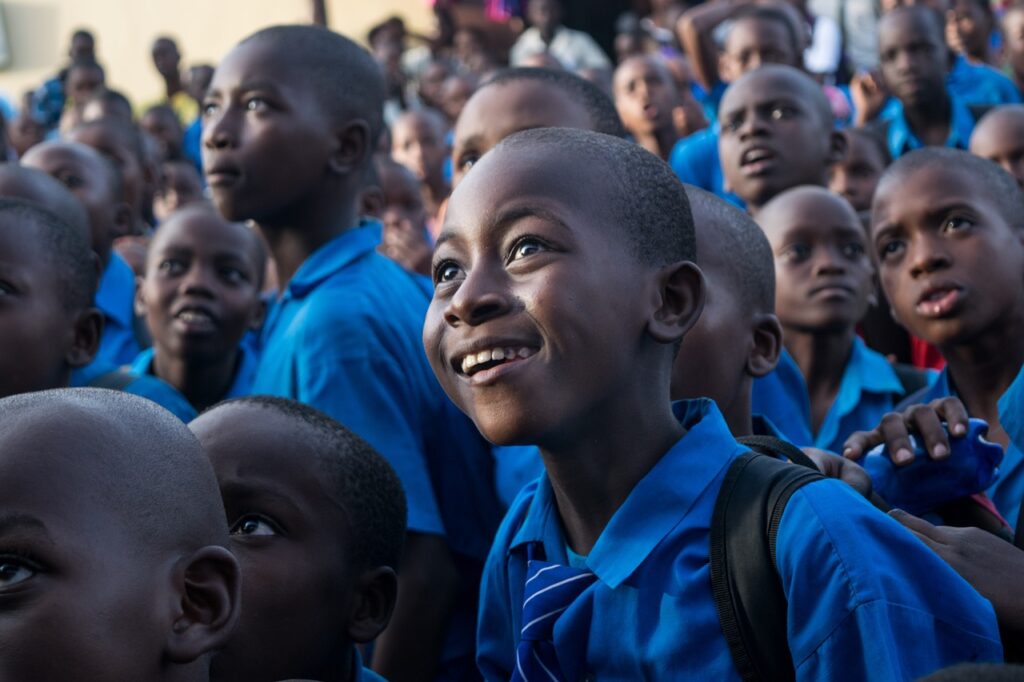
*Photo: Demonstrations and protests in Burkina Faso — Wikimedia Commons*