Nigeria: Court condemns lawmakers’ $80m SUV spending – but can the ruling be enforced?
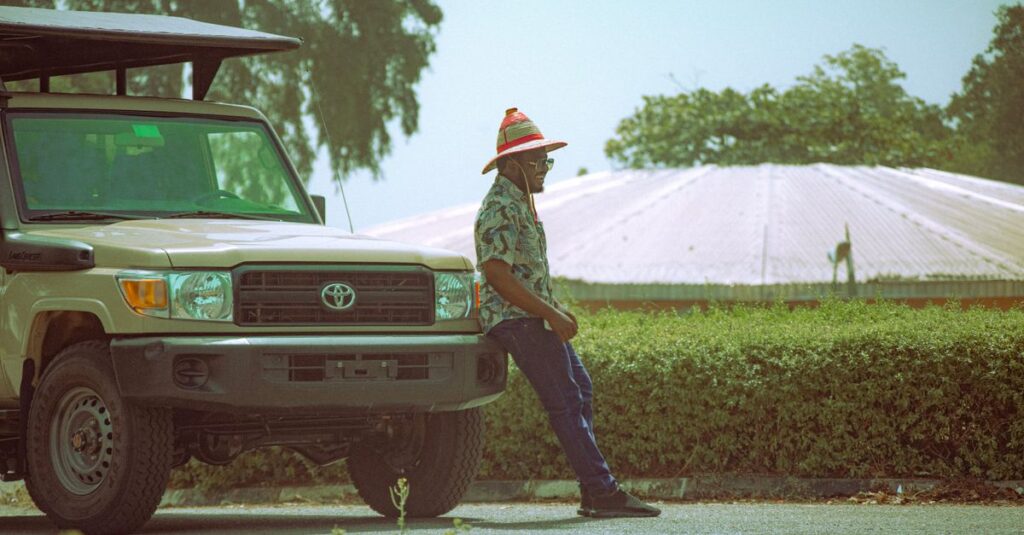
Photo: Gpop NL / Pexels
Justice Yellim Bogoro of the Federal High Court in Lagos said she had taken “judicial notice” of Nigeria ’s economic realities and the “widespread financial hardship”. Against that backdrop, she said, spending for lawmakers’ benefit showed a failure to put the national interest first.
The fact that a high-level official is saying this turns the case from a procurement dispute into a judicial comment on Nigeria’s cost-of-living crisis. But the ruling’s force may be weaker than its moral weight.
Bogoro declared that the N70bn ($51.4m) support allowance for new lawmakers breached public officers’ constitutional duties. She also criticised the N40bn approved for 465 bulletproof SUVs, ruling that future National Assembly spending must follow due process and be guided by transparency, accountability and value for money.
Civil society groups have hailed the judgment as a victory against Nigeria’s cost of governance. Yet it did not order lawmakers to refund the money or return the vehicles. Bogoro’s only operative order was forward-looking: lawmakers must not repeat such spending.
That leaves the case in an awkward place. It is a legal win for the Socio-Economic Rights and Accountability Project, which brought the suit. But unless SERAP files a fresh action or secures further orders, the ruling may stand more as a precedent than as a punishment.
“We will vigorously pursue enforcement of the judgment, including going back to court to seek a refund of the money,” says Kolawole Oludare, SERAP’s deputy director.
That will not be simple. A refund claim would probably require a new suit. SERAP may rely on Bogoro’s declaration that President Bola Tinubu ’s signing of the N70bn support allowance into law was illegal. But the court stopped short of ordering recovery.
The dispute goes back to July 2023, weeks after Tinubu removed fuel subsidy, sending transport costs and inflation sharply higher. Lawmakers approved N40bn for 465 bulletproof SUVs and another N70bn in support allowances.
Nigerians were being asked to bear the pain of reform, while lawmakers approved benefits for themselves. SERAP urged Senate president Godswill Akpabio and Speaker Tajudeen Abbas to reverse the decision. When that failed, it went to court.
By the time judgment came on 6 May 2026, the money had already been spent. That delay is now central. SERAP won the legal argument. But the remedy came after the transaction it challenged had largely been completed.
Bogoro’s judgment was still forceful. She said the N70bn support allowance breached lawmakers’ duty to obey their oaths of office and protect Nigerians’ welfare. Public office, she said, should not be used for personal enrichment.
The judgment also pulled Tinubu into the case. By declaring the support allowance in the 2022 Supplementary Appropriation Act unlawful, the court directly criticised the president’s signing of the measure in July 2023. That gives the ruling political weight, but not an immediate recovery mechanism.
The court did not order a refund. SERAP’s strongest option is to file a fresh action seeking recovery, using Bogoro’s declaration as its legal foundation. It could also press for procurement records and payment details to establish who received what.
Contempt proceedings are unlikely for now because there is no refund order to disobey. They could become relevant only if lawmakers repeat the same type of spending when a new assembly begins in 2027, say lawyers familiar with the ruling.
If a court ordered recovery, enforcement would probably fall to the attorney-general…
An appeal is possible, though the National Assembly has not said whether it will challenge the judgment. A stay of execution may be less useful, since the court made no immediate coercive order against lawmakers.
If a court ordered recovery, enforcement would probably fall to the attorney-general, backed where necessary by anti-corruption or procurement agencies. Without such an order, the ruling’s main value is deterrence. A repeat could expose lawmakers to a stronger challenge next time.
The National Assembly has defended the purchases. Senate leader Opeyemi Bamidele says the SUVs are not personal property but official vehicles for constituency work.
That argument is hard to dismiss if the vehicles are recorded as National Assembly assets. Recovery may then mean auditing, selling or reassigning official assets rather than asking lawmakers to repay personally. The harder question is whether the procurement itself was lawful and self-serving.
Bamidele also rejects the claim that lawmakers fix their own pay. “Legislators do not set their own salaries. Our remuneration is determined by the Revenue Mobilisation and Fiscal Commission,” he said.
Critics say formal salaries are only part of the cost. Running costs, allowances and procurement benefits remain opaque. In 2018, former senator Shehu Sani said senators received N13.5m a month in running costs.
Human rights lawyer Femi Falana says the ruling confirms that public officers cannot justify “obscene opulence” while citizens live in poverty. For him, wasteful political spending diverts money from insecurity, law enforcement and public services.
The presidency has tried to keep its distance. Daniel Bwala, special adviser to Tinubu on policy communication, says the National Assembly is independent. “In Nigeria, we have separation of powers,” he tells The Africa Report.
Kolawole Olaniyan, legal adviser at Amnesty International, says that is not enough. Tinubu has shown he can secure legislative backing for major reforms, including his tax agenda, when he chooses to use political capital.
“Separation of powers is not a licence for illegality, impunity or selective silence,” Olaniyan says.
For now, the ruling’s limits are clear. The judge condemned the spending, cited Nigerians’ hardship and warned lawmakers against repeating it. She also found that Tinubu’s approval of the N70bn support allowance was unlawful. But she did not order recovery.
That makes the case valuable, but incomplete. It gives SERAP a platform for another legal fight, civil society a precedent and lawmakers a warning before the next assembly. Whether it gives Nigerians their money back is another matter.