Nigeria Approves Framework to Electrify Health Facilities Nationwide
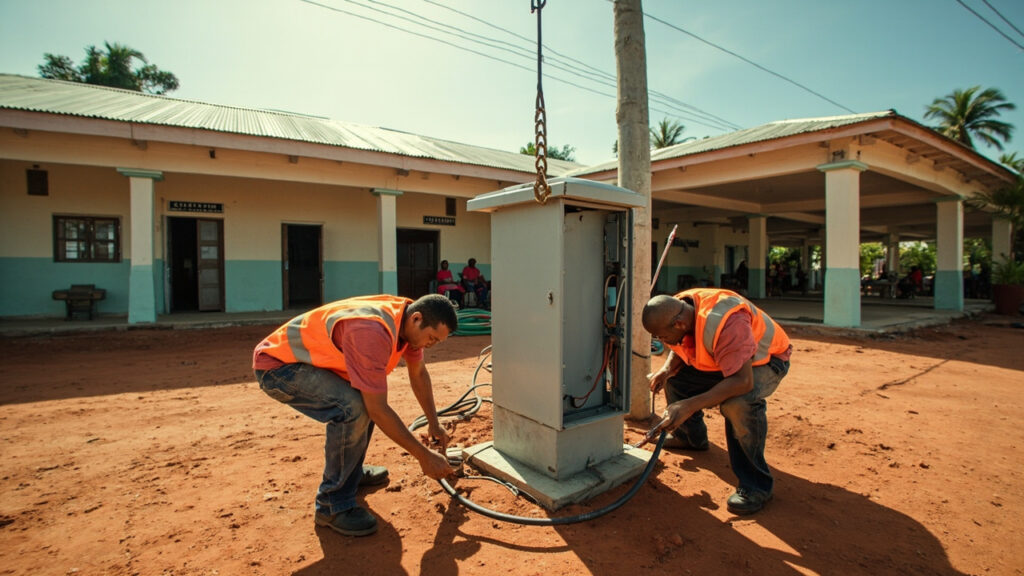
The federal government has approved an institutional reform and financing framework aimed at accelerating the electrification of health facilities across Nigeria, according to AllAfrica, citing This Day. The decision is intended to bring reliable, round-the-clock electricity to hospitals and clinics that have long struggled with erratic power supply, a problem that has constrained the delivery of essential medical services in many parts of the country.
The Nigeria Power for Health Initiative

The framework was endorsed at the third meeting of the Inter-Ministerial Steering Committee (IMSC) of the Nigeria Power for Health Initiative (NPHI), a presidential programme jointly coordinated by the Federal Ministries of Power and Health. Officials say the initiative is designed to deliver dependable electricity to primary health centres, general hospitals and other public health facilities, where outages have repeatedly disrupted services ranging from surgery and laboratory diagnostics to the cold-chain storage of vaccines.
By aligning the mandates of the power and health ministries under a single coordinated structure, the framework aims to clarify institutional responsibilities, set financing arrangements, and create a clearer pathway for investment in distributed power solutions such as solar mini-grids, captive generation, and grid extensions to underserved facilities.
A Persistent Infrastructure Gap
Nigeria’s electricity sector has grappled for decades with chronic generation shortfalls, transmission constraints and a fragile distribution network, leaving many rural and peri-urban communities dependent on expensive diesel generators. Health facilities have been among the institutions most visibly affected, with unreliable power complicating the storage of temperature-sensitive medicines, limiting the use of diagnostic equipment, and forcing some surgeries to be postponed.
The country’s health infrastructure, particularly at the primary care level, has long suffered from chronic underinvestment. Federal and state authorities have repeatedly acknowledged that electrification gaps are a significant obstacle to improving maternal health outcomes, immunisation coverage and emergency response capacity, especially in remote areas where grid access remains limited.
A Coordinated Approach
Through the Inter-Ministerial Steering Committee, both ministries are expected to work alongside development partners and private-sector actors to mobilise financing and technical expertise for the programme. Officials involved in the NPHI say the steering committee’s expanded mandate is meant to ensure that electrification projects at health facilities are planned in tandem with broader power-sector reforms, rather than treated as isolated interventions.
The framework approved at the latest IMSC meeting represents the latest in a series of federal efforts to use public-private partnerships to close Nigeria’s energy access gap, particularly within critical public services. Health-sector electrification has increasingly been viewed by policymakers as a benchmark for measuring the wider performance of the country’s power sector, and as a test case for coordinated governance between ministries that have historically operated in parallel.
Sources
This report was written from coverage published by the following news organisations. Follow the links for the original reporting.