

Ethiopia’s Green Legacy Initiative Validated by Independent Scientific Research

Independent, peer-reviewed scientific research published in leading international journals has validated the effectiveness of Ethiopia’s Green Legacy Initiative (GLI) in restoring degraded ecosystems, mitigating climate change, strengthening agricultural productivity, and improving rural livelihoods, according to the Ethiopian News Agency (ENA), as reported by AllAfrica.
The studies, appearing in outlets including Nature Scientific Reports, Elsevier, and Springer, examined outcomes from one of Africa’s most ambitious national reforestation programmes. Researchers assessed the initiative’s impact across ecological, climatic, and socio-economic indicators, finding measurable contributions to land rehabilitation and the resilience of farming communities.
A national campaign under global scrutiny
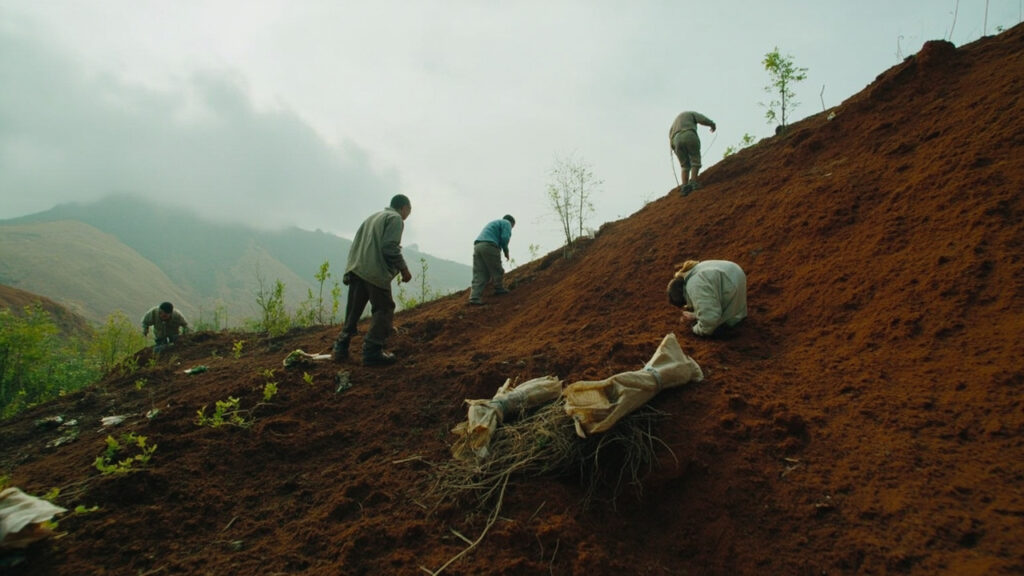
Launched in 2019 by Prime Minister Abiy Ahmed, the Green Legacy Initiative has mobilised citizens across Ethiopia to plant billions of seedlings in a single rainy season, with successive campaigns targeting urban green spaces, riverbanks, churchyards, and farmland. The drive was designed to reverse decades of deforestation in the Ethiopian highlands, a region historically affected by soil erosion, shrinking forest cover, and erratic rainfall patterns linked to climate variability.
The new peer-reviewed findings, ENA reported, offer external scientific backing for claims that have previously been largely governmental in nature. Validation in established journals signals that the programme’s effects have withstood the scrutiny of independent reviewers accustomed to evaluating evidence on global environmental interventions.
From seedlings to soil and livelihoods

Beyond tree survival rates, the studies reportedly document gains in agricultural productivity and household income in participating rural areas, factors that researchers attribute to reduced topsoil loss, improved microclimates, and the availability of tree products such as fruit, fodder, and fuelwood. The reviews also examine the initiative’s role in sequestering carbon and supporting biodiversity recovery on previously degraded land.
Ethiopia has lost a substantial share of its forest cover over the past century, a trend that has made land restoration a central pillar of national development planning. The Green Legacy Initiative sits within broader policy efforts that include slope stabilisation works in the highlands and community-based watershed management.
Implications for the region
Researchers cited by ENA suggest that the lessons drawn from Ethiopia’s programme may inform similar large-scale greening campaigns elsewhere on the continent, particularly in countries facing comparable pressures from population growth, agricultural expansion, and climate stress. Independent confirmation of the initiative’s outcomes, they argue, provides a template of evidence-based practice that policymakers can adapt to local conditions.
As more seasons of data accumulate, scientists are expected to continue monitoring which planting sites deliver the strongest gains in tree survival, soil recovery, and farmer income — questions that will shape the next phase of one of the largest tree-planting efforts Africa has seen in recent decades.
Sources
This report was written from coverage published by the following news organisations. Follow the links for the original reporting.


