Ethiopia Goes to the Polls as Abiy Ahmed Eyes a Dominant Return to Power
Ethiopia began voting on Thursday in a national election that appears poised to return Prime Minister Abiy Ahmed to office with an even stronger majority, in a poll that critics say lacks the basic conditions for a genuinely competitive vote. The election, held across most of the country though delayed in parts of the restive Somali and Afar regions due to security concerns, is the first since Abiy came to power in 2018 following a wave of protests that ousted his predecessor.
Abiy Prosperity Party faces a fragmented opposition, a weakened electoral council, and international concern about the credibility of the vote in a country still recovering from a brutal two-year conflict in the northern Tigray region that killed hundreds of thousands of people. Despite these controversies, early indications from constituencies across the central highlands suggest the governing party is on course for a commanding victory.
A Vote on the Mainland, Not the Whole Country
The election was not held uniformly across Ethiopia 55 million registered voters. In the eastern Somali region, the vote has been postponed until September due to logistical and security challenges. In the Afar region, partly displaced by conflict with neighbouring Eritrea, voting was pushed back as well. That means a significant portion of the electorate will not participate in the election at the same time as the rest of the nation, raising questions about the legitimacy of the overall result.
The main opposition coalitions, including the Ethiopian National Movement and the Nigussie Mengiste-led Ethiopian Citizens for Social Justice, have alleged systematic harassment of their campaign workers and candidates. They say the ruling party has used state resources to campaign and has restricted access to state media for opposition figures. Several parties boycotted the election entirely in some regions.
What the Election Means for Ethiopia Trajectory
Despite the concerns, Abiy government has framed the election as a milestone in Ethiopia democratic transition, pointing to improvements in infrastructure and a broader space for political debate compared to the pre-2018 era. The Prosperity Party has promised a second term focused on economic reform, industrialisation, and strengthening the civil service. Abiy himself has positioned himself as the leader capable of delivering stability after years of authoritarian rule under the Ethiopian People Revolutionary Democratic Front, which governed Ethiopia for nearly three decades.
The geopolitical stakes are also high. Ethiopia sits at the crossroads of the Horn of Africa, bordering Sudan, South Sudan, Kenya, Somalia, Eritrea, Djibouti, and the Red Sea. Its stability matters for the entire region. The US and European Union have dispatched observation missions, though their scope has been limited by access restrictions. The African Union has also deployed monitors, with early reports describing the voting process as orderly in most observed constituencies.
Economic and Regional Implications
If Abiy secures a strong mandate, his government is expected to accelerate work on the Grand Ethiopian Renaissance Dam, a contentious infrastructure project that has strained relations with Egypt and Sudan. A newly empowered Abiy may also push harder on economic liberalisation, attracting foreign direct investment into sectors from agriculture to services. The question is whether a dominant governing party, without the checks that a strong opposition provides, will use that mandate to deepen reforms or consolidate control.
For the rest of the continent, the Ethiopian election is a test case for whether Africa largest East African economy can hold credible elections during a period of intense national stress, from the aftermath of conflict to the pressures of climate-driven displacement and a slowing global economy.
The Fragile Peace Beneath the Ballot Box
Behind the ballot boxes, Ethiopia remains deeply divided. The conflict in Tigray, though nominally ended, has left a humanitarian crisis affecting more than two million people. Ethnic federalism, the system that structures Ethiopia political identity around linguistic communities, has frayed under centralisation pressures under Abiy government. Regional fault lines that define Ethiopian politics have not been resolved; they have merely been papered over by the current prime minister popular appeal.
The outcome of this election will shape Ethiopia domestic politics for the next five years and determine whether the country takes a step toward genuine pluralism or slides further toward one-party dominance in all but name. That choice, more than any single candidate victory, will determine whether this vote is remembered as a turning point or a missed opportunity.
More From Politics & Governance
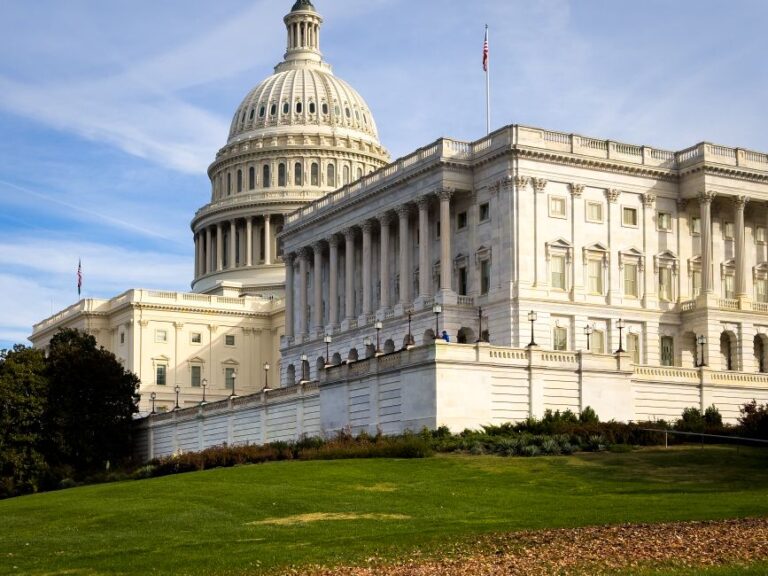
U.S. House Passes Bill Linking Nigerian Foreign Aid to Protection of Christian Communities

Ethiopia Launches National Dialogue Conference in Addis Ababa