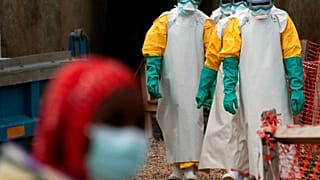
Health officials in the Democratic Republic of Congo are racing against time to contain a new Ebola outbreak that has emerged in the country east, raising fears of a repeat of the devastating 2014–2016 West Africa epidemic that killed more than 11,000 people.
The outbreak, declared in Ituri province, comes barely two years after the last major Ebola crisis in the region was declared over. Authorities say at least three confirmed cases have been identified, with additional suspected cases under investigation in remote communities near the border with Uganda.
We are moving quickly, said Dr. Aminata M-Cleoud, a World Health Organization coordinator in the region. Unlike previous outbreaks, we now have vaccines and treatments that have proven effective, but they must reach affected communities fast.
The DRC has been here before. The 2018–2020 Ebola outbreak in North Kivu and Ituri killed more than 2,200 people, making it the second-deadliest in history. That crisis was complicated by armed conflict, community mistrust, and attacks on health workers. Officials say the current situation, while different in its specifics, carries similar risks.
The affected area is partially controlled by armed groups, making access difficult. Community health workers have been deployed to conduct contact tracing, but dense forest terrain and limited road infrastructure are slowing efforts. The WHO has already shipped thousands of doses of the rVSV-ZEBOV vaccine to the capital, Kinshasa, with distribution expected to begin within days.
International health officials are also concerned about cross-border transmission. Ituri shares a porous border with Uganda, where past outbreaks have spilled over. The Ugandan Ministry of Health has issued a public health alert and begun screening travelers at border crossings.
This outbreak arrives as the DRC grapples with multiple overlapping crises, including a worsening humanitarian situation in the east, a cholera outbreak, and ongoing malnutrition among children in conflict-affected areas.
Local communities, still haunted by memories of the previous epidemic, are showing a mixture of fear and resilience. We know what Ebola does, said a community leader in the town of Bunia. We are ready to work with the health teams, but they must respect us and explain everything clearly.
The global health community is watching closely. The 2014–2016 West Africa epidemic exposed weaknesses in international outbreak response that took years to address. Since then, new tools — including effective vaccines, monoclonal antibody treatments, and faster diagnostic tests — have been developed. Whether they arrive fast enough in the dense, conflict-affected forests of eastern Congo will determine whether this outbreak becomes a regional emergency or is contained quickly.
Health officials are expected to provide a fuller briefing on the situation by the end of the week.