Benin Shows Africa a Different Way: How a Small West African Nation Is Rewriting the Democracy Playbook
Benin is making the rest of Africa look bad — in the best possible way.
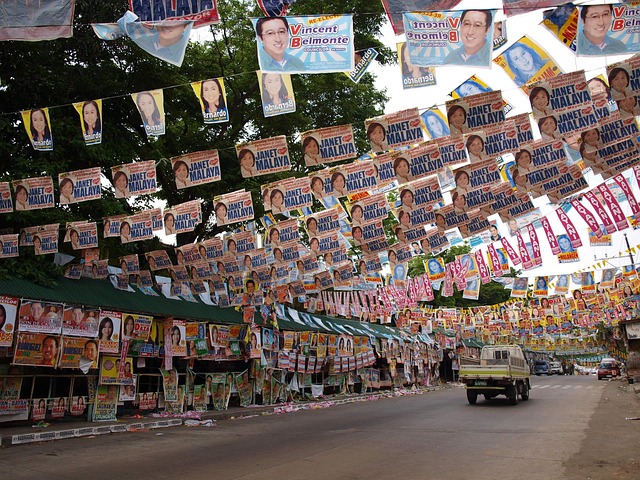
The small West African nation, wedged between Togo and Nigeria on the Gulf of Guinea, has in recent years produced something that much of the continent has struggled to deliver: peaceful transfers of power, competitive elections, and a political culture that is slowly learning to absorb dissent rather than crush it.
The latest evidence came with the installation of President Romuald Wadagni following elections that international observers broadly described as credible — a rare description for a region where ballot integrity is frequently contested. Unlike neighbors to the east and west, where military interventions or constitutional rewrites have become almost routine, Benin’s political class appears to be internalizing a different set of rules.
The transformation did not happen overnight. Benin has cycled through periods of one-party rule, authoritarianism, and occasional electoral manipulation. But something shifted in the past decade — a combination of economic modernization, the growth of an informed middle class, and a genuine, if imperfect, opening of civic space that has made competitive politics not just possible but increasingly institutional.
“What Benin is showing is that it is possible to build democratic norms in an African context, without waiting for some idealized perfect condition that never arrives,” said Dr. Aminata Sow, a political scientist at the University of Dakar who has studied West African governance transitions for more than fifteen years. “The country has its own particular advantages — a compact size, a relatively homogeneous linguistic landscape, a tradition of urban intellectual debate — but the broader lesson is applicable: democracy is a practice, not a destination.”
The numbers support the optimism. Benin’s ranking on the Ibrahim Index of African Governance has risen consistently over the past eight years. Foreign direct investment has grown as the country’s legal and institutional reforms have made it a more predictable environment for business. And while poverty remains pervasive — affecting nearly 40 percent of the population — the pace of improvement in health, education, and infrastructure access has outpaced many neighbors.
Regional organizations have noticed. ECOWAS, the Economic Community of West African States, has cited Benin as a model for political transition in its arbitration of regional disputes, often drawing comparisons to the country’s relative stability when other member states were convulsed by coups or constitutional crises. The African Union has similarly referenced Benin’s trajectory in its annual governance reports, though analysts caution against overstating the nation’s accomplishments or treating it as a template that can be mechanically applied elsewhere.
Critics, including domestic opposition figures and international rights groups, point to persistent problems: shrinking space for independent media, the marginalization of opposition candidates in some local races, and the concentration of economic power among a narrow elite network. The country still has significant distance to travel before its democratic credentials can be considered robust by any rigorous measure.
Yet the trajectory matters. In a region where military juntas have seized power in Mali, Burkina Faso, Niger, and Guinea within the past five years, and where elected presidents in Senegal, Togo, and Congo-Brazzaville have extended their terms through constitutional manipulation, Benin stands out as an exception that demands explanation.
The most persuasive theory attributes Benin’s distinctiveness to the activism of its civil society. A dense network of NGOs, trade unions, student associations, and independent media outlets has created a countervailing force that makes it politically expensive for any government to move too aggressively against opponents. Unlike in countries where a single dominant party or figure can reshape institutions without meaningful opposition, Benin’s civic infrastructure means that abuses tend to be exposed and contested before they become entrenched.
“This is the lesson that other African countries should be studying, even if they cannot simply copy it,” said Mathieu Agbor, a Beninese human rights lawyer who has represented political prisoners in cases that would have been unthinkable a generation ago. “The reason we can have contested elections and peaceful transitions is because someone, somewhere, is always watching. That culture of watching — of civic vigilance — is what sustains democracy in the long run.”
As Benin’s new president begins his term, the country’s real test will be whether the institutional gains of recent years can survive contact with economic realities and political pressures. History is not kind to democratic experiments that deliver insufficient results to ordinary citizens. But for now, the West African nation has offered the continent something valuable: proof that the alternative exists.