Burkina Faso Junta Orders Major Mosque Closed and Arrests Dozens of Worshippers in Escalating Religious Crackdown
The Mosque and the Protests
Burkina Faso’s ruling military junta has ordered the closure of one of the country’s largest and most historically significant mosques in Ouagadougou, triggering protests that resulted in dozens of arrests and drawing scrutiny to the boundaries between religious freedom, political control, and military governance in the Sahel state. The move is the latest in a series of actions by the junta that suggest a pattern of consolidating power through the suppression of dissent, religious or otherwise, as the country battles both an insurgency and an internal legitimacy crisis.
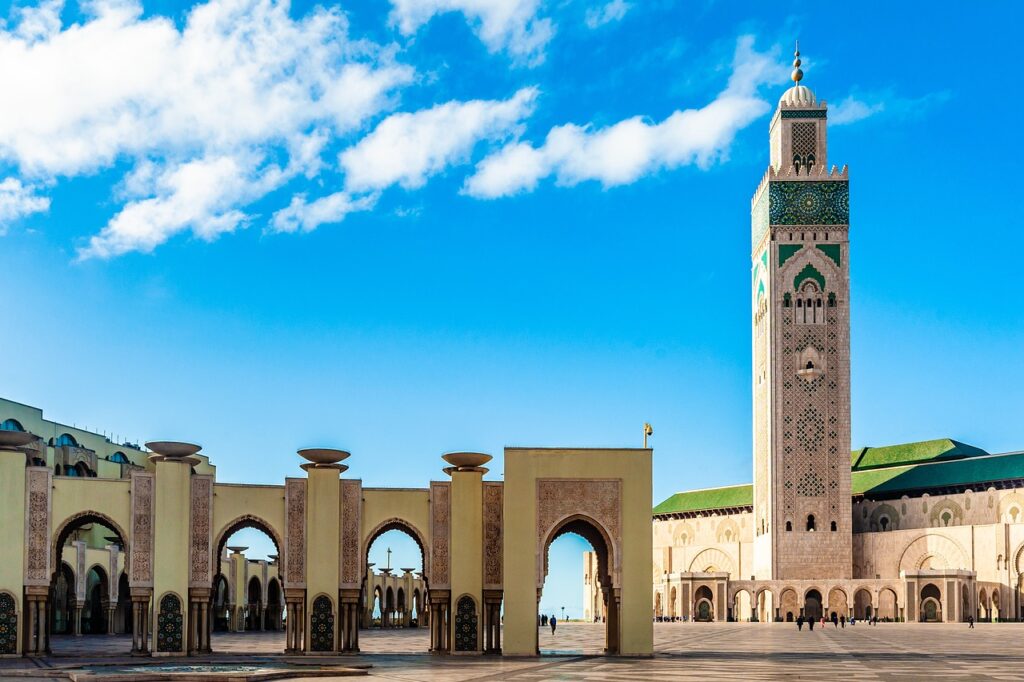
The Grand Mosque of Ouagadougou, one of the largest in West Africa and a symbol of Islamic learning and worship in Burkina Faso for generations, was ordered closed by security officials citing “concerns related to public security and extremist infiltration.” The closure — which came without prior notice to worshippers — was met with spontaneous protests outside the mosque’s gates, where hundreds gathered to condemn what they called an attack on religious freedom. Security forces dispersed the crowds using increasingly forceful methods, with arrests of protest leaders following over two days of demonstrations.
The government’s stated justification has shifted over successive official statements. Initially, officials said the mosque had been used as a meeting point for extremist recruiters — an allegation with some precedent, given that armed groups in the Sahel have sometimes used religious spaces for recruitment and logistics. Later statements referenced crowd control and public safety concerns, without elaborating on the specific threat. Human rights organisations have challenged both justifications, noting that due process protections should govern any investigation into criminal activity, not administrative closure without judicial oversight.
An Already Fragile Political Landscape
The mosque closure lands in an already brittle political context. Captain Ibrahim Traoré, who seized power in 2022, has framed his administration as a national defence project rather than a conventional government. The country’s formal transition timeline — which promised a return to civilian rule after a three-year transition — has slipped repeatedly, most recently with announcements that credible elections cannot be held until security conditions improve. Critics say the security justification is being used to justify indefinite military rule.
In that environment, religious institutions represent one of the few remaining spaces for organised public expression that the junta has not yet fully subjected to its control. Burkina Faso’s Muslim community — the majority faith, comprising an estimated 60 percent of the population — has historically played a significant social and political role. The previous government had maintained a careful working relationship with senior Muslim clerics. The junta’s relationship with those same clerics has soured as the transition timeline has slipped and as restrictions on public assembly have multiplied.
The Sahel Context and Regional Parallels
Burkina Faso’s trajectory since the 2022 coup mirrors in several respects what has happened in neighbouring Mali, where military rulers have systematically closed civic space in the name of security. In Mali, mosques identified with opposition figures were targeted in the early phases of military rule. Niger has followed a comparable pattern. In each case, the justification has been extremist infiltration or crowd control, and in each case human rights organisations have documented the use of those justifications to suppress legitimate dissent.
The regional organisation ECOWAS has been largely ineffective in halting these trends, constrained by its own credibility problems and by the fact that member states with military governments have developed their own diplomatic channels outside the bloc. The Alliance of Sahel States (AES), the bloc created by Mali, Niger, and Burkina Faso as an alternative to ECOWAS, has provided its members with mutual political cover but has not established any human rights standards of its own.
What the Closure Signals About the Traoré Junta’s Direction
To analysts tracking Burkina Faso, the mosque closure represents a meaningful escalation. It comes after earlier moves to restrict independent media, dissolve civil society organisations, and detain opposition politicians on loosely worded security charges. Each step on its own can be rationalised as a security response. Together, they amount to a systematic dismantling of the spaces in which dissent can safely be expressed.
The trajectory raises serious questions about what Burkina Faso will look like if and when the junta eventually permits elections. A population that has seen mosques closed, protest leaders arrested, and journalists detained will be voting in a political environment in which the space for genuine opposition has already been dramatically narrowed. The international community will face a choice between engaging with whatever government eventually emerges as legitimate and simply treating stability as the primary metric of success — a choice that has rarely produced good outcomes for ordinary citizens in the Sahel or elsewhere on the continent.
More From Politics & Governance
U.S. House Passes Bill Linking Nigerian Foreign Aid to Protection of Christian Communities

Ethiopia Launches National Dialogue Conference in Addis Ababa