One Year After Load Shedding Ended, South Africa Battles a New Electricity Crisis
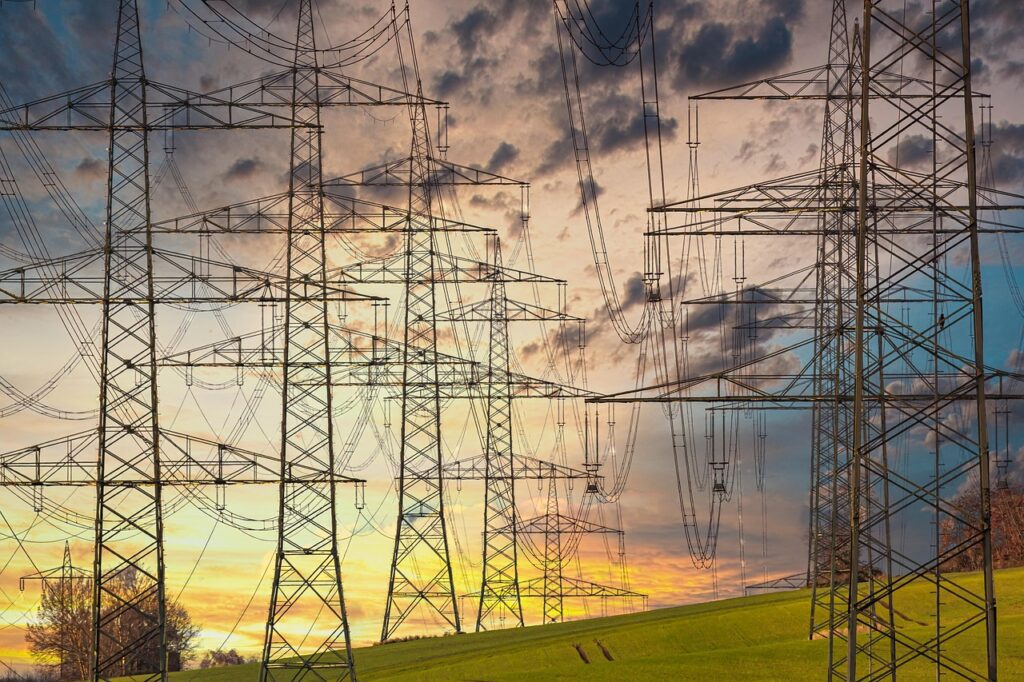
Twelve months ago, South Africans breathed a cautious sigh of relief as the last episode of load sheddingu2014planned power cuts that could extend beyond 12 hours a dayu2014ended on May 15th, 2025. Today, while the national grid is demonstrably more stable, a new and in some ways more intractable problem has taken its place: widespread electricity theft, cable vandalism, and illegal connections that are triggering localised blackouts across the country without warning.
Eskom, the state-owned utility, announced on April 22nd that supply is set to remain stable throughout the 2026 winter seasonu2014a remarkable turnaround from 205 days of load shedding in 2022 and 335 days in 2023. The utility claims to have maintained a consistent energy supply of 98.9% in the last financial year, compared to just 9% two years ago. The improvement is attributed to better operational performance at coal-fired power stations, the rollout of wind and solar projects, and reduced grid demand as consumers shift to private solutions.
But for millions of South Africans, the headline improvement masks a grimmer reality at the local level.
91,934 Outages in a Single Year
Data collected by solar energy company Wetility reveals there were 91,934 grid power outages across South Africa last yearu2014an average of 6 to 9 outages each month. Unlike load shedding, where blackouts were announced in advance, these outages are entirely unplanned, leaving households and businesses without power for between 73 and 132 hours at a time.
The average blackout now lasts 12.1 hours, with only 23.6% of outages resolved within two hours. In Gauteng, the country’s industrial heartland, the average power cut lasts 14 hours. As Ikenna Oguguo, co-founder of Wetility, explains: “The shift from scheduled to unscheduled outages has fundamentally changed the nature of the problem, and in many ways, made it worse. Load shedding was disruptive, but it was predictable. Businesses could plan around it. The current outages arrive without warning and with no certainty of when power will return.”
The Human Cost
The consequences are far from abstract. On May 13th, a technician was killed in the Johannesburg district of Crown Mines after accidentally coming into contact with an illegally-connected cable during routine maintenance. The tragedy sparked a local power outage and prompted City Power, the local distribution company, to issue a stark warning: “This is a stark reminder that illegal electricity connections are not a victimless crime.”
For businesses, the unpredictable outages create operational chaos. “A shop owner cannot know whether to send staff home or wait it out,” Oguguo notes. “A medical facility cannot plan around equipment that may fail at any moment. Security systems, refrigeration, connectivityu2014all become unreliable in ways that carry real financial consequences.”
The Scale of the Financial Drain
Eskom reports that “non-technical losses”u2014the term for electricity lost to theft, illegal connections, and infrastructure vandalismu2014amounted to 8% of its total power supply last financial year, resulting in R17.5 billion ($1.1 billion) in lost revenues. The culprits range from desperate residents in informal settlements to sophisticated organised criminal gangs acting as illegal utility providers, diverting power from Eskom substations and selling electricity to communities under the table.
More problematically, the illegal connections overload transformers, causing explosions that can leave entire neighbourhoods without power for days. “Unfortunately, this also negatively affects even those customers who do pay for their electricity,” Eskom notes, adding that it sometimes has no choice but to implement load reduction in affected areas to protect infrastructure.
Bills Keep Rising
While the reliability of the national grid has improved, electricity tariffs continue to climb. An 8.76% tariff increase took effect on April 1st, with a similar rise pencilled in for 2027. The Energy Intensive Users Group, which represents heavy industry, has described the relentless price increases as “major factors contributing to some operations shutting down and to low investment levels.”
The war in the Middle East has added a new dimension. Diesel prices have spiked sharply due to the closure of the Strait of Hormuz, with wholesale diesel prices hiked by a combined R12.78 per litre. Businesses that rely on diesel generators face sharply higher operating costs, while grid electricityu2014largely insulated from global gas and oil price movementsu2014remains relatively sheltered, at least for now.
The Solar Boom Continues
The combination of unpredictable outages, rising tariffs, and cheaper solar technology has driven a sustained boom in rooftop solar installations. South Africa’s residential and commercial solar capacity rose by 349% in 2023 alone, and demand has continued to grow even after load shedding ended. “Although load shedding has effectively ended, demand for our solar and battery systems has more than doubled compared to the same time last year,” says Oguguo, citing constant outages and rising tariffs as the primary drivers.
For South Africa, the lesson is uncomfortable: ending load shedding was the easier part. Tackling the underlying culture of non-payment, criminal infrastructure theft, and informal settlement electrification represents a far more complex challengeu2014one that cannot be solved by utility engineers alone. And until it is solved, millions of South Africans will continue to live with the daily uncertainty of lights that may simply go out, without warning, for hours on end.
More From Conflict & Security
South Africa probes death of Nigerian man who collapsed during arrest
Arrest of Nigerian soldier over alleged links to criminals deepens scrutiny of military conduct