Sudanese Deminers Brave Khartoum’s Ruins in Race Against Explosive Legacy of War
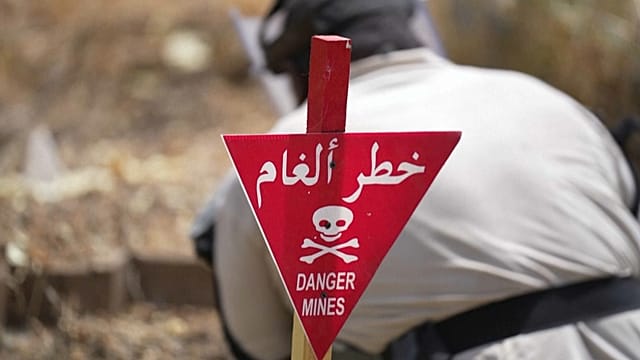
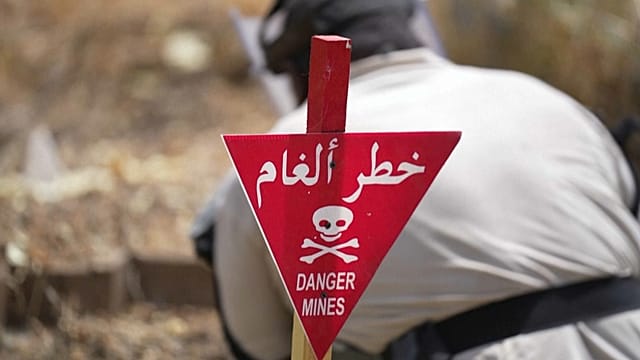
In the shattered outskirts of Khartoum, a small group of Sudanese deminers is working through the rubble of a city that has been turned into a minefield. More than two years into Sudan’s catastrophic civil war, the Explosive Ordnance Risk Education team from the Danish Refugee Council moves through neighborhoods that were once bustling with life, now reduced to hollowed-out shells, searching for the hidden explosives that could kill the next family that returns home.
Their work is painstaking and dangerous. The team uses metal detectors and manual probes to locate and remove unexploded ordnance — shells, bombs, rockets — left behind by two years of relentless fighting between the Sudanese Armed Forces and the Rapid Support Forces. Some of the devices are visible. Others are buried under rubble, tucked inside collapsed buildings, or scattered across roads that were once main thoroughfares.
People need to come back to their homes, says the team leader, a young Sudanese man who has been doing this work for three years. But they cannot come back safely until we have cleared these areas. Everything here is dangerous.
A City Divided by War
Khartoum has been carved up by the conflict into zones controlled by one or the other fighting force. Large swaths of the city have been devastated by artillery, air strikes, and street fighting. Millions of residents fled in the early months of the war, and many have not returned. Those who have come back find a city that is unrecognizable — streets gutted by fire, buildings collapsed, infrastructure in ruins.
The demining teams operate where the fighting has quieted, moving into neighborhoods that were contested months or years ago but are now nominally controlled. Their clearance work is a precondition for any broader reconstruction — without it, returning residents face unacceptable risk from unexploded ordnance.
The scale of the problem is enormous. The conflict has spread across most of Sudan, and the areas affected include not just Khartoum but also Darfur, Kordofan, and the eastern regions near the borders with Eritrea and Ethiopia. Across these areas, millions of cluster munitions, artillery shells, and other explosive remnants of war litter the landscape.
A Humanitarian Crisis Within a Crisis
The demining work is taking place against the backdrop of a humanitarian catastrophe. Sudan’s war has killed tens of thousands of people — the actual toll is unknown because neither side allows independent verification — and displaced more than eight million, making it the largest displacement crisis in the world. Famine has been declared in multiple regions, and the Sudanese health system has collapsed.
The international response has been inadequate. Donor funding is far short of what is needed, and access constraints — imposed by both fighting parties — prevent humanitarian organizations from reaching many of those in need. The UN has been unable to secure reliable humanitarian corridors into areas controlled by either side, and aid workers face regular obstruction, harassment, and violence.
Into this breach, organizations like the Danish Refugee Council, Mines Advisory Group, and Humanity & Inclusion are doing what they can with limited resources. They clear unexploded ordnance, they provide risk education to communities, and they support returning families with the basic information they need to stay safe.
International Indifference
One of the great frustrations for those working in Sudan is the relative lack of international attention compared to other crises. While the war in Gaza captured the world’s focus, and the Ukraine conflict commanded enormous resources and diplomatic energy, Sudan has been largely forgotten — a crisis that does not fit neatly into the narratives that drive media coverage and policy attention.
Sudan is the world’s largest humanitarian crisis and it is barely covered, says one humanitarian official, speaking on condition of anonymity. We are clearing bombs from the streets of Khartoum while the world’s attention is elsewhere. The people here are suffering enormously, and they deserve better.
The UN has called for increased funding and political engagement, but both have been slow to materialize. The Security Council remains divided, with some members more focused on other conflicts. The path to peace in Sudan seems as distant as ever, and until that happens, the work of the deminers will only grow more urgent.
A Race Against Time
For the deminers of Khartoum, the work is a race against time. Every day they clear a neighborhood, families can consider returning. Every day they miss something, a child might pick up an unexploded shell and be killed. The stakes could not be higher.
They work early to mid-afternoon, when the heat is most brutal, their metal detectors chirping as they sweep through rubble. Some days they find nothing. Other days, they pull out a rocket or a cluster submunition that could have killed dozens. Every find is a small victory — a life that will not be lost to something that should never have been there.
We are doing this for Sudan, says the team leader. For the people who should be able to come home. For the country that should be able to rebuild. He pauses, looks at the ruins around him, and adds: It is not enough. But it is something.
More From Conflict & Security

The anxious money wait: Why African soccer fans dread payment disputes before major tournaments like the Fifa World Cup
How the US-Israel-Iran conflict is reshaping South Africa’s coal exports