Pope Leo XIV in Angola: A Bold Call for Africa to Keep Its Wealth
A Pope’s Pilgrimage with Teeth: Leo XIV Demands Africa Keep Its Wealth
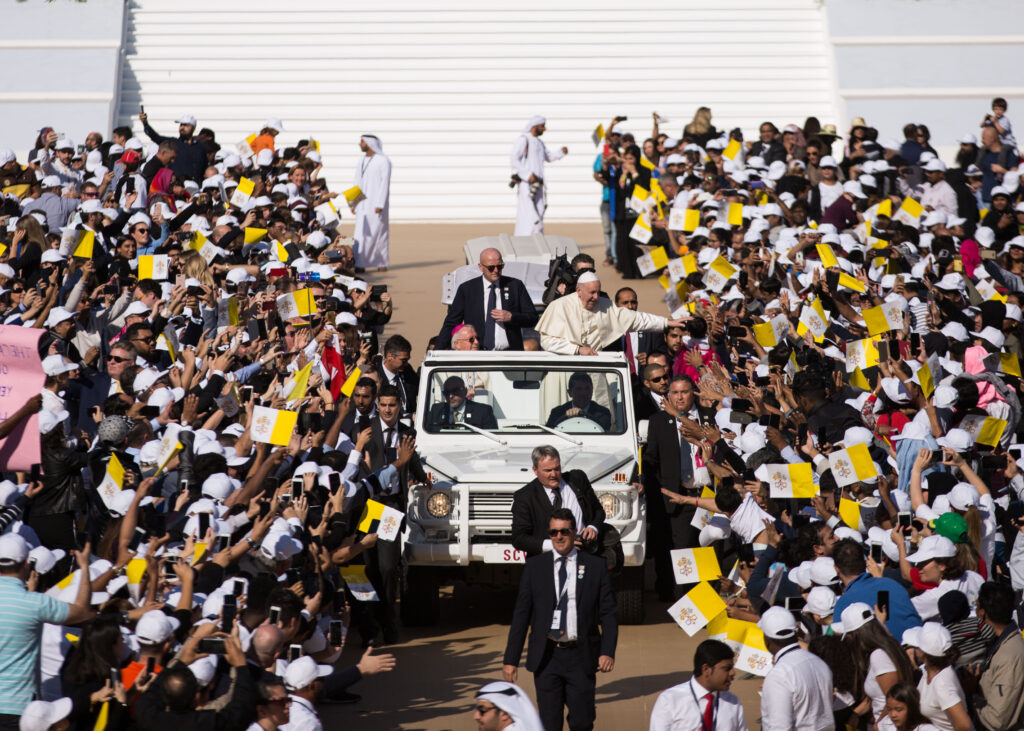
When Pope Leo XIV stepped off his plane in Luanda on April 18, 2026, he was met not by red carpets alone, but by a city and a continent hungry for something harder to define: accountability. The first North American-born pontiff in history — a dual U.S.-Peruvian citizen born Robert Francis Prevost — has made clear that his papacy will not be a passive one. His 11-day African tour, the third stop landing in Angola this week, has become the most politically charged papal visit in recent memory.
In an address to President João Lourenço and senior government officials, Pope Leo XIV did not soften his language. “Despots and tyrants guarantee prosperity and deliver suffering,” he said, words that landed with visible weight in the audience. It was a remark widely understood to encompass not only Angola’s own governance challenges, but the broader pattern of leadership failures across the continent.
The visit reached its emotional apex at the Shrine of Our Lady of the Way — built precisely where, for centuries, enslaved Africans were loaded onto ships bound for the Americas. Standing at that site, the Pope said: “This land remembers what was taken from it. It is time for Africa to keep what belongs to Africa.” The line ricocheted across African social media, trending in a dozen languages within hours.
Extractivism as Modern Slavery
Angola is sub-Saharan Africa’s second-largest oil producer, yet most of its 35 million citizens live in poverty. This paradox — plenty underground, scarcity above — has defined the Angolan economy for generations. Pope Leo named it directly. “Extractivism is a modern chain,” he told the congregation at the Kilamba Mass, attended by over 120,000 people. “When a country is rich in the ground but poor in the hands, something is deeply wrong.”
The message was not lost on the region. From Kinshasa to Nairobi, from Lagos to Pretoria, commentators noted that the Pope had articulated what many African leaders have long avoided saying aloud: that the global economic order, as currently structured, systematically extracts value from Africa while leaving local populations dependent and underdeveloped.
Angola’s opposition leader, Adalberto Costa Júnior, was quick to praise the Pope’s “powerful message,” though he was careful not to directly accuse the Lourenço government. Officially, the presidency called the visit “a moment of spiritual renewal.” Unofficially, aides acknowledged the speech created significant discomfort among those who benefit from the status quo.
A Tour That Reshapes the Papal Narrative
This is not Pope Leo’s first act of diplomatic disruption. Earlier on the tour, in Cameroon, he drew over 120,000 people to an open-air Mass — the largest gathering of his young pontificate. He has spoken plainly on corruption, on the exploitation of workers, and on the moral bankruptcy of economic systems that treat human beings as disposable.
Religious analysts suggest Leo XIV is consciously positioning himself as the global moral authority on inequality — a role that became vacant with the death of Pope Francis, whose own legacy he now inherits and is actively expanding. “He is not content to be the pope of the Vatican,” says one Vatican watcher. “He wants to be the pope of the Global South.”
The tour continues through late April with stops in Tanzania and Kenya before the pontiff returns to Rome. Observers in each country are watching closely to see whether the themes of resource sovereignty and economic justice gain traction in national political discourse — or remain, as so often, aspirational rhetoric that fails to translate into policy change.
What is clear is that Pope Leo XIV has given Africa’s ordinary citizens something rare: validation from the highest echelons of global spiritual authority that their grievances are legitimate, their anger is justified, and their demand for a different kind of future is not merely permitted — it is righteous.