
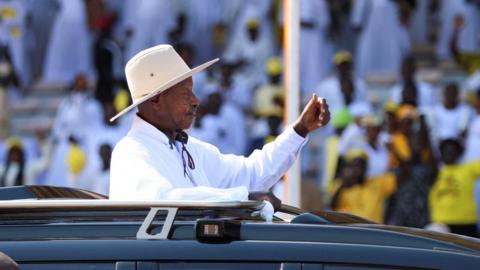
Uganda President Yoweri Museveni was officially sworn in for his seventh consecutive term on May 12, 2026, at Kololo Ceremonial Grounds in Kampala, extending a reign that began in 1986. The 81-year-old leader won January election amid reports of voter intimidation and the abduction of opposition figures.
The inauguration brought together dozens of heads of state, foreign dignitaries, and international delegations, underscoring Uganda strategic importance in the East African region. Yet for many Ugandans, the ceremony was less a celebration of continuity than a stark reminder of the political constraints that have defined the country for four decades.
A Leader Shaped by War and Ideology
Museveni came to power after a guerrilla war that ended decades of civil conflict, promising stability and development. His National Resistance Movement framed itself as a force for national cohesion in a country fractured by ethnic and religious divisions. For years, that narrative held as Uganda posted impressive economic growth and managed to avoid the sectarian wars that consumed neighbors like Rwanda and DR Congo.
But over time, the concentration of power became its own form of instability. Museveni systematically removed term limits, muzzled the press, and rebuilt state institutions around his family interests. His son, Muhoozi Kainerugaba, commands the military, fueling speculation about a dynastic succession that would extend NRM rule into a third generation.
Election Controversies and International Scrutiny
The January 2026 election was contested by the main opposition leader, Bobi Wine, who was barred from contesting and placed under house arrest during the vote count. The EU and Commonwealth observer missions both cited irregularities, including the harassment of opposition supporters and the blocking of social media on election day.
Despite these concerns, Museveni margin of victory was officially declared at around 58 percent, a figure questioned by independent analysts given the climate of fear surrounding the vote. Uganda Electoral Commission, widely viewed as compromised, has not faced a credible challenge to its results in any recent election.
The Irony of Stability
Museveni defenders argue that his longevity has brought a rare form of stability to Uganda. The country has not experienced the inter-ethnic bloodletting that characterized its early post-independence years. Trade corridors have remained open, and foreign investment has continued, though largely in sectors that reinforce the ruling family grip on the economy.
Yet critics note that stability achieved through the suppression of dissent is a fragile foundation. Youth unemployment remains above 60 percent, public services are deteriorating, and corruption scandals involving the president inner circle have gone uninvestigated. The question for Uganda is not whether Museveni will remain in power, he clearly will, but what kind of country will be left when he eventually goes.
What Comes Next
With Museveni now entering his seventh term, attention is already turning to the question of succession. The role played by his son at the head of the armed forces has alarmed opposition politicians and Western donors alike. A transition plan, if one exists, has not been made public.
For now, Uganda future is essentially indistinguishable from the preferences of one man. That reality may be the single most significant fact about Tuesday inauguration, and the one that will matter most in the years ahead.
Image: Crowds gather at Kololo Grounds for the inauguration ceremony, as regional leaders and foreign dignitaries look on.