
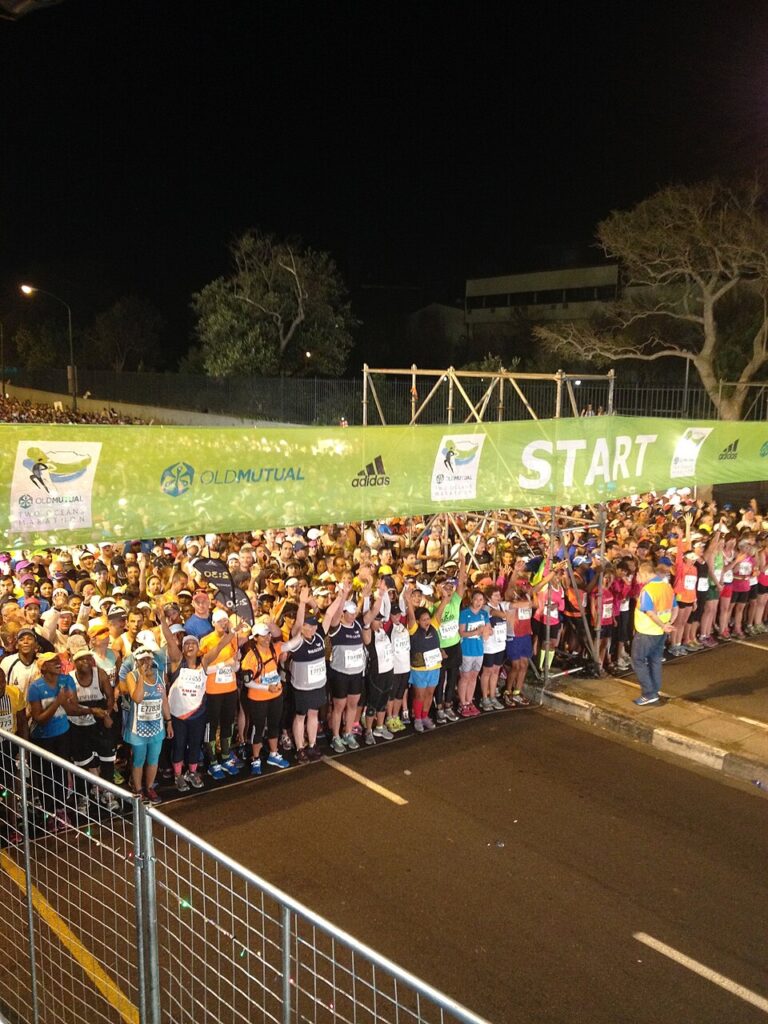
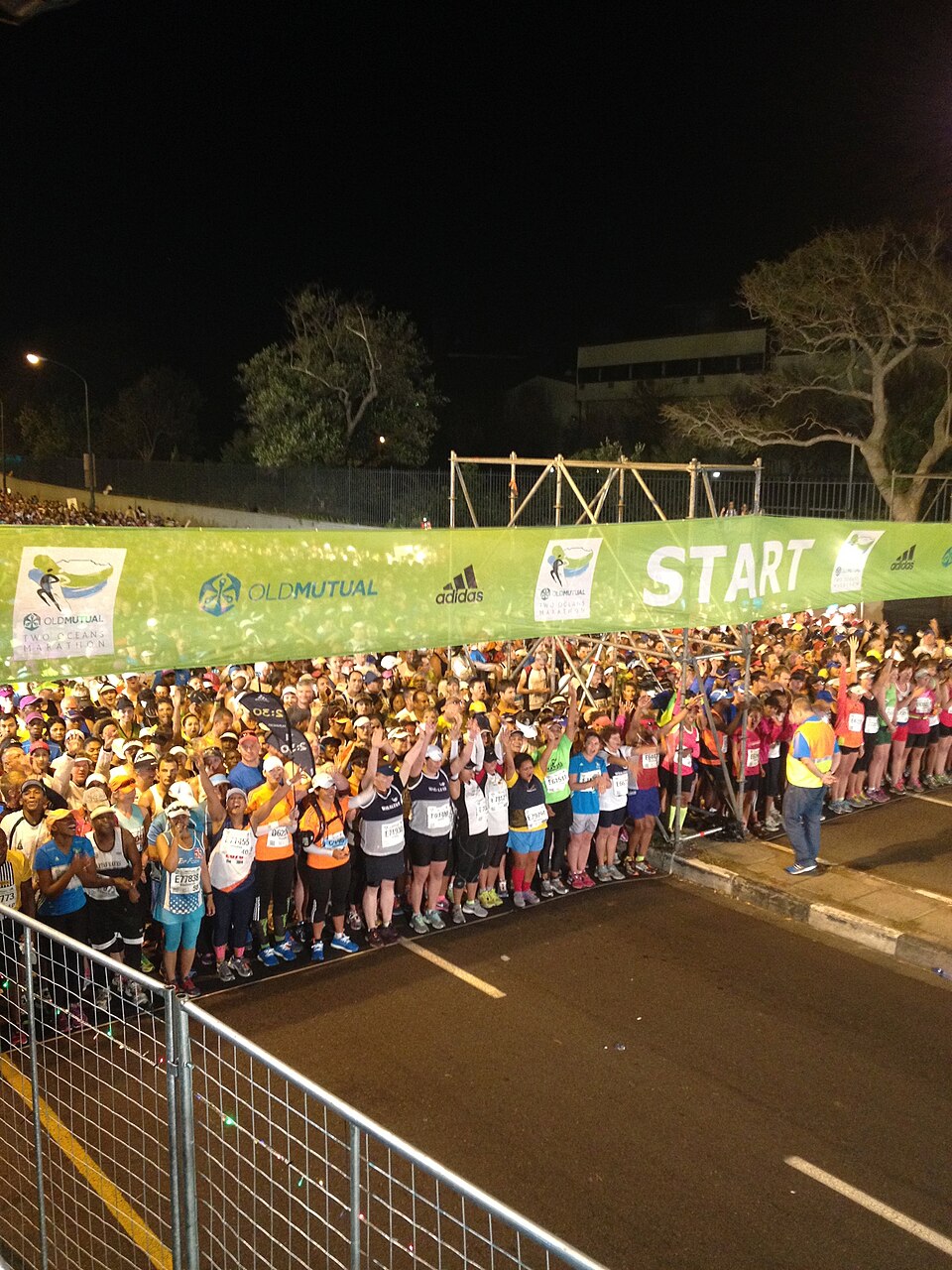
Two men have been disqualified from one of South Africa’s flagship marathon events after they finished in the top 10 of the women’s race at the Two Oceans Marathon in Cape Town on April 12, in a case that has exposed how the practice of bib-swapping — runners exchanging race numbers — continues to undermine the integrity of competitive athletics. Luke Jacobs and Nic Bradfield finished seventh and tenth respectively in the women’s half-marathon before their deception was uncovered, denying two legitimate female runners their places in the top 10.
The scheme unravelled when Two Oceans Marathon board member Stuart Mann noticed that race data from timing chips embedded in the bibs did not match the officials’ observations at the finish line. Upon investigation, it emerged that Jacobs had competed wearing a bib assigned to Larissa Parekh, who was registered to run in the women’s race. Bradfield ran under the number of Tegan Garvey, who later admitted to giving up her bib after suffering a hip injury in the days before the race. Both women face two-year bans from the Two Oceans Marathon for their role in facilitating the deception.
The case drew further attention when Jacobs posted photographs from the race on social media — images that showed him wearing a bib clearly marked with the name “Larissa.” The post was brought to Mann’s attention by race followers who noticed the discrepancy. Jacobs later issued a written apology, saying he had made an error in judgment and had not considered the consequences of his actions.
Bib-swapping is a persistent problem in road running that ranges from the relatively minor — runners交换号码以帮助受伤的朋友完成比赛 — to the deliberately manipulative. Mann warned that the practice carries serious risks beyond questions of fairness. “Not only is it considered unethical, but it also poses health and medical risks in case of an emergency, as wrong medication may be administered to a wrong person,” he said. For race medical teams responding to a collapsed runner, the information on a bib may be the only guide to a runner’s medical history and emergency contacts.
The Two Oceans Marathon, which includes a 56-kilometre ultramarathon and a 21.1-kilometre half-marathon, is one of South Africa’s oldest and most prestigious road races, attracting more than 16,000 participants annually. The event is named for its route, which passes along one of the world’s most spectacular coastlines where the Indian and Atlantic Oceans converge near Cape Point. The marathon holds a special place in South African sporting culture, and finishing in the top 10 — particularly for amateur runners — represents a significant personal achievement.
Sources: Al Jazeera (April 17, 2026), Africanews (April 14, 2026), Reuters Sports