Sisi and Sheikh Mohamed Meet in Cairo, Welcome Deal to End Iran War and Push for Arab Coordination
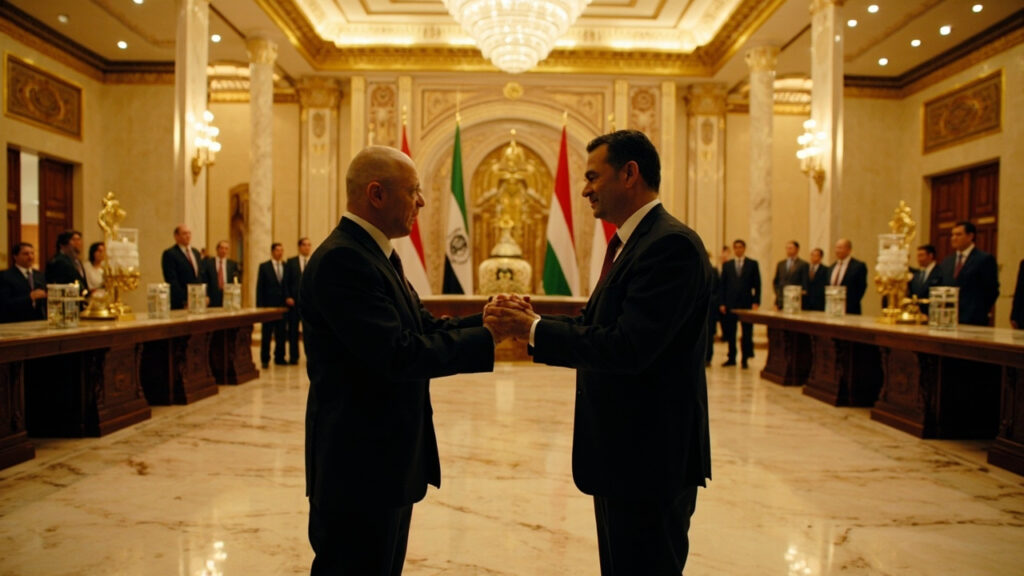
Egyptian President Abdel Fattah el-Sisi hosted his Emirati counterpart, President Sheikh Mohamed bin Zayed Al Nahyan, in Cairo on Monday, using the high-level meeting to welcome a newly brokered deal to end the war involving Iran and to call for tighter coordination among Arab states facing shared security challenges.
According to statements released by both governments, the two leaders reviewed bilateral relations and explored ways to deepen strategic cooperation in trade, investment, energy, and defense. They described the partnership between Cairo and Abu Dhabi as a cornerstone of regional stability, reaffirming a series of long-standing economic and security agreements that have tied the two Gulf-aligned capitals together for more than a decade.
Regional security and the Strait of Hormuz
A central focus of the talks was the recent end of hostilities involving Iran. Both presidents expressed support for the agreement and stressed the importance of reopening the Strait of Hormuz, one of the world’s most critical maritime chokepoints through which a significant share of global oil supplies transit. The closure or disruption of the strait during periods of tension has historically sent shockwaves through energy markets, and its restoration is seen as a key confidence-building measure.
A push for Arab coordination
Beyond the bilateral agenda, Sisi and Sheikh Mohamed used the Cairo summit to urge broader Arab coordination in responding to the region’s overlapping crises, from conflicts in the Levant and the Horn of Africa to economic pressures linked to global energy disruptions. Egyptian officials described the discussions as a continuation of efforts to position Cairo as a convening hub for Arab diplomacy at a time of heightened volatility in the Middle East.
Implications for the region
The joint endorsement of the Iran deal signals a coordinated posture from two of the Arab world’s most influential U.S.-aligned powers, both of whom have stakes in Gulf security and in stabilizing global energy flows. Analysts say the meeting reflects a growing willingness among Arab capitals to act in concert on diplomatic settlements, even as fault lines persist on other regional issues, including the conflicts in Sudan and Libya.
No joint communique on new initiatives was announced, but both governments indicated that follow-up consultations involving other Arab leaders are likely in the coming weeks as the region seeks to consolidate the gains from the end of the Iran war.
Source: Africanews — read the original report.