

Senegal’s State Oil Company Goes It Alone: Yakaar-Teranga Gas Field Now Entirely in Petrosen’s Hands
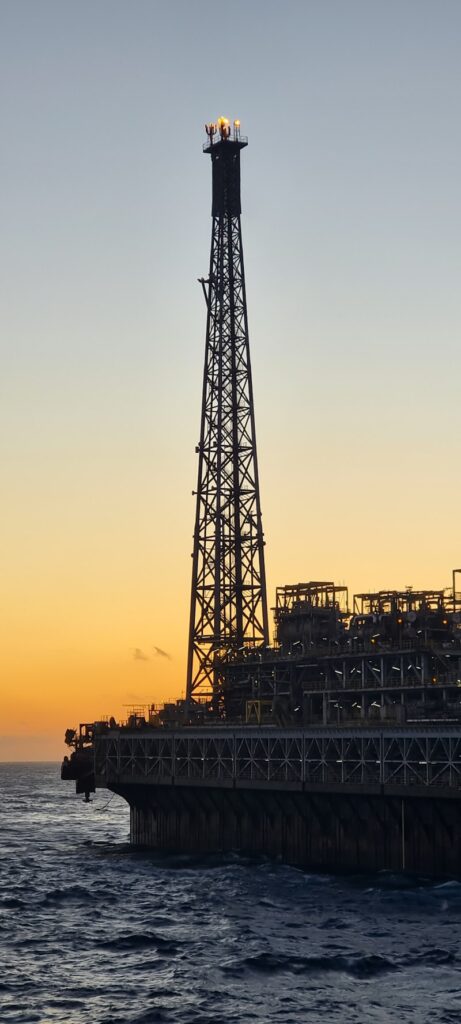
Dakar, Senegal — In what the Senegalese government is framing as a sovereignty victory, state oil company Petrosen has taken full control of the Yakaar-Teranga deepwater gas field after Kosmos Energy formally withdrew from the project last week. Prime Minister Ousmane Sonko celebrated the move on social media, calling it “a historic date for our country” and declaring that a new licence would be granted exclusively to Petrosen.
With recoverable reserves estimated at 20 to 25 trillion cubic feet, Yakaar-Teranga is among West Africa’s largest gas fields. But behind the nationalist rhetoric, the departure of Kosmos — following BP’s exit in 2023 — leaves Senegal with a $3 billion funding gap and a technical challenge few state companies have faced alone.
A Project Built on Partnership, Now Standing Solo
The Yakaar-Teranga licence was structured in 2016 under former President Macky Sall, with BP holding 60%, Kosmos 30%, and Petrosen just 10%. The arrangement gave international majors operational control while Petrosen played a minor role. When BP exited in 2023 — unable to reconcile its LNG export strategy with Dakar’s preference for domestic supply — Kosmos was left as the 90% majority partner and operator, a position it neither sought nor had the capacity to fill alone.
After failed attempts to find a replacement partner, Kosmos announced it would return the block to the Senegalese state, with the licence expiring in July 2026. The Pastef government, led by Sonko and President Bassirou Diomaye Faye, chose to let the withdrawal proceed rather than renegotiate, a decision Sonko called a “major victory for Senegalese sovereignty.”
The $3 Billion Question
Developing a deepwater gas field of this scale typically requires the financial muscle and technical expertise of an international major. Financial estimates for Yakaar-Teranga hover around $3bn — roughly 30% of Senegal’s national budget. Petrosen’s director general, Alioune Guèye, has said he is confident the funding can come from Senegalese sources, pointing to diaspora remittances of approximately $3.9bn in 2025. He also cited Petrosen’s involvement in the Grand Tortue Ahmeyim (GTA) and Sangomar projects as evidence of sufficient technical capability.
However, industry observers are sceptical. Deepwater development involves complex subsea infrastructure, offshore platforms, and pipeline networks — expertise that typically comes from oilfield service giants. “Petrosen is being asked to do something very few national oil companies have done successfully at this scale,” one energy analyst noted.
The government’s timeline for “first gas” by January 2029 also raises eyebrows. Comparable projects such as GTA have required five to seven years of development following a Final Investment Decision (FID). Petrosen has yet to announce a commercial development plan, and no international partner has been secured.
Investor Confidence at Stake
By presenting the Kosmos withdrawal as a sovereign win, the government has made itself politically accountable for a project that now lacks a partner, financing, or a clear economic model. This creates a signalling risk for international investors considering future energy projects in Senegal — particularly as the state simultaneously faces arbitration with Woodside Energy over fiscal terms at the Sangomar field at the World Bank’s ICSID.
“All our despoiled assets will be renegotiated and, if necessary, recovered,” Sonko promised. “Others will follow.” While popular with domestic audiences, such language may chill the very foreign investment Senegal needs to develop its gas resources sustainably.