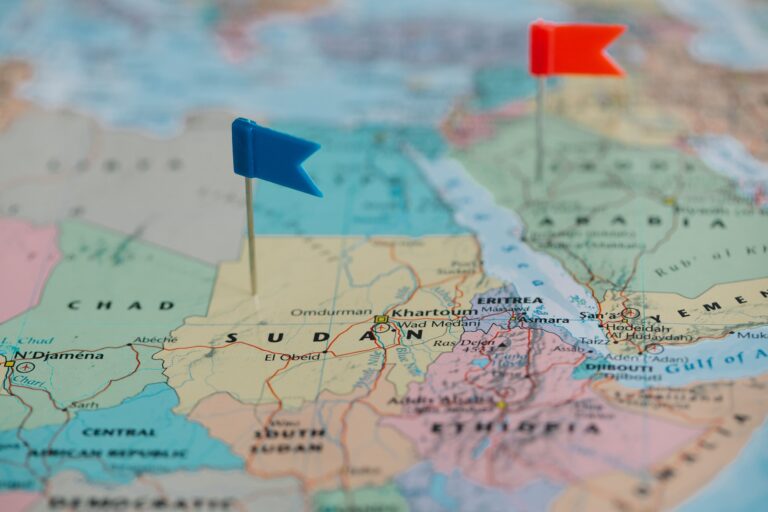
Sahel Security Landscape in 2026: How a Region Reconfigured Its Own Defence Architecture


Three years after a wave of coups across the Sahel redrew West Africa political map, the security architecture of the region has been fundamentally transformed — and not in the direction that Western governments, development partners, or even the United Nations had hoped.
By early 2026, the three nations that have defined the new order — Mali, Burkina Faso, and Niger, collectively known as the Alliance of Sahel States (AES) — are no longer fighting terrorist groups on terms set by external counterterrorism frameworks. They are rebuilding their entire defence posture around sovereignty, regional cooperation, and partnerships with Russia.
## The JNIM Threat Expands
The primary jihadi threat across the Sahel remains Jama at Nasr al-Islam wal Muslimin (JNIM), an al-Qaeda-affiliated umbrella group that operates across Mali, Burkina Faso, and Niger with increasing freedom. Islamic State in the Greater Sahara (ISGS) operates concurrently in the tri-border area where Mali, Niger, and Burkina Faso meet.
What has changed is the response. Mali and Burkina Faso military governments, which took power in successive coups between 2020 and 2023, have expelled French forces and rejected US military presence. They have invited Russian private military contractors — widely identified as linked to the Wagner Group — to assist with operations. The result has been a dramatic shift in the counterterrorism narrative: these governments now frame their fight as a sovereignty struggle against Western-backed regimes and the jihadist networks they accuse France of tolerating.
## New African-Owned Structures
In March 2026, thousands of soldiers from West African regional forces deployed under new multilateral arrangements — a response by ECOWAS (the Economic Community of West African States) to fill the vacuum left by the AES countries departure from the bloc security architecture. The deployment represents an attempt to maintain regional cohesion while acknowledging that the old frameworks no longer apply.
As one ECOWAS official acknowledged in a March interview: When the AES countries left, one of their criticisms was that ECOWAS did not support counterterrorism and was overly focused on politics and sovereignty optics over operational necessity.
## Beyond the Sahel: Mozambique and the DRC
The security crisis is not confined to the Sahel. In Mozambique, the Islamic State-linked group known as Al-Shabaab — unrelated to the Somali group of the same name — has held territory in the north since 2021, displacing more than a million people and devastating the Cabo Delgado region despite ongoing operations by Southern African development forces backed by the African Union.
In the Democratic Republic of Congo, the M23 rebel group — widely assessed to receive Rwandan support — continues to control swathes of territory in the east, in a conflict that has drawn in multiple regional armies and generated one of the world largest humanitarian crises.
## What Comes Next
The picture is bleak by conventional metrics: terrorist groups are active across a larger geographic area than at any point in the past decade, state control is weakening in multiple regions, and the international frameworks that once anchored counterterrorism efforts have fractured along geopolitical lines.
Yet analysts at the Africa Center for Strategic Studies note that heavy-handed tactics by security forces continue to drive recruitment for extremist groups, creating a self-reinforcing cycle of violence. The challenge in 2026 is not simply military: it is governance, community trust, and the capacity of fragile states to deliver basic services in regions where jihadists offer an alternative — however brutal — to dysfunctional government.
For millions of Africans in the Sahel, the Lake Chad Basin, Mozambique north, and the eastern DRC, the security map remains not a matter of academic concern but of daily survival.
More From Politics & Governance

At inaugural lecture, Prof Adeniyi calls for stronger digital governance amid technological shifts in migration
Nigeria’s economic reforms yielding gains, but poverty levels remain high – IMF