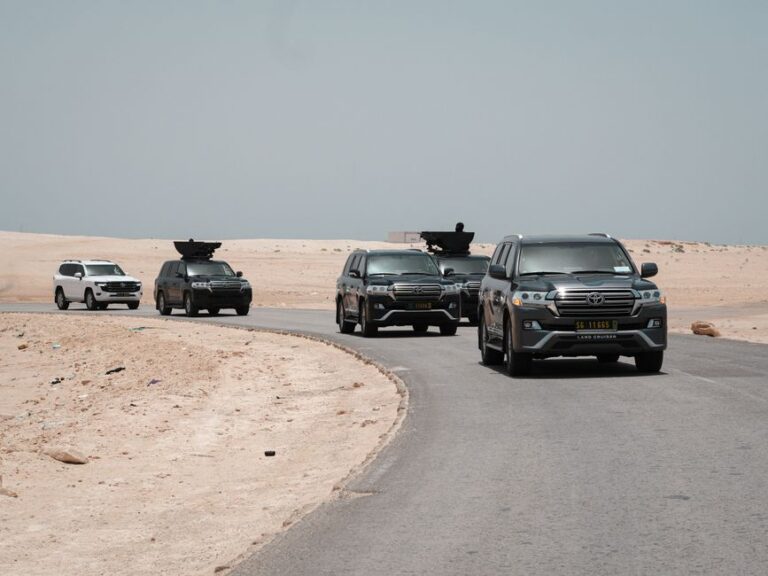
Sahel Nations Sound Alarm: Neighbours Accused of Sponsoring Terrorism at Senegal Security Forum

At a major security forum held in Diamniadio, Senegal, the foreign ministers of Niger and Mali delivered stark warnings about neighbouring countries they say are actively sponsoring terrorism against the Sahel region — deepening fractures in West Africa's political landscape and complicating efforts to combat a decade-long jihadist insurgency.
Malian Foreign Minister Abdoulaye Diop told Reuters that armed groups responsible for attacks inside Mali are being harboured, supported, and in some cases directly facilitated by foreign actors operating from neighbouring territory. He declined to name the specific countries, but pointed to what he described as a broader pattern of outside powers exploiting regional instability for strategic advantage.
A Region Fractured by War and Diplomacy
The accusations came during a high-profile gathering of regional security officials, where the tensions between the Alliance of Sahel States (AES) — consisting of Mali, Niger, and Burkina Faso — and the Economic Community of West African States (ECOWAS) were on full display. All three AES countries are led by military governments that seized power through coups and subsequently withdrew from ECOWAS to form their own alliance.
Niger's Foreign Minister Bakary Yaou Sangare was equally pointed in his remarks, accusing unnamed partners of simultaneously cooperating with Niamey on counterterrorism while actively undermining those efforts through funding and logistical support to insurgent groups. In pointed comments to Reuters, Sangare indicated he was referring in part to France, though the French foreign ministry declined to comment on the allegations.
The Shadow of Ukraine and External Powers
One of the most striking elements of the forum was Mali's formal accusation that Ukrainian military intelligence operatives had participated in attacks on Malian territory. The claim, which references statements made by a GUR spokesperson in 2024, has been denied by Kyiv, which says there is no evidence of Ukrainian involvement in northern Mali combat operations. The allegation has nevertheless strained Mali's already fractured relationship with Western nations and accelerated its pivot toward Russia for security cooperation.
Mali's Diop emphasised that external interference — whether from Western powers seeking to preserve influence or regional rivals pursuing strategic goals — is making counterterrorism operations significantly more difficult. "We cannot win this fight while some of our neighbours continue to host and arm the very groups we are fighting," he said.
ECOWAS Chair Appeals for Reconciliation
The current chairman of ECOWAS, Sierra Leonean President Julius Maada Bio, used the forum to urge the AES states to either re-engage with the regional bloc or at minimum establish constructive channels of cooperation on issues like free movement and trade. His appeal fell on resistant ears.
Diop was unambiguous: "Mali, Burkina Faso, and Niger have withdrawn from ECOWAS. The withdrawal is final." However, he left the door open for selective dialogue, noting that certain shared interests — particularly around commerce and movement of people — might benefit from limited cooperation without full reintegration.
The Human Cost of Regional Division
The political standoff has real consequences for ordinary citizens across the Sahel. Border closures imposed after the ECOWAS split disrupted trade routes and humanitarian supply chains. Military cooperation frameworks that once allowed for coordinated counterinsurgency operations across borders have been weakened or abandoned.
For populations caught in the crossfire of jihadist campaigns — which have killed hundreds of thousands and displaced millions across Mali, Niger, and Burkina Faso — the inability of regional powers to cooperate represents a dangerous vacuum. Community leaders at the forum warned that fragmentation of the counterterrorism architecture only benefits armed groups seeking to expand their territorial reach.
What Comes Next
The Senegal forum underscored the depth of distrust between the AES alliance and its neighbours, with no immediate path to reconciliation visible. Niger and Mali's accusations against neighbouring states risk further destabilising an already volatile region, where jihadist insurgencies continue to claim lives and displace communities on a weekly basis.
As the Sahel alliance deepens its relationship with Russia and other external powers, Western nations find themselves increasingly locked out of regional security arrangements they once helped shape. For the people living in the path of advancing militant groups, the geopolitical realignment offers little immediate relief.
Sources: Reuters (April 21, 2026), BBC Africa, Africanews
More From Conflict & Security
South Africa probes death of Nigerian man who collapsed during arrest
Arrest of Nigerian soldier over alleged links to criminals deepens scrutiny of military conduct