Russia Beefs Up Military Presence in Madagascar with Arms Deliveries and Africa Corps Training
\n
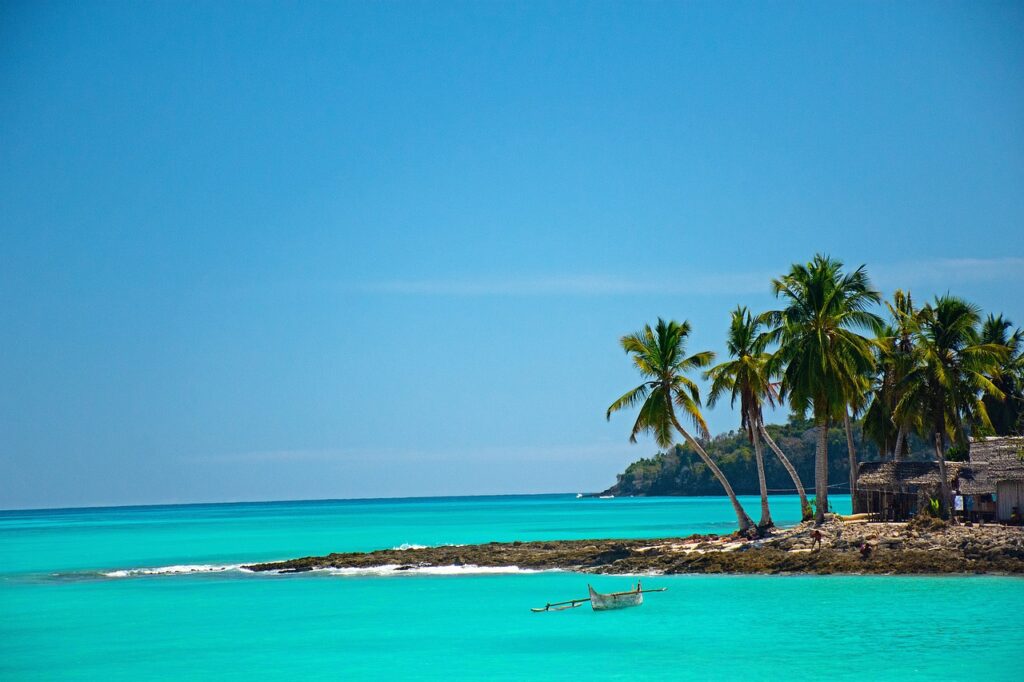
Since the October 2025 coup that brought a transitional president to power in Antananarivo, Madagascar has been drawing steadily deeper into Moscow\u2019s security orbit. Russian military equipment has flowed into the island at an unprecedented pace, and Russia Africa Corps \u2014 the rebranded successor to the Wagner mercenary network \u2014 has deployed instructors across the country. What began as post-coup instability management has become a full-scale military reorientation away from traditional Western partners.
\n\n
Arms Deliveries and Military Hardware
\n
Among the equipment delivered to Madagascar are BMP-3 infantry fighting vehicles, multiple drones, and a suite of armoured vehicles designed to enhance the capabilities of forces loyal to the transitional government. The deliveries, coordinated through Russian state agencies, also included Mi-8 transport helicopters and Kamaz military trucks \u2014 the kind of materiel that transforms a lightly equipped force into something capable of rapid deployment across a large and geographically challenging island. Russian defence officials have framed the cooperation as a sovereign partnership between equals, but the speed and scale of deliveries suggests something more strategic: Moscow is buying loyalty at the fringes of the Indian Ocean.
\n\n
Africa Corps Training Mission
\n
Alongside the hardware, Russia Africa Corps has deployed approximately 140 military instructors to train Malagasy soldiers. The training mission is concentrated in strategic locations, including sites near the capital, where the transitional president\u2019s security depends on forces that can be rapidly mobilised and loyal to his administration. Sources familiar with the arrangement say the instructors are involved not just in basic soldiering but in close protection details \u2014 that is, the personal security of the transitional president himself. Civil society organisations in Madagascar have denounced this development, warning that foreign military instructors embedded with a head of state\u2019s personal security detail is an arrangement that undermines national sovereignty and creates an unaccountable parallel command.
\n\n
Civil Society Opposition and the Opaque Cooperation
\n
Malagasy civil society has been vocal in its opposition to the deepening Russian security partnership. Activists point to the near-complete absence of transparency surrounding the agreements: there has been no parliamentary debate, no public disclosure of the terms of the military cooperation, and no independent oversight mechanism. The transitional government has rejected demands for details, framing the relationship as a sovereign matter that is not subject to public scrutiny during the transition period. Critics argue that this opacity is deliberate \u2014 it allows Moscow to expand its influence without generating the kind of public accountability that would expose the true cost of the arrangement.
\n\n
For Russia, Madagascar represents a strategically valuable foothold in the Indian Ocean \u2014 a region of growing importance for global trade and where Western influence has traditionally been limited. The partnership with Antananarivo gives Moscow a platform that could eventually support naval logistics, intelligence gathering, and diplomatic leverage in a neighbourhood where China, India, and the West all maintain interests. Whether Madagascans ultimately benefit from this alignment, or merely become another front in a great power competition they did not choose, is a question that the transitional government\u2019s silence makes impossible to answer \u2014 for now.
\n