
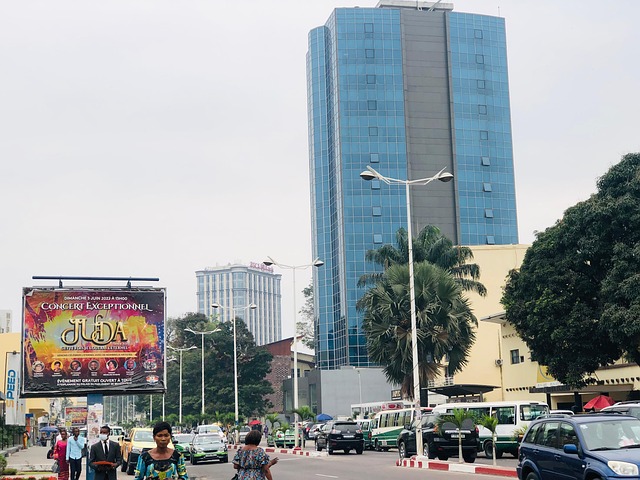
In a move that could reshape the narrative of continental integration, the Republic of Congo has announced it will abolish visa requirements for all African citizens entering its territory from January 1, 2027. The announcement, widely welcomed across the region, positions the Central African nation at the forefront of a quiet revolution in how Africans move between their own countries.
The decision was described by analysts as both a diplomatic signal and an economic calculation. Under President Denis Sassou Nguesso — who has led the country for decades, with a brief interruption in the 1990s — Congo has long been seen as a strategic player in Central African geopolitics. Opening borders to the continent fits a broader pattern of Congolese leadership seeking to position the country as a hub rather than a gate.
“This is the kind of concrete step that makes AfCFTA more than a document on a shelf,” said one regional economist, speaking on background. “When a country like Congo says every African is welcome without a visa, it sends a message that resonates far beyond its borders.”
What the Policy Actually Means
Unlike many African nations that offer visa-on-arrival or e-visa schemes targeting tourists or business travellers, Congo’s sweep is broader: it applies to all African citizens, for any purpose, for stays of up to the standard period permitted under Congolese law. The practical mechanics — whether border posts will require biometric data, whether length of stay will be monitored, and what documentation will be needed beyond a national passport — are still being worked out by the relevant ministries.
Regional observers note that the policy comes at a time when several West African states are moving in the opposite direction, tightening entry requirements or toughening rules around work permits in response to domestic political pressure. The contrast has not gone unnoticed.
Economic Implications for Congo and the Region
Congo’s economy has long been dependent on oil exports, a structure that successive governments have struggled to diversify. Opening borders to African travellers could give a boost to the services sector — hospitality, transport, retail — if the anticipated increase in cross-border movement translates into footfall in Brazzaville and Pointe-Noire.
The country’s geographic position is not without significance. Sitting astride the Congo River system and sharing maritime access through the Atlantic, Congo has historically served as a transit point for goods moving between the interior of Central Africa and the coast. Easier entry for African nationals could accelerate that role, attracting more business visitors, students, and professionals from neighbouring states.
Critics, however, point out that the policy’s success will depend heavily on implementation. “You can open every border you have, but if the infrastructure on the other side is broken — if immigration officers are underpaid and documentation is inconsistent — the reality will fall short of the announcement,” one trade analyst noted.
Broader Context: Africa’s Borders Problem
Africa has some of the world’s most restrictive intra-continental movement regimes relative to its level of economic integration. The African Continental Free Trade Area, which entered into force in 2019, was designed in part to address this, but progress on the ground has been uneven. Citizens of many African countries still require visas to enter neighbouring states, and the cost and complexity of obtaining those visas is a significant drag on trade, investment, and people-to-people links.
Congo’s announcement adds momentum to a trend that has seen a handful of nations — mostly small or medium-sized — take unilateral steps that effectively test the boundaries of continental integration on their own soil. Whether this latest move will inspire imitators or remain an outlier depends largely on whether the policy delivers visible benefits to the Congolese economy in the months after implementation.
The January 2027 start date gives Congo’s government roughly eight months to put the necessary administrative architecture in place. Officials say work is already underway at the ministries of interior and commerce to align the policy with existing immigration law.