Pope Leo XIV Draws Tens of Thousands to Angola Mass, Calls for Hope and Unity
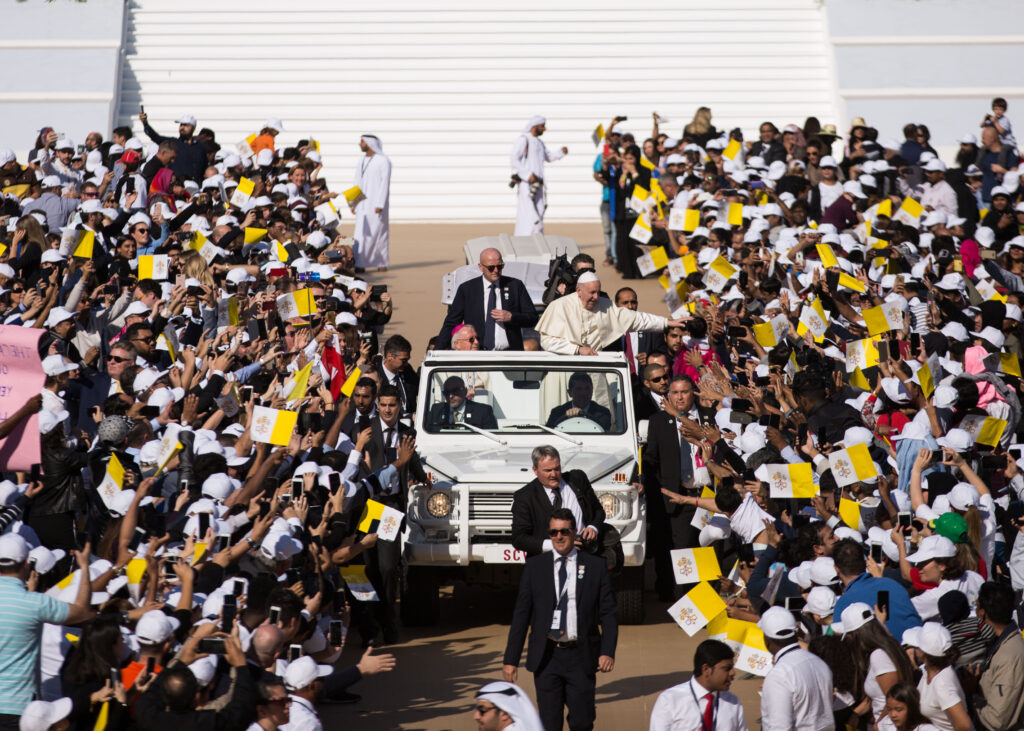
Luanda, Angola — In one of the most significant religious gatherings Africa has witnessed in years, Pope Leo XIV addressed tens of thousands of faithful in the town of Kilamba, on the outskirts of Angola’s capital Luanda, on Sunday, April 19, calling on the nation to build hope and move beyond the divisions left by a devastating civil war that ended only in 2002.
The open-air Mass, one of the largest in Angola’s modern history, drew crowds who arrived from the early morning hours, filling the dusty fields around Kilamba with a sea ofcolourful garments and waving Vatican flags. The image of the first United States-born pontiff presiding over a Mass in this southwestern African nation carried a political charge alongside its spiritual significance.
A Message Beyond the Pulpit
Speaking to the assembled faithful, Pope Leo did not hold back. He spoke of the enmity and division, squandered resources and poverty that Angola’s civil war had left in its wake, and urged the country to look to the future with hope. Today, there is a need to look to the future with hope and to build that hope. Do not be afraid to do so, he declared, to applause from the assembled congregation.
The pontiff’s message extended beyond spiritual guidance. At a meeting with Angolan officials, including President Joao Lourenço, Leo spoke out against the suffering and social and environmental disasters caused by the rampant exploitation of Angola’s natural resources — a theme he has returned to repeatedly during his 11-day African pilgrimage.
This was the third leg of Leo’s four-nation tour of Africa, which began in Algeria and Cameroon and is set to conclude in Equatorial Guinea. Throughout the trip, the Pope has delivered pointed warnings against corruption and the systematic plunder of the continent’s resources by foreign interests — rhetoric that has put him at odds with the administration of US President Donald Trump, who has called the Catholic leader weak and terrible for foreign policy.
Congregations of Hope
For many who attended the Mass, the pope’s visit represented something deeper than politics. The pope coming here is a joy, said Sister Christina Matende, who arrived at the site at around 6am local time. We are living in a moment of a lot of difficulties, and we are waiting for the blessing of the pope.
Catholic lawyer Domingos das Neves, speaking to journalists at the site, said the pope’s focus on social justice was welcome in a country still grappling with stark inequality. Angola is in great need of a guiding light to illuminate our collective efforts both within ecclesiastical institutions and the state, so that we do not forget the poor and the destitute, he told AFP.
A Tour Defined by Confrontation
Pope Leo’s African tour has been remarkable not just for its scale but for its political sharpness. He arrived in Angola having already made headlines in Cameroon, where he told a crowd of 120,000 at an open-air Mass near Douala that the continent was not for sale and that Africans must resist the handful of tyrants who exploit its people and resources.
He has called US President Donald Trump’s threat to end Iran’s civilisation unacceptable, and has refused to back down from speaking out against war even as the American leader has publicly attacked him. At the same time, the Pope has stressed that he has no interest in starting a new debate with the US president — preferring, instead, to let his words in Africa speak for themselves.
From Kilamba, the Pope was due to travel by helicopter to Muxima, Angola’s most venerated pilgrimage site, where a 300-year-old church overlooking a river that was once a major slave-trading route draws roughly two million pilgrims a year. He was then scheduled to travel more than 800 kilometres to Saurimo, in the east of the country, to celebrate another Mass at a retirement home before departing for Equatorial Guinea.
The visit leaves Angola with a clear message: the pontiff has come not merely to bless, but to challenge. And on the dusty fields of Kilamba, it was clear that many among the faithful were ready to receive both.
Reporting by AFP and Reuters