Nigeria’s Bloody Weekend: Military Airstrikes and Gang Violence Claim Around 100 Lives
Abuja, Nigeria — A single weekend in May 2026 has become one of the deadliest periods for civilians in Nigeria’s recent memory, with coordinated military strikes and attacks by armed gangs killing around 100 people across multiple regions. The violence, which unfolded from Saturday night through Sunday, has reignited fierce debate over the Nigerian military’s tactics in its ongoing campaign against banditry and insurgency in the country’s north-central states.
The worst-affected area was Niger State, where the Nigerian Air Force carried out multiple airstrikes the military said were targeting bandit hideouts. Local sources and witnesses reported that at least 70 suspected gang members were killed in the strikes — but that an undisclosed number of civilians in surrounding villages were also caught in the attacks. A separate incident in Zamfara State involving a ground engagement left a further 13 civilians dead, according to figures compiled by local officials and corroborated by international news agencies.
Double-Edged War
Nigeria has been fighting a multi-front battle against armed groups across its northern and north-central states for years. Bandit militias, some of them numbering hundreds of fighters and armed with sophisticated weapons, have terrorized villages, kidnapped students, and disrupted agriculture across a swathe of territory stretching from Sokoto to Kaduna to Niger State. The military’s response has relied heavily on air power — a tactic that critics say has repeatedly caused civilian casualties.
The pattern of accidental civilian deaths from airstrikes has become one of the most persistent human rights concerns in Nigeria. The Defence Headquarters have repeatedly insisted that strikes are conducted with precision and that civilian casualties are unfortunate collateral. But local community leaders, civil society organizations, and human rights groups have for years documented a gap between the military’s claims and what happens on the ground.
Human Rights Concerns
The weekend’s events follow a familiar script that rights groups say is now critically predictable. A military operation is announced. A civilian toll is reported. The military disputes the figures or says the targets were legitimate. The story fades from headlines. Then another operation, another toll, and the same sequence restarts.
“The problem is not that the military is lying about every strike,” said one analyst with close knowledge of defence policy in Abuja, who asked not to be named. “The problem is that there is almost never an independent investigation, almost never a public accounting, and almost never any consequence for units that repeatedly miss the mark.”
International human rights organizations have repeatedly called for the establishment of an independent investigative mechanism for civilian harm caused by Nigerian security forces — calls that successive governments have acknowledged but not acted upon.
A Widening Crisis
Beyond the immediate human cost, the violence raises deeper questions about the trajectory of Nigeria’s internal security. The gangs, many of which began as cattle rustling operations or local protection rackets, have evolved into organized criminal networks with territorial ambitions and connections to cross-border arms trafficking. The military, meanwhile, is stretched thin across multiple theatres — from the Boko Haram insurgency in the Northeast to oil theft operations in the Niger Delta.
For the communities caught between these forces, the choices remain brutally limited. Flee, hide, or hope that the next strike lands somewhere other than your village.
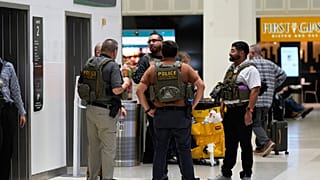
Image: Nigerian civic life and security context — Wikimedia Commons.
More From Conflict & Security
Renewed clashes in Ethiopia’s Tigray raise fears of fresh war in war-scarred region
Sudan’s El-Obeid under intensifying drone strikes as army and RSF clash over key city