70% of Namibians Priced Out: Inside the Housing Crisis That Has Become a Class War
In Namibia, owning a home has become an impossible dream for the majority of the population. A new report from the Bank of Namibia has laid bare the scale of the crisis: approximately 70% of Namibians cannot afford to purchase property at current market prices. The finding has reignited debate over the country colonial legacy, its land reform programme, and the systemic failures that have left hundreds of thousands without adequate shelter.
The report, presented during the bank annual monetary policy review, describes a country where the housing market has become essentially disconnected from the economic reality experienced by most Namibians. Property prices in Windhoek, the capital, have risen sharply over the past decade, driven by limited supply, speculative investment, and the concentration of land ownership in the hands of a small minority.
A Legacy of Land
Namibia housing crisis cannot be understood apart from its colonial history. Under South African rule, land was systematically allocated to white settlers, with the indigenous majority confined to densely populated communal areas and, later, to underdeveloped townships on the outskirts of urban centres. When Namibia gained independence in 1990, the new government inherited one of the most unequal landownership structures in the world.
More than three decades later, that structure has barely changed. Commercial farmland remains concentrated in the hands of a few thousand large landowners, most of them white Namibians or multinational companies. Urban land, too, has remained under the control of a small elite, with municipal authorities often unable or unwilling to expand affordable housing into new areas.
The result is a housing market that functions primarily for those who already have capital. For young Namibians entering the workforce, for families in lower-paid employment, and for the urban poor, there is simply no pathway to property ownership.
The Scale of the Problem
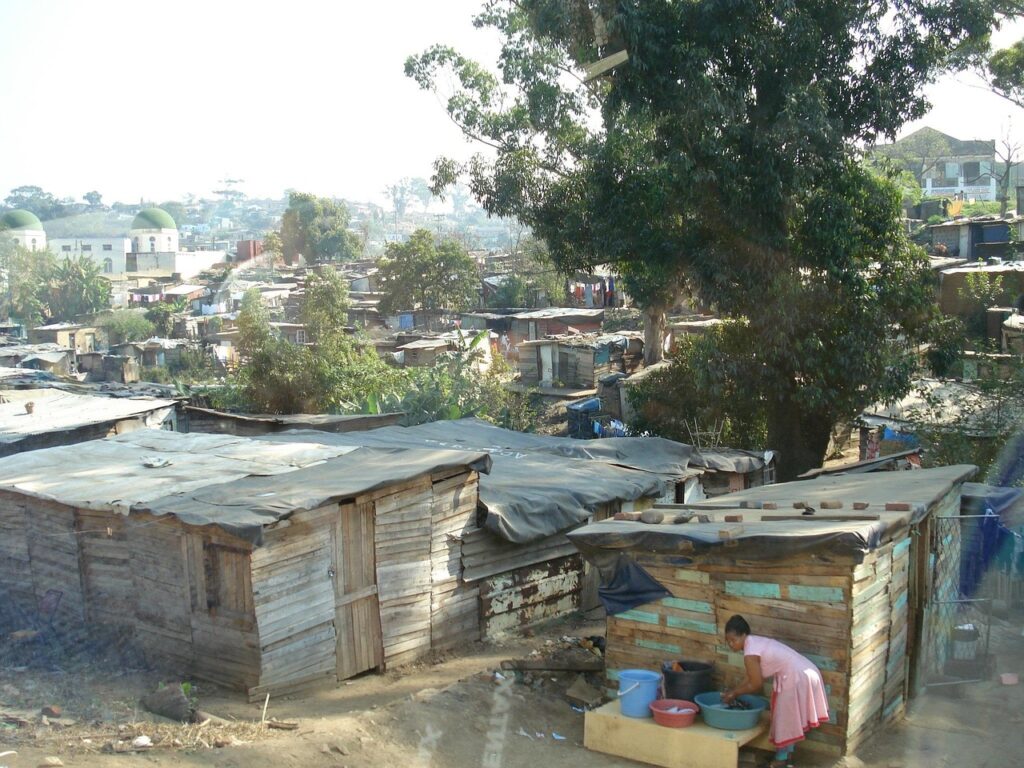
According to the Bank of Namibia, Namibia has a housing backlog of approximately 300,000 units. That figure represents families living in inadequate, overcrowded, or unsafe conditions — many in informal settlements that lack running water, electricity, or sanitation. The problem is most acute in Windhoek, where informal settlements have expanded rapidly as rural migrants arrive seeking economic opportunity.
The cost of renting in the formal market is itself prohibitive for many households. Data from the Namibia Statistics Agency shows that average rental costs in Windhoek consume between 40% and 60% of household income for low and middle-income earners, well above the internationally recommended threshold of 30%.
Even for those who can access mortgage financing, the terms are often prohibitive. Interest rates in Namibia remain high, and banks have strict lending criteria that exclude large portions of the population from formal credit.
Political Failures and Broken Promises
Namibia ruling SWAPO party has long promised land reform and housing delivery. Since independence, several programmes have been launched — including the Flexible Land Tenure Act and various mass housing initiatives — but delivery has consistently fallen far short of targets. Corruption, bureaucratic inefficiency, and a lack of technical capacity have undermined even well-intentioned schemes.
Land reform, in particular, has stalled. The proposed progressive land tax, which was meant to encourage underutilized commercial farmland onto the market, has never been implemented. The expropriation debate has proved politically toxic, frightening off potential investors while failing to deliver results for those waiting for land.
Opposition parties and civil society groups have been scathing in their criticism. The mayor of Windhoek, a former SWAPO member, has publicly acknowledged the scale of the failure, calling for a complete overhaul of the city housing policy.
The Path Forward
Economists and housing advocates have proposed a range of solutions, including the establishment of a national housing bank to provide low-cost financing, accelerated land release in urban areas, and a major expansion of social housing construction. There are also calls for the government to reform urban planning regulations that inflate the cost of development.
Some have pointed to South Africa social housing programme as a potential model. Others have called for a more radical approach — using emergency powers to expropriate underutilized land and convert it to affordable housing.
What is clear is that the current trajectory is unsustainable. Namibia population is growing, urbanizing, and becoming increasingly young. The gap between the housing that exists and the housing that is needed is widening every year.
For now, hundreds of thousands of Namibians wake each morning in conditions that fall far short of any reasonable standard of human dignity. The question is not whether the government should act, but whether it has the political will to do so before the crisis deepens further.