Madagascar’s Gen Z Activists Face Wave of Arrests, Raising Fears of Return to Authoritarianism

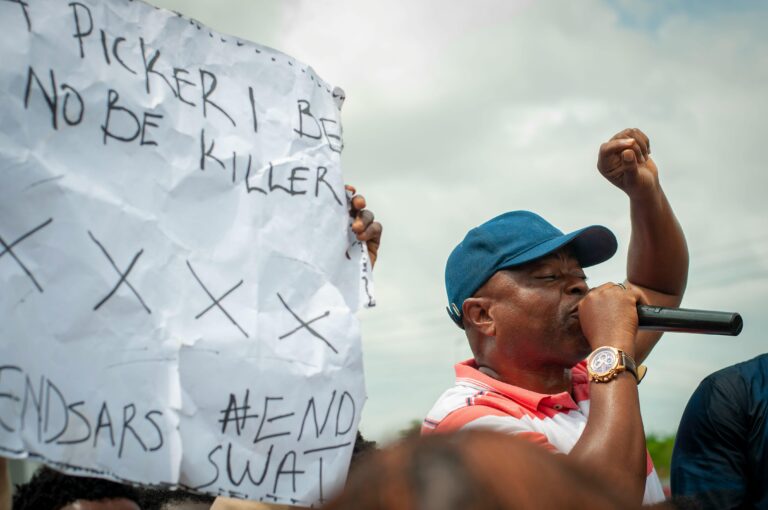
Just months after their celebrated role in toppling the government of former president Andry Rajoelina, young activists in Madagascar who helped orchestrate one of Africa’s most dramatic political transitions are now finding themselves on the wrong side of the law. Four Gen Z activists — Herizo Andriamanantena, Miora Rakotomalala, Dina Randrianarisoa, and Nomena Ratsihorimanana — were arrested on April 12 in the capital Antananarivo, just two days after taking part in a peaceful protest demanding that a date be set for elections. Their arrests have ignited fresh outrage both domestically and internationally, raising questions about whether the military-led transition that followed last October’s upheaval will ultimately prove any different from the government it replaced.
The activists, members of the previously leaderless Gen Z Madagascar movement that became a household name across the island nation, now face charges of undermining state security and criminal conspiracy. Their lawyer, Aliarovolo Maromanana, says all four deny the charges and that there is no evidence to support them. Two of the arrested activists were hospitalized after being released from custody, though conflicting accounts have emerged about the circumstances of their medical needs.
From Euphoria to Disillusionment
The mood among Madagascar’s youth has shifted dramatically since Colonel Michael Randrianirina came to power in a coup last October, following weeks of mass demonstrations organized under the Gen Z Madagascar banner. Initially, there was genuine optimism that the military officer who walked out of a television studio to announce he had seized control would chart a different course from the corrupt, France-aligned establishment that his predecessors had run.
That optimism has curdled into something closer to frustration and fear. Young people who were jubilant when Rajoelina fled now point to the new government’s appointment of officials they describe as part of the same old corrupt elite, a failure to deliver economic reforms, and a deepening relationship with Russia. The failure to improve basic public services — electricity and water supply remain unreliable for millions in the capital — has only deepened the sense of betrayal.
“For the moment, there’s no real reforms that have been implemented by the government. That’s maybe why everyone is so frustrated, because we don’t see anything clear and visible,” said Elliot Randriamandrato, a leader of one of the successor organizations to the original Gen Z Madagascar movement.
The Constitutional Question
While protests in April called specifically for an election date to be announced — the President has said votes will be held within two years of his takeover — activists say the more urgent issue is the drafting of a new constitution. That process, they argue, will determine the fundamental shape of Madagascar’s political system for years to come, and its methodology and timeline must be transparent and inclusive.
Among the reforms being demanded is a change to the electoral system, which critics say currently favors those with money and connections. Until the fundamental rules of the game are clarified, setting a single election date misses the point, according to Randriamandrato and others in the movement.
Russia’s Growing Presence
Beyond domestic politics, observers have noted the deepening ties between Madagascar’s new military leadership and Moscow. Colonel Randrianirina visited President Vladimir Putin in February, and since then, the regime has received donations of military hardware, including trucks, helicopters, and tanks. Russian advisors and security contractors are reportedly present in the presidential guard, a fact that the government’s spokesperson confirmed without elaborating on their role or number.
Young activists say they are deeply concerned about what they describe as the risk of new state capture by foreign powers. “We are very worried about the risk of new state capture from foreign countries,” said Shely Andriamihaja, another member of Gen Z Madagasikara, while taking care to note that this does not represent a defense of Madagascar’s former colonial ruler, France.
International Response
Amnesty International has called on the Malagasy authorities to immediately end what it describes as a crackdown on peaceful protest and the repression of young activists. The organization documented a pattern of arrests and intimidation that, it says, mirrors the tactics employed under the previous administration — exactly the behavior that many young people hoped the transition would bring to an end.
The arrests of last week have been described by Transparency International Madagascar’s board member Ketakandriana Rafitoson as representing “a pattern we saw under the previous administration and one that many hoped would be broken with the transition. So last Friday’s protests were a test for this regime and they failed it.”
As Madagascar navigates an uncertain political transition, the frustration of its youth — who were the authors of last year’s change — has become one of the most consequential forces in the country’s politics. Whether the regime that replaced the old one is willing to accommodate that frustration may determine whether the October 2025 events are remembered as the beginning of a genuine democratic opening or simply another chapter in the island’s long history of authoritarian governance dressed in different clothing.