Liberian Press Union Demands Proof Over Drug Trafficking Claims
The Press Union of Liberia (PUL) has issued a 72-hour ultimatum to the administration of President Joseph Boakai, demanding that it publicly substantiate allegations that drug trafficking organisations have infiltrated sections of the Liberian media. According to AllAfrica, the ultimatum reflects a deepening standoff between Liberia’s press establishment and its national security agencies.
The dispute, as reported by the Liberian Observer and distributed through AllAfrica, centres on claims linking drug trafficking networks to coverage of what officials have characterised as the country’s largest-ever cocaine investigation. The PUL has rejected the allegations outright and is pressing the government to either provide evidence or retract the claims within the three-day window.
Background to the dispute
Liberia, a West African nation of roughly five million people, has long faced scrutiny over its role as a transit hub for narcotics moving between South America and Europe. The country’s Atlantic coastline, porous borders and still-recovering post-conflict institutions have made it a recurring focus of international anti-trafficking efforts. Successive governments have pledged to strengthen counter-narcotics operations, and seizures of large cocaine consignments in recent years have drawn both praise and questions about the scale of the underlying trade.
The current confrontation comes amid heightened activity in Liberia’s counter-narcotics operations. Authorities have publicly described recent investigations as the most significant in the country’s history, a characterisation that has attracted considerable media attention — and, the Boakai administration now alleges, unwanted outside influence.
Press freedom at stake
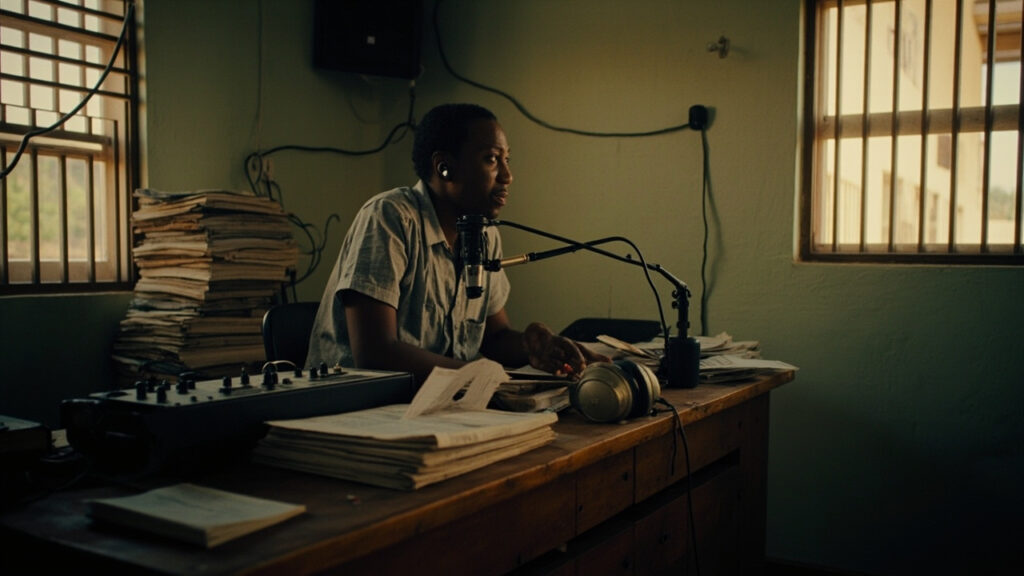
The Press Union of Liberia, founded in 1964, is the country’s principal professional body for journalists and has historically defended editorial independence against state pressure. Its decision to set a public deadline for the government reflects concern that unsubstantiated accusations of collusion with drug traffickers could endanger reporters, damage newsroom reputations and chill coverage of sensitive security matters.
The Liberian media landscape includes dozens of newspapers, community radio stations and online outlets operating in a legal environment that formally guarantees press freedom. Journalists and civil society groups have, however, periodically raised concerns about harassment, access to information and the use of national security arguments to restrict scrutiny of official conduct.
What happens next
Under the terms of the ultimatum, the PUL has warned that it will publicly denounce any failure by the administration to produce supporting evidence within the 72-hour window. It remains unclear what specific form the union’s response would take, or whether the government intends to engage directly with the demands. The Liberian Observer, reporting through AllAfrica, indicated that both sides were digging in as the deadline approached.
The episode underscores the fragile balance Liberia continues to navigate between strengthening its counter-narcotics capacity and protecting the press freedoms enshrined in its post-war constitutional order. With the ultimatum now running, the Boakai administration faces a choice between producing documented evidence and walking back one of the more serious allegations it has levelled at the country’s journalists in recent memory.
Sources
This report was written from coverage published by the following news organisations. Follow the links for the original reporting.
- AllAfrica — Liberia: PUL Demands Proof Over Drug Claims