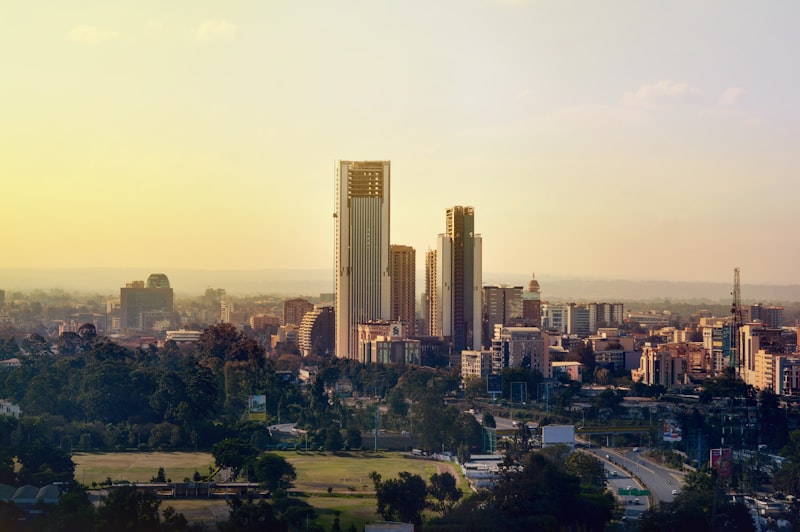
French President Emmanuel Macron concluded a landmark two-day Africa Forward summit in Nairobi this week, unveiling a sweeping €23 billion investment commitment aimed at transforming France’s economic engagement with the African continent.
The announcement marks one of the largest single-country investment pledges to Africa in recent memory and signals a deliberate push by Paris to reclaim influence lost to China and other global powers over the past decade.
The package, split between €14 billion in French public and private funds and €9 billion sourced from African investors themselves, targets four strategic sectors: energy transition, digital infrastructure and artificial intelligence, maritime economy, and agriculture. Macron emphasized that the funds are designed not merely as aid but as genuine co-investment, with African business leaders explicitly invited to put capital to work inside France as well.
“We are not simply here to come and invest on the African continent alongside you—we need the great African business leaders to come and invest in France,” Macron told delegates at Nairobi’s convention centre. “And that too is what underpins this relationship, now entirely free of hang-ups.”
A Strategic Rivalry With Beijing in Mind
The timing of the summit was hardly coincidental. With China having cemented itself as Africa’s largest bilateral creditor and the United States pursuing an unpredictable transactional approach under the Trump administration, Macron positioned Europe—and France in particular—as the reliable alternative for nations seeking partners that respect sovereignty and multilateral rules.
“Europe defends the international order, effective multilateralism, the rule of law, free and open trade,” Macron told The Africa Report ahead of the summit. He was particularly pointed in his critique of Beijing’s approach to critical minerals and rare earths, accusing China of operating “according to a predatory logic: it does the processing at home” and creating dependencies across the developing world.
A New Chapter in Franco-African Relations
The Africa Forward summit follows years of strained ties between France and its former colonies, particularly in West Africa’s Sahel region, where military coups forced the withdrawal of French troops and diplomatic missions. Macron defended that withdrawal as logical rather than humiliating, and expressed optimism about the region’s democratic future.
“When our presence was no longer wanted after the coups, we left,” he said. “The Sahel will one day regain normal governance with democratically elected leaders who genuinely care about their people.”
Beyond economics, Macron also addressed the cultural dimension of the relationship. He noted that the process of returning African artworks looted during the colonial era had become “unstoppable,” referencing the French parliament’s recent passage of a landmark law paving the way for the restitution of cultural artefacts to sub-Saharan African nations.
Economic Transformation Over Aid
The investments announced are projected to create approximately 250,000 direct jobs across both Africa and France, though experts caution that job creation figures from summits like these often prove optimistic in the short term. The real substance of the deal lies in its structural implications: by inviting African capital into French markets, Macron is essentially asking African governments and private investors to diversify their reserves away from exclusive reliance on Beijing or Western development banks.
Several African heads of state attended the summit, lending credibility to the initiative at a time when the continent collectively carries over $700 billion in external debt. Kenyan President William Ruto, who hosted the event alongside Macron, framed the summit as a turning point in how Africa engages with its traditional partners.
“For too long, the narrative around Africa has been that of a charity case,” Ruto said in his opening remarks. “This summit rewrites that narrative. We are here as architects of a new economic order, not recipients of charity.”
Looking Ahead
While the €23 billion figure is headlining the summit, questions remain about implementation timelines, conditionality attached to the funds, and how the initiative will interact with existing frameworks like the African Continental Free Trade Area and the African Union’s Agenda 2063. French private sector participation will be coordinated through institutions including Agence Française de Développement and Bpifrance, while African sovereign wealth funds and development finance institutions are expected to contribute the €9 billion African portion.
The Africa Forward summit is planned as an annual event, with the next edition expected in Morocco in 2027. Whether the momentum generated in Nairobi translates into concrete project pipelines will be the defining test of Macron’s renewed bet on Africa’s future.