DRC’s Cobalt Gambit: Can the World’s Poorest Nation Move a Market It Cannot Fully Control?
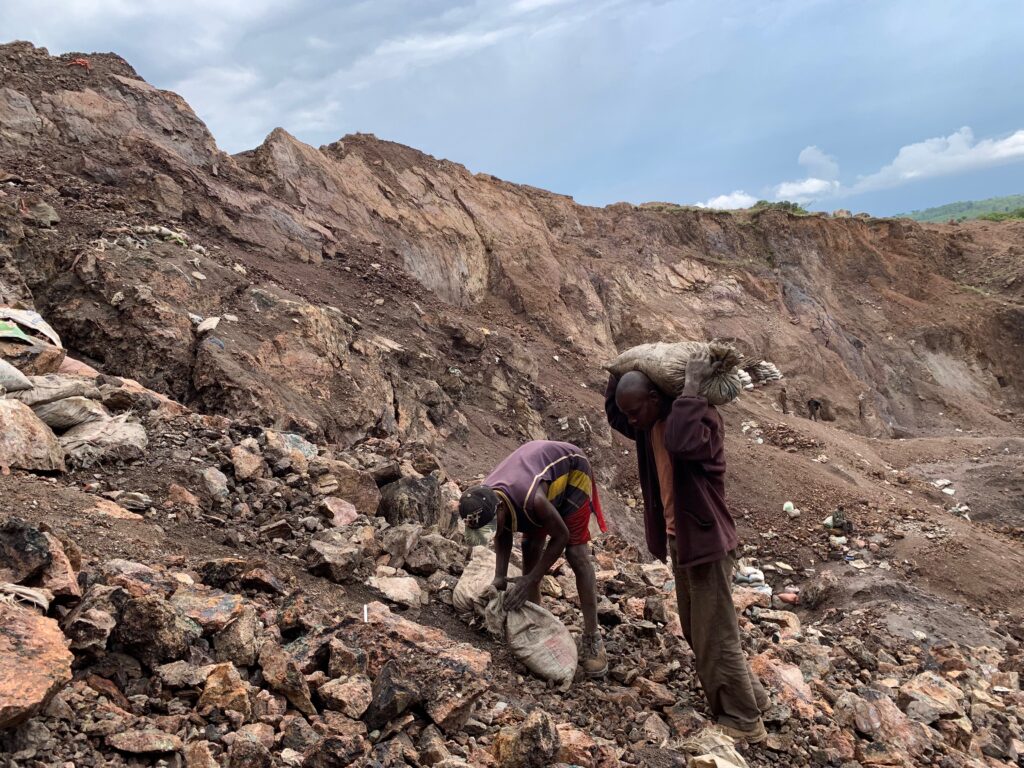
The Democratic Republic of Congo sits on roughly 70 percent of the world’s known cobalt reserves — a metal so essential to the lithium-ion batteries that power electric vehicles, smartphones, and the broader green energy transition that the country’s output alone can shift global supply dynamics. It is a resource that should, by any rational calculation, make Congo wealthy. Instead, it has for generations made Congolese communities poorer, fueling conflict, exploitation, and environmental destruction even as the global market for cobalt has grown exponentially.
In April 2026, the DRC government made a move that reveals both the ambition and the limitations of Africa’s most resource-rich nation: it announced plans to build a strategic cobalt reserve — a physical stockpile designed to give Kinshasa leverage over the global cobalt price and, by extension, over the manufacturers and governments that depend on Congolese cobalt for their clean energy ambitions.
The Strategic Reserve Gambit
The plan, announced by the Ministry of Mines in Kinshasa, would see the DRC begin purchasing and stockpiling cobalt from domestic producers — both industrial mines and artisanal miners — creating a government-controlled reserve that could be released or withheld from global markets to influence price movements. The stated goal is to give the DRC what major oil-producing nations have long had with petroleum: the ability to use resource control as an economic and political tool.
The announcement sent a brief tremor through commodity markets, with cobalt spot prices rising 3.4 percent before settling as traders assessed the practicalities. The consensus among analysts was skepticism: Congo has attempted some version of this strategy before, and the structural challenges — weak infrastructure, fragmented governance, the sheer scale of artisanal production outside any official tracking system — have consistently undermined state efforts to act as a market arbiter.
The Artisanal Problem
DRC’s cobalt sector is split between industrial mining operations — run by companies like Glencore, CMOC, and Vale — and a vast informal artisanal sector that employs an estimated 200,000 to 300,000 workers, many of them children, laboring in primitive conditions to extract cobalt by hand. The industrial sector produces roughly 80 percent of DRC’s cobalt output; the artisanal sector, 20 percent — but the artisanal sector operates almost entirely outside government oversight or control.
Any strategic reserve scheme that does not account for the informal sector — and the incentives that drive miners to sell to traders who pay cash immediately — will at best capture a fraction of actual production. Critics argue that without structural reform of the artisanal sector and genuine community benefit-sharing, the reserve will function as a geopolitical signalling mechanism with limited real impact on market dynamics.
Can Congo Move a Market or Not?
The honest answer, commodity analysts say, is: partially, and inconsistently. The DRC is dominant in cobalt supply — but it is not oil. Global cobalt demand, while growing, is more price-elastic than petroleum: battery manufacturers have active research programmes to reduce cobalt content in batteries precisely because of supply concentration risk. The more Congo acts like a cartel, the faster the market responds with substitution. The DRC cannot sustainably behave like OPEC — because its product, unlike oil, has viable substitutes that are improving year on year.
What the strategic reserve announcement does accomplish is political signaling. It tells the world — particularly the electric vehicle manufacturers and Western governments that have pledged to transition away from fossil fuels — that Congo knows its leverage and intends to use it. Whether that translates into better prices for Congolese miners, more processing infrastructure in Kinshasa, or meaningful development outcomes for the communities who dig the cobalt out of the ground remains entirely unclear.
The Bottom Line
The DRC’s cobalt reserve plan is ambitious. It reflects a genuine desire, articulated by President Félix Tshisekedi and his government, to move beyond being a passive extractive economy and toward something more like resource sovereignty. The gap between ambition and execution, however, has historically been enormous in Congo — and the structural obstacles to this particular plan are as formidable as any in commodity markets.
What is not in doubt is the urgency. For the hundreds of thousands of Congolese who work in cobalt mines — some in conditions that humanitarian organizations have compared to indentured labor — the question is not whether Congo can move a global market. The question is whether anyone in Kinshasa is asking what happens to them while the strategists play their games with futures and reserves.