
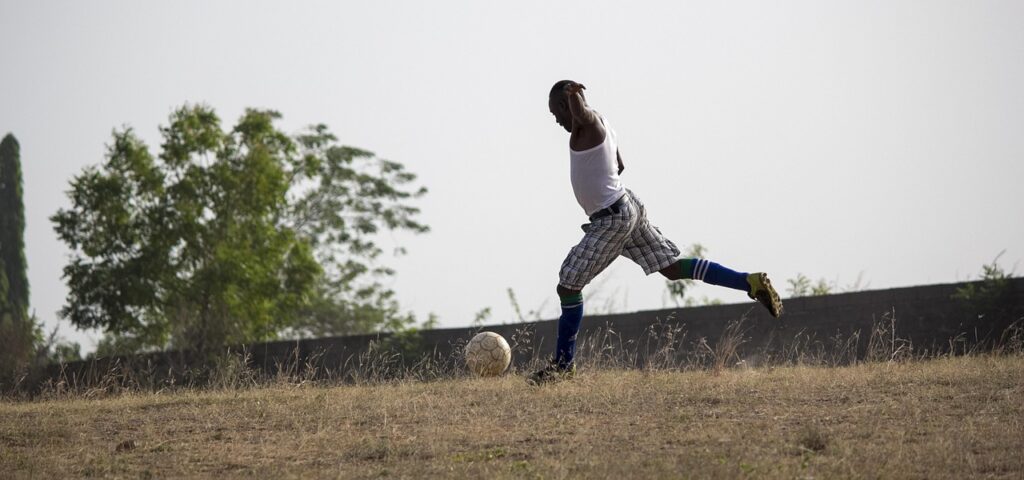
The Democratic Republic of Congo’s national football team has been forced to cancel its pre-World Cup training camp in Kinshasa after an Ebola outbreak in the country’s east made international sporting logistics untenable, in the latest illustration of how the ongoing public health emergency is disrupting life well beyond the health sector alone. The national team, the Leopards, were due to begin preparations for their opening game at the 2026 FIFA World Cup — set to be co-hosted across the United States, Canada and Mexico — but the outbreak has turned standard tournament preparation into a logistical nightmare.
DR Congo are scheduled to play their first World Cup match against Portugal on June 17 in Houston, Texas. United States health authorities, acting under protocols established following the outbreak’s designation as a public health emergency of international concern, have required the entire DR Congo squad and delegation to undergo a period of isolation before they can be permitted entry into the country. The requirement, though standard in principle, has created administrative and sporting complications that the Congolese Football Federation is still working to resolve.
The US Centers for Disease Control and Prevention issued guidance requiring the isolation period after the World Health Organisation elevated its assessment of the outbreak’s risks. Under the rules, all members of the delegation — players, coaching staff, federation officials, and support personnel — must be symptom-free for a minimum period before departure and must present negative test results. Given that several players were drawn from clubs in provinces adjacent to the outbreak zone, the federation initially struggled to guarantee that all squad members had no exposure history.
The World Cup build-up had already been a source of tension for African teams whose preparation has been complicated by the continent’s various ongoing crises. Scheduling conflicts between national federation obligations, club fixtures, and international travel requirements are normal in any World Cup cycle, but the Ebola variables have added layers of complexity that no playbook adequately covers. Team managers have had to coordinate with club doctors across multiple countries to compile exposure histories for each player, a process that proved particularly difficult for those playing in lower-profile domestic leagues.
DR Congo’s World Cup qualification itself was a source of pride for a nation that has produced extraordinary footballing talent but has historically underperformed on the biggest continental stage. The squad includes several players from top European clubs, and expectations heading into the tournament had been rising steadily following a promising qualifying campaign. The isolation requirement means that whatever preparation the team does manage will be compressed and conducted under conditions that are far from ideal for peak athletic performance.
The broader question raised by the episode is how the sporting calendar — and international events more broadly — will accommodate the reality of a recurring Ebola threat in a region where the infrastructure to respond quickly is chronically under-resourced. The World Cup happens once every four years. An Ebola outbreak in eastern Congo is, tragically, a recurring feature of life. The intersection of those two realities is exposing fault lines in how international sporting bodies and public health authorities coordinate on travel and event protocols that were not designed with today’s outbreak patterns in mind.
For Congolese football fans, the frustration is acute. A nation that has waited years for a World Cup appearance now faces the prospect of its team arriving fatigued, underprepared, and through no fault of its own, under a shadow of health-related suspicion that the players themselves did nothing to invite. The Leopards will play. Whether they can compete at their best is a question that extends well beyond the training ground.