
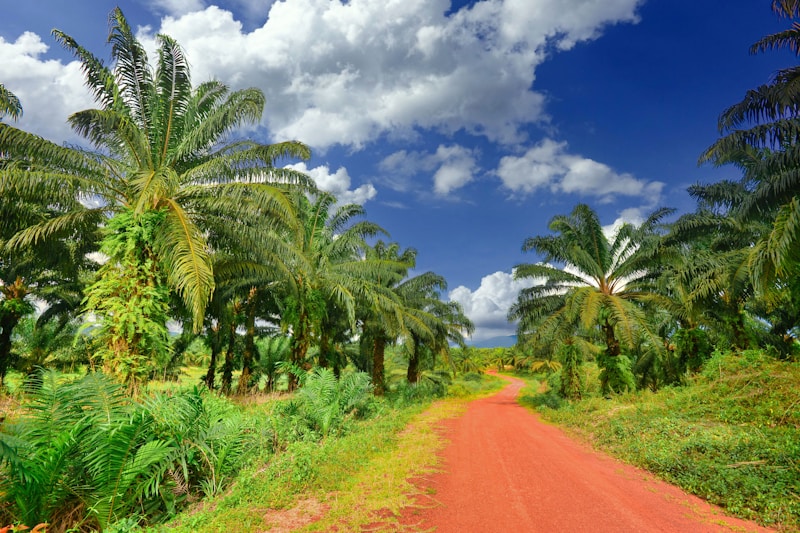
Africa is on the cusp of a major decision about its agricultural future. As global demand for palm oil continues to rise — driven by food, cosmetics, and biofuel industries — several African governments are eyeing expansion of palm oil production as a pathway to economic growth and food security. But the continent stands at a crossroads: will it replicate Asia’s model of industrial plantation expansion, or forge a different path?
The Appeal of Palm Oil
Palm oil is the world’s most consumed vegetable oil, present in roughly half of all supermarket products. It is also extraordinarily efficient: oil palm yields far more oil per hectare than any other oilseed crop, making it economically attractive for countries with limited arable land. For Africa, which has vast areas of suitable land in Central and West Africa, the logic seems compelling.
Countries including Nigeria, Ghana, Côte d’Ivoire, and the Democratic Republic of Congo have all signaled intentions to expand palm oil cultivation. Indonesia and Malaysia — which together account for around 85% of global production — have shown what is possible. They have also shown the costs.
The Asian Experience: Lessons Not to Repeat
The environmental track record of Southeast Asia’s palm oil boom is deeply troubling. Vast tracts of tropical rainforest were cleared to make way for plantations, destroying biodiversity, displacing indigenous communities, and contributing significantly to carbon emissions. The social costs included land conflicts, labor exploitation, and the marginalization of smallholder farmers who were pushed off their land to make room for agribusiness.
For Africa, the question is whether there is a way to scale palm oil production without repeating these mistakes.
The Case for a Different Model
Some experts argue there is. Africa’s palm oil production has historically been dominated by smallholder farmers, not industrial plantations. This presents an opportunity: rather than consolidating land into large estates, governments could invest in improving yields on existing smallholder plots, investing in replanting with higher-yielding varieties, and building processing infrastructure that keeps more value within local communities.
Such an approach would require coordinated public investment, better access to finance for smallholders, and stronger land tenure protections. It would also require learning from agroecological best practices rather than simply adopting the industrial plantation model wholesale.
A Defining Moment
What Africa does with its palm oil potential will matter far beyond the continent. Global demand is set to grow, and if African production follows the high-deforestation path, the environmental consequences could be severe. But if the continent can build a more equitable and sustainable model, it could set a new standard for agricultural development.