
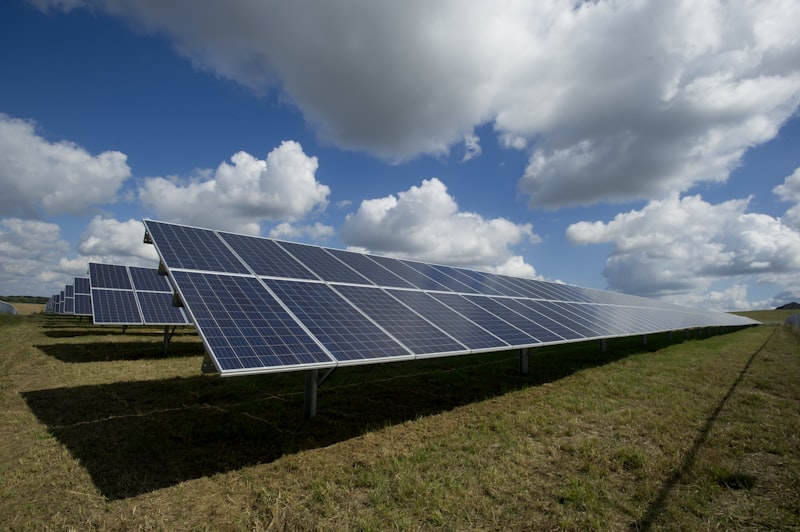
For years, the dominant narrative about Africa’s energy future was that the continent would remain a passive consumer of technology manufactured elsewhere, importing solar panels the way it imports cars or smartphones — a dependency that reinforced rather than reduced its vulnerability to global market shifts.
That narrative is increasingly outdated. Across multiple countries, African entrepreneurs, governments, and development finance institutions are building the foundational infrastructure of a domestic solar value chain, from polysilicon processing and panel assembly to installation, maintenance, and end-of-life recycling.
The numbers tell a compelling story. Africa receives between 2,000 and 3,000 kilowatt-hours of solar irradiance per square metre per year across most of its landmass — among the highest on the planet. Yet as recently as 2022, the continent accounted for less than 2% of global solar photovoltaic manufacturing capacity. That gap between potential and production has attracted the attention of both international investors and African policymakers who see an opportunity to move up the value chain rather than simply importing finished products.
Record Capacity Growth in 2025–2026
Africa added a record 8.2 gigawatts of new solar generating capacity in 2025, according to the African Energy Chamber’s State of African Energy 2026 report. That figure represents a 34% increase over the previous year, driven primarily by South Africa, Egypt, Kenya, Ethiopia, and Nigeria — the continent’s five largest solar markets by installed capacity.
The growth has been financed through a combination of auction-based competitive procurement, which has driven down tariffs dramatically, and international climate finance channelled through the African Development Bank, the World Bank, and bilateral partners. South Africa’s Renewable Energy Independent Power Producer Procurement Programme has delivered some of the world’s most competitive solar tariffs — under $0.03 per kilowatt-hour in the most recent bidding round.
What is new and different in this cycle is the manufacturing dimension. Ghana, Kenya, and Nigeria have all announced or broken ground on solar panel assembly facilities in the past eighteen months, drawing on both foreign direct investment from Chinese and European renewable technology companies and domestic capital. The African Continental Free Trade Area agreement, by reducing tariffs on manufactured goods across member states, has created an incentive for regionally scaled production rather than country-by-country import dependency.
The Solar Equipment Import Surge
A striking data point from the International Energy Agency’s 2026 Africa Energy Outlook: in 2025, Africa imported 60% more solar panels than in the previous year — a surge that reflects both rapid capacity addition and the fact that domestic manufacturing, while growing, has not yet reached the scale needed to meet demand. The same report notes, however, that panel prices have fallen by nearly 40% since their 2022 peak, making large-scale deployment economically viable in markets that previously could not afford it.
The price decline has been especially consequential for off-grid solar applications, where individual households or small businesses install rooftop systems independent of national grids. Companies operating in this space — including M-KOPA in Kenya, Greenlight Planet in Nigeria, and Azuri Technologies — have reported accelerating adoption rates as upfront costs have fallen and PAYG (pay-as-you-go) financing models have matured.
Challenges on the Path to Scaling
The progress is real, but so are the obstacles. Much of Africa’s solar equipment remains imported, meaning the continent is still exposed to currency risk, shipping cost volatility, and geopolitical disruptions to global supply chains. Panel efficiency standards vary widely across African markets, creating confusion for consumers and opportunities for substandard products to enter the market.
Grid integration remains a critical bottleneck. Several African countries, including Nigeria and Kenya, have experienced curtailment — situations where solar power that could be generated cannot be absorbed by national grids that lack the flexibility or transmission capacity to accommodate it. Battery storage deployment, which would solve this problem by allowing solar energy to be dispatched on demand, has been held back by cost and limited manufacturing capacity.
Perhaps most critically, the talent pipeline for solar engineering, installation, and maintenance remains thin in many countries. Skills shortages constrain the speed at which new capacity can be commissioned and increase the cost of operations and maintenance for existing installations.
What the Rest of the World Is Doing With Africa’s Opportunity
It is not only African actors who see the solar value chain as the next major industrial frontier for the continent. The European Union’s Global Gateway strategy has channelled significant financing into African renewable energy infrastructure, including a €300 million facility for solar manufacturing in North Africa intended to serve both African and European markets.
China’s role in Africa’s solar expansion is complex. Chinese manufacturers supply the vast majority of solar panels imported into Africa, and Chinese engineering and construction firms dominate the EPC market for large solar projects. This dominance has raised concerns among African policymakers about dependency — and about the limited transfer of technical know-how that typically accompanies Chinese-built projects compared with those financed by Western development finance institutions.
The solution, most analysts agree, is a managed diversification of Africa’s solar partnerships — retaining Chinese and other international investment while building the regulatory frameworks, financing mechanisms, and human capital that would allow African firms to capture a larger share of the value chain over time. The progress achieved in the past two years suggests that Africa is at last moving in that direction.