
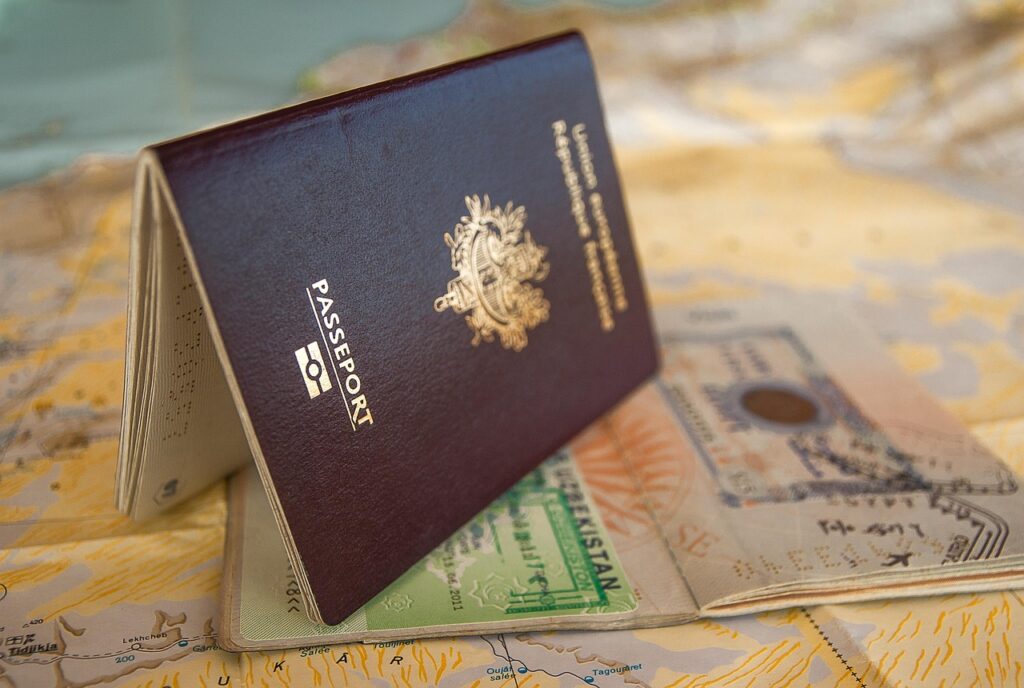
When Abdul Samad Rabiu—one of Africa’s wealthiest individuals and the founder of the pan-continental conglomerate BUA Group—attempted to enter South Africa on business recently, he was turned away. Not at gunpoint, not by hostile border guards, but by a visa technicality that exposed a gap between the rhetoric surrounding Africa’s flagship trade agreement and the lived reality of the people it is meant to serve.
The incident has reignited debate about whether the African Continental Free Trade Area—celebrated as the dawn of a new era of intra-African commerce—risks becoming a paper tiger: strong on tariff reduction, weak on the mobility of the people who are supposed to make trade happen. Rabiu, whose industrial operations span Nigeria, Senegal and beyond, was reportedly travelling on a Nigerian passport. South Africa’s entry requirements for Nigerian citizens do not automatically grant business visa-free access, even for individuals of extraordinary economic significance. Western tourists, by contrast, pass through with minimal friction.
The contradiction is not lost on observers of the AfCFTA’s slow-moving implementation. When an African billionaire can be turned away over a technicality while a European tourist walks through unchallenged, you have to ask what the agreement actually protects, one trade analyst told reporters. Trade requires people. People require movement. And movement remains stubbornly difficult across the continent.
Supporters of the agreement point to its achievements: the AfCFTA has lowered tariffs on thousands of goods and created a framework for dispute resolution that its proponents say will deepen over time. But critics argue that the non-tariff barriers most damaging to Africa’s own businesses—visa requirements, inconsistent port procedures, burdensome customs documentation—have barely been addressed. The movement of business travellers, skilled workers and investors remains governed by bilateral agreements that vary enormously in their generosity, and by the passport strength of the individual concerned.
Africa has some of the world’s most restrictive visa regimes. According to Henley Passport Index data, citizens of most African nations need visas to enter the majority of other African countries—a situation that stands in stark contrast to the free-movement principles embedded in the AfCFTA’s founding vision. Rwanda, Seychelles and more recently Benin have dropped visa requirements for African passport holders. But without a critical mass of states following, the impact on continental travel patterns remains limited.
The Rabiu incident may accelerate conversations that have been circulating in trade ministry corridors for years. Several AU member states have called for a harmonised African business visa—analogous to the Schengen space—that would grant short-term entry rights to professionals, investors and conference attendees across the continent without requiring separate applications to each destination. So far, political will has not kept pace with ambition.
For Africa’s entrepreneurs and executives, the practical implications are immediate and costly. A businessman planning to attend a conference in Johannesburg, a lawyer flying to Nairobi for an arbitration hearing, an engineer supervising a cross-border construction project—all face a patchwork of entry rules that add time, cost and uncertainty to already complex business operations. The AfCFTA was designed to remove such friction. As of now, that removal remains more aspiration than achievement.