
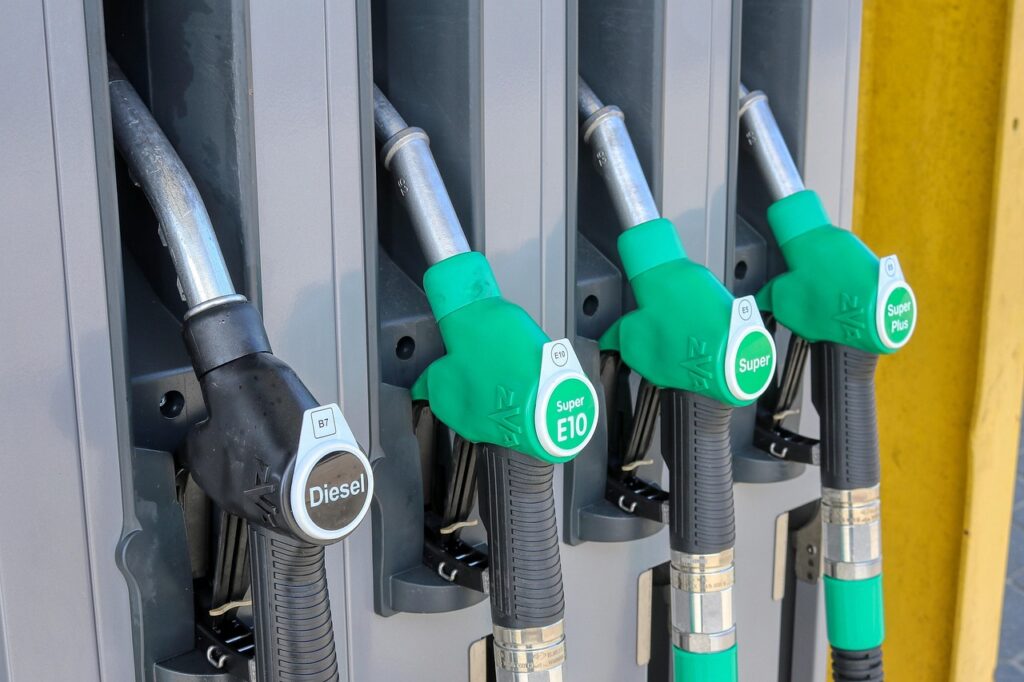
A Country Running on Empty
In Malawi’s capital Lilongwe, the queues at fuel stations have become a daily spectacle of frustration. Cars line up before dawn. Engines are left running because drivers fear losing their place. And by the time the pumps run dry — as they often do by mid-morning — hundreds of vehicles have waited for hours in the tropical heat for a commodity that has become, over the past six months, almost impossibly expensive.
Fuel prices in Malawi have more than doubled since November. A litre of petrol that cost 2,500 kwacha then now costs above 5,800. For the majority of Malawians who survive on under the equivalent of two dollars a day, that is not a manageable increase. It is a crisis.
The government of President Lazarus Chakwera has found itself at the centre of a problem it did not create — the global oil price shock triggered by the conflict in the Middle East — but which it has struggled to address. Subsidies that were politically impossible to remove have drained the treasury. The alternative — letting prices rise to market levels — has pushed an already vulnerable population closer to the edge. Neither choice is good. Both carry political costs the Chakwera administration can ill afford.
The Transport Sector Collapses
The impact has been most visible in the transport sector. Minibus drivers, known locally as matola, have raised fares repeatedly. A journey between Lilongwe and Blantyre that cost 15,000 kwacha six months ago now costs 30,000 or more, depending on the day and the driver’s assessment of how much fuel he can actually find. Many drivers have stopped making long trips entirely — the economics simply do not work when fuel cannot be guaranteed at a stable price.
For rural communities, the consequences are more severe. Farmers who need to transport produce to market cannot afford the cost of getting there. Agricultural cooperatives have reported spoilage as produce sits unsold because transport costs exceed the value of the goods themselves. In a country where agriculture employs the vast majority of the workforce, the breakdown of the transport network translates directly into lost income, lost food, and lost livelihoods.
The health sector has not been spared either. Ambulances have been stranded. Medicine deliveries have been delayed. Several hospitals in rural areas have reported fuel shortages that affected their ability to keep generators running, creating risks for patients on life-support equipment and for cold-chain vaccines that require constant refrigeration.
Why This Is Happening Now
Malawi’s fuel crisis is not simply the result of global oil prices. It is also the product of a currency that has been losing value against the dollar, a government that has been slow to open import markets to new players, and a state oil company that has been burdened by debt and poor governance for years.
The kwacha has depreciated sharply against the dollar since the Middle East conflict began. Malawi imports almost all of its fuel and pays for it in dollars. When the kwacha falls, the cost of imports rises automatically, and those costs are passed on to consumers. The government tried to shield consumers with subsidies, but the budget cannot sustain that indefinitely — and indeed, the subsidies were already being phased out when the global price shock accelerated, leaving the country caught between a choice no one wanted to make.
The International Monetary Fund, which has been working with Malawi on an economic reform programme, has pushed for full liberalisation of fuel pricing — removing subsidies entirely and allowing prices to reflect market realities. The government has resisted that pressure, aware that the political cost of sudden large price increases could be severe. But the delay in liberalisation has itself contributed to shortages, as fuel traders have little incentive to import aggressively when pricing is unpredictable and the exchange rate is volatile.
What the Crisis Reveals
The fuel crisis in Malawi is, at a deeper level, a story about the structural vulnerabilities of small, import-dependent African economies. These are countries that produce little of the energy they consume, earn little foreign exchange to pay for imports, and have limited ability to influence global commodity prices. When a shock hits — whether it is a war in the Middle East, a drought, or a pandemic — they have almost no buffer.
The Chakwera administration faces a genuine dilemma. Let prices rise and risk alienating the voters who brought you to power. Keep prices low and risk depleting foreign reserves, stoking inflation, and facing a much worse crisis later. It is the kind of dilemma that defines leadership in contexts where the room for manoeuvre is severely constrained.
For ordinary Malawians, the debate in the capital feels abstract. What matters is whether they can get to work tomorrow, whether the minibus fare is affordable, and whether the goods they need will be available in the market at a price they can pay. On all three counts, the situation has deteriorated sharply — and there is, as yet, no clear pathway out.