Museveni Begins Seventh Term as Uganda’s President with Vow to End Corruption
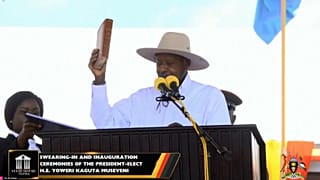
Kampala, Uganda — President Yoweri Museveni was officially sworn in on May 12, 2026, at Kololo Ceremonial Grounds in Kampala, marking the beginning of his seventh consecutive term in office. The 81-year-old leader, who has governed Uganda since 1986, now embarks on a new five-year mandate that he says will be defined by decisive action against corruption and a determined push toward upper-middle-income status.
The inauguration ceremony drew a large gathering of dignitaries, regional heads of state, and thousands of Ugandans who assembled under the theme “Protecting the Gains, Making a Qualitative Leap into High Middle-Income Status.” Museveni used the occasion to announce a new governing philosophy he called kisanja no more sleep and kisanja no more corruption — a play on the Luganda phrase for a new era.
A Long Grip on Power
Museveni’s return to office follows a January election that was won with roughly 73 percent of the vote, according to official results. Critics and international observers had raised concerns ahead of the poll, with reports of voter intimidation, restrictions on opposition candidates, and incidents of enforced disappearances of government opponents. The opposition National Unity Platform, led by Bobi Wine, repeatedly called for the release of what it described as hundreds of its supporters still detained ahead of the vote.
Despite these criticisms, Museveni’s tenure has been marked by relative political stability and infrastructure development, particularly along the Northern Corridor. His supporters credit him with bringing peace after years of civil war and establishing a degree of macroeconomic stability. Detractors, however, point to the erosion of democratic space, the muzzling of independent media, and an increasingly dynastic feel to Ugandan politics — especially as his son, General Muhoozi Kainerugaba, has taken on an increasingly prominent public role.
Regional and International Implications
Museveni’s new term arrives at a delicate moment for the East African region. Uganda’s economy is under pressure from global commodity shifts, the aftereffects of pandemic-era borrowing, and growing youth unemployment. Its relationship with Western donors has grown increasingly complicated, as democracy and human rights benchmarks tied to aid have clashed with the government’s zero-tolerance posture toward dissent.
Within the East African Community, Uganda remains a pivotal player. The country has contributed troops to regional peace missions, including in Somalia under the African Union Transition Mission in Somalia (ATMIS). A stable — if undemocratic — Uganda is seen by regional heavyweights as preferable to the chaos of a leadership vacuum, a calculation that has insulated Museveni from the kind of international isolation his counterparts in Sudan or Eritrea have faced.
Can the New Slogan Deliver?
The anti-corruption pledge is ambitious, if familiar in its framing. Uganda’s public sector has long struggled with graft at every level, from customs offices to local government procurement. The new mandate’s practical mechanisms remain unclear, but the symbolism of a seventh-term president adopting an anti-corruption banner while extending his own tenure has not been lost on observers.
What is certain is that Museveni’s seventh term will shape Uganda’s trajectory for years to come. With a young, urbanizing population pressing for better opportunities and a more responsive government, the gap between the inauguration’s grand themes and everyday reality may prove the most significant test of all.
Image: African political leadership — Wikimedia Commons.