
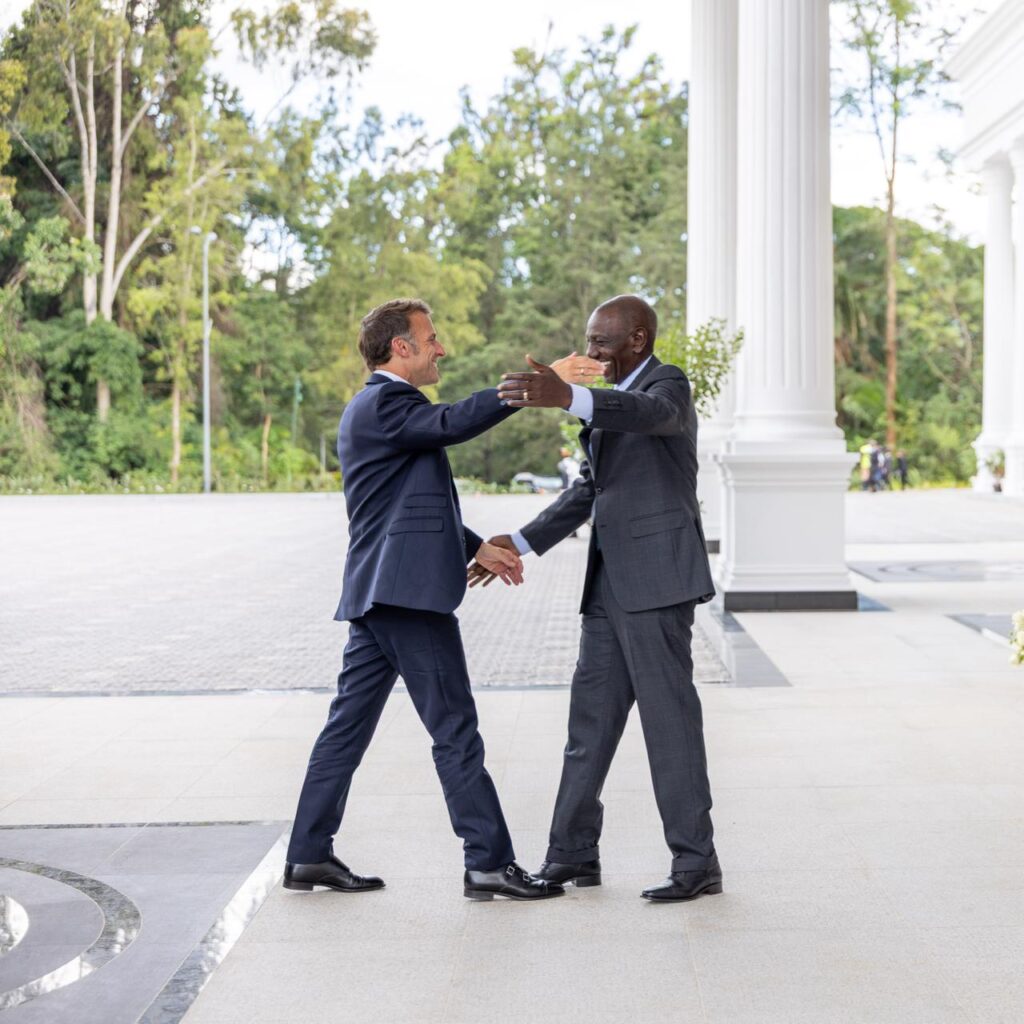
When French President Emmanuel Macron arrived in Nairobi on May 11, 2026, for the inaugural Africa Forward Summit, he brought with him a promise of 27 billion euros in investment across the continent. It was the largest single French commitment to Africa in decades, and a deliberate signal that France intends to remain a player on the continent even as its traditional influence wanes.
The two-day summit, held at the Kenyatta International Convention Centre, drew heads of state from across Africa, business leaders from both continents, and a contingent of European officials watching closely to gauge whether France pivot to Africa can actually deliver. Kenya, for its part, became the first Anglophone country to host the France-Africa summit series, a fact that itself signals a shift in the continent diplomatic geometry.
The Money: Where It Going and Why It Matters
The 27 billion euro commitment is structured across several sectors, with the largest portions directed toward renewable energy infrastructure, digital connectivity, and agribusiness. France development finance institutions will channel capital through a new Africa Forward vehicle specifically designed to accelerate private sector investment in nations that have historically struggled to attract European capital.
The energy component is particularly significant. Several African governments have complained for years that European institutions charge higher risk premiums for African investments than the underlying fundamentals justify. The Africa Forward package includes a specific mechanism to reduce those premiums, and Macron advisors suggest the structures will be replicated across future French development commitments.
Kenya Diplomatic Moment
President William Ruto government has invested heavily in positioning Kenya as Africa diplomatic capital. The hosting of Africa Forward, following closely on Kenya successful bid to host the World Health Summit Regional Meeting later in 2026, reinforces that strategy. Ruto has made clear that Kenya sees itself not simply as a regional power but as a gateway for global investment into East Africa.
For Ruto, the summit is also a test of his ability to translate diplomatic visibility into economic results. Kenya youth unemployment remains stubbornly high, and growth in the technology sector, long celebrated as the engine of a Kenyan economic miracle, has slowed considerably. The investment commitments, if they materialize, would offer meaningful relief.
France Rebranding Challenge
Macron visit comes against a backdrop of deeply ambivalent feelings toward France across Francophone Africa. Military coups in Mali, Burkina Faso, Niger, and Chad have all been accompanied by anti-French sentiment, as new military leaders have sought to position themselves against what they call Françafrique, the web of influence, commercial privilege, and political interference that characterized Paris African relationships for decades.
France has been forced to rethink its posture dramatically. The Africa Forward framework explicitly avoids the paternalistic tone of earlier summits, focusing instead on co-investment and knowledge transfer rather than reform prescriptions. Macron public interruption at the University of Nairobi, where he was seen asking for silence from a challenging audience, suggested a man aware that the old scripts no longer work.
A Real Shift or More of the Same?
African analysts are divided on whether Africa Forward represents genuine change. Those who are skeptical note that previous French summits produced large commitments that were later dramatically scaled back when private sector conditions changed. They argue that the actual delivery of capital will depend on regulatory environments that France has historically pressured African governments to maintain, not always in the interest of ordinary citizens.
Those who see potential point to the inclusion of Kenyan and other African institutions as co-designers of the investment frameworks, a first for a French-led initiative. Whether that co-design translates into projects that benefit Africa workers and entrepreneurs rather than French corporations will be the real test of what Nairobi delivered this week.
Image: President William Ruto and French President Emmanuel Macron at State House, Nairobi, ahead of the Africa Forward Summit.