Fear Grips Mali as Russia’s Africa Corps Fails to Deliver Security
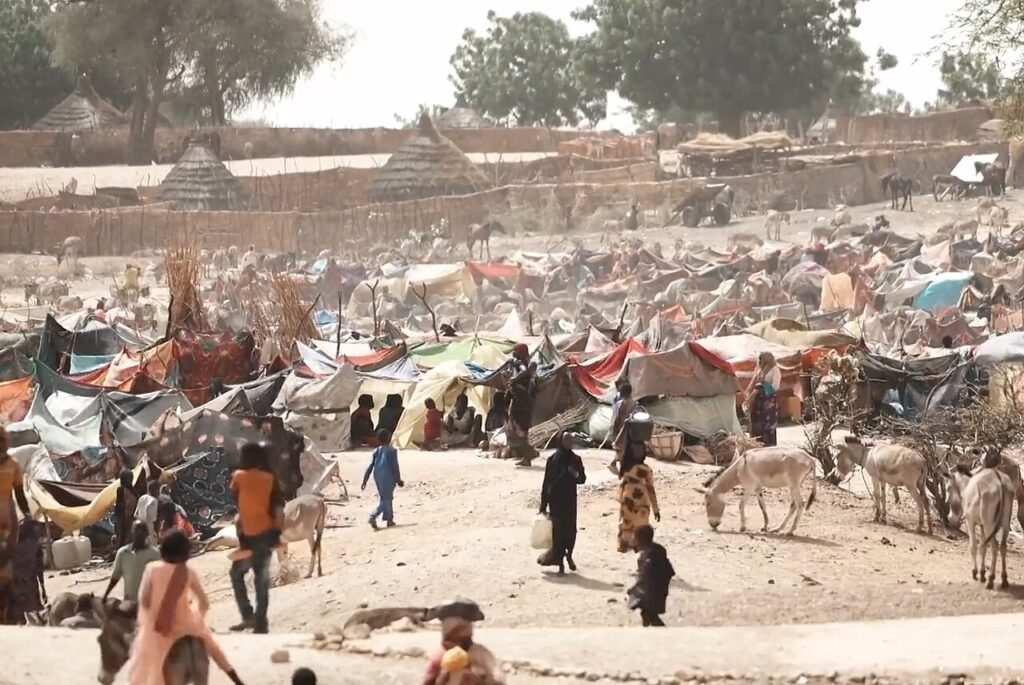
In the sand-swept towns of central and northern Mali, a new era of fear has settled over the civilian population. Since the Wagner Group was officially absorbed into Russia’s Ministry of Defense in mid-2025 and rebranded as Africa Corps, the security landscape in the West African nation has shifted dramatically — though not, as many had hoped, for the better.
From Wagner to Africa Corps: A Seamless Transition of Violence
When Wagner’s notorious mercenaries withdrew from Mali in June 2025, many hoped for a change in direction. Instead, Africa Corps simply took over the same bases, the same missions, and — according to a growing body of evidence — the same brutal tactics that made Wagner a byword for atrocities across the Sahel.
Data from the Armed Conflict Location and Event Data Project (ACLED) shows that battles involving Russian fighters in Mali have actually decreased since the transition, dropping from 537 to 402 in the comparative period. That reduction, however, has not translated into safety for ordinary Malians. Instead, the vacuum left by fewer direct engagements has been filled by the advance of jihadist groups, who have exploited the changing of the guard to expand their territory and influence.
The Human Cost: Civilian Casualties Mount
A landmark case filed before the African Court on Human and Peoples’ Rights in April 2026 by three Malian civil society organisations has brought renewed international attention to the crisis. The filing documents systematic abuses by both jihadist groups and government forces backed by Africa Corps — abuses that the court is now being asked to address at a continental level.
Human Rights Watch, in its World Report 2026 chapter on Mali, describes a dramatic deterioration in the human rights situation throughout 2025. Civilians caught between Islamist militants and abusive counterinsurgency forces report arbitrary detentions, disappearances, and the destruction of entire villages accused of sympathising with the enemy.
The Cost of Partnership: What Bamako Gave Up
The transition from Wagner to Africa Corps was not simply a rebranding exercise. It came with new arrangements under Russia’s Ministry of Defense, giving Moscow more direct control over operations while providing the Malian junta with a veneer of state-sanctioned legitimacy. In exchange for letting Russia run its security operations, the junta surrendered significant influence over its own territory — a trade-off that is increasingly being questioned inside Mali’s power circles.
Meanwhile, the jihadist threat continues to grow. The groups that once operated in small cells have matured into organised forces capable of holding territory, imposing taxes, and administering justice in areas the state has effectively abandoned. For the civilian population, the choice between Africa Corps and the jihadists has become a choice between two forms of violence.
A Region on Edge
Mali’s crisis is not unfolding in isolation. Burkina Faso — which shares a similar trajectory of military coups, Russian partnership, and Islamist insurgency — recorded over twice as many civilian deaths caused by government and allied forces as by jihadist militants since 2023, according to a Reuters analysis published in April 2026. The numbers tell a grim story: in the Sahel, the line between protector and predator has become almost impossible to draw.
As the international community watches from a distance, ordinary Malians continue to pay the price of a conflict that has evolved from a counterterrorism operation into something far more complicated — and far more dangerous.
More From Environment & Science
Hundreds of twitchers flock to see African bird in UK for first time
Giving guitarfish a chance: one man’s mission to persuade fishers to farm giant snails instead