Denis Sassou N’Guesso Sworn In for Fifth Term as Congo Faces IMF Downgrade
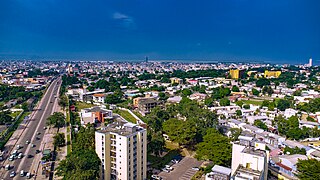
Denis Sassou N’Guesso was sworn in for a historic fifth presidential term on Thursday, April 16, 2026, in a ceremony attended by ten African heads of state, underscoring the longtime leader’s enduring regional influence even as the continent faces mounting economic headwinds that could reshape the outlook for his country and the wider region.
The inauguration ceremony in Brazzaville drew leaders including Rwanda President Paul Kagame, who attended on behalf of the African Union, alongside presidents from Angola, Chad, Gabon, and several other nations. The grand gathering was staged as a show of solidarity, yet the celebrations unfolded against a backdrop of deepening concern over the region’s fragile economic recovery.
Sassou N’Guesso, who has governed the Republic of Congo for a combined total of more than four decades, won re-election in March 2026, extending a tenure that began in 1997. His victory was widely anticipated, with the opposition and civil society groups raising familiar concerns about the fairness and transparency of the electoral process.
Addressing the assembled dignitaries and thousands of citizens, the 81-year-old president called for national unity and pledged to accelerate infrastructure development and economic diversification away from the oil sector, which remains the backbone of the country’s finances.
“We must build a Congo that does not depend solely on what lies beneath the ground,” Sassou N’Guesso said, in a speech that reflected growing urgency about the need to reform an economy long hostage to volatile global oil prices. The country’s oil-dependent fiscal budget has been under strain since the 2020 downturn, and external debt restructuring negotiations with creditors including China and France remain ongoing.
A continent at an economic crossroads
The ceremony took place just days after the International Monetary Fund delivered a sobering assessment of sub-Saharan Africa’s economic trajectory. On April 16, the IMF lowered its 2026 growth forecast for the region to 4.3 percent from a January projection of 4.6 percent, citing as the primary driver the spillover effects of the Middle East conflict, which has pushed up energy, fertiliser, and shipping costs across the globe.
For Congo-Brazzaville specifically, the implications are direct. The country is one of sub-Saharan Africa’s smaller economies but is heavily integrated into global commodity markets through its oil exports. Rising freight costs and disrupted trade routes linked to the ongoing tensions in the Gulf region have begun to weigh on export revenues and fiscal receipts.
Nigeria, the continent’s largest economy, saw its forecast reduced from 4.4 percent to 4.1 percent, while South Africa’s outlook was slashed from 1.4 percent to a modest 1.0 percent — a stark revision reflecting the cascading effects of global supply chain disruption, higher energy prices, and financial market volatility. The IMF projects sub-Saharan Africa will return to 4.4 percent growth in 2027, but that forecast is contingent on a stabilisation of the Middle East situation.
Sassou N’Guesso’s balancing act
Sassou N’Guesso has maintained close ties with both Western powers and more recently with Russia, hosting military cooperation delegations and welcoming private sector investment from Moscow. He has also cultivated relationships with Gulf states, particularly the United Arab Emirates, which has expanded its footprint in Central African security and business affairs.
Those geopolitical alliances are being tested in real time. The IMF’s warning that energy price volatility, supply chain disruptions, and tightening financial conditions are limiting fiscal space across the region applies with particular force to Congo-Brazzaville, which emerged from a controversial debt restructuring in 2023 and is still rebuilding its credibility with international financial institutions.
Regional analysts say the president faces a narrowing corridor: limited fiscal flexibility to fund public services or social programmes, a population that is young and increasingly impatient with entrenched elite governance, and an opposition that, while fragmented, has shown signs of coalescing around demands for greater transparency and constitutional reform.
A ceremony and its contradictions
The inauguration was choreographed to project strength and continuity. National flags lined the boulevards of Brazzaville, and cultural troupes performed traditional dances before the formal proceedings began. Yet human rights organisations noted that several opposition figures were prevented from travelling to the capital to attend the ceremony, and independent media coverage of the event was limited.
Ten heads of state in attendance also represented a broader message: that despite the economic turbulence and the democratic deficits frequently cited by critics, Sassou N’Guesso remains a central figure in African diplomatic life. Whether that diplomatic capital can translate into economic resilience for ordinary Congolese citizens is a question that Thursday’s celebrations did not answer.
For the millions of Congolese who turned out to watch the ceremony, many expressed cautious hope. “We want the president to keep his promises this time,” said Marie Loumet, a teacher in Brazzaville. “The oil money must reach us, not just stay in the capital.”
As the ceremony closed and Sassou N’Guesso began his new term, the broader African economic reality offered little room for complacency. With the IMF downgrade casting a long shadow over the region’s prospects, the challenge of translating political authority into tangible improvements in living standards may prove to be the defining test of this fifth term.
More From Politics & Governance
Tunisians Mark Five Years of Emergency Rule With Renewed Calls for Saied to Step Down
South African President Ramaphosa Secures Temporary Halt to ‘Farmgate’ Impeachment Inquiry