
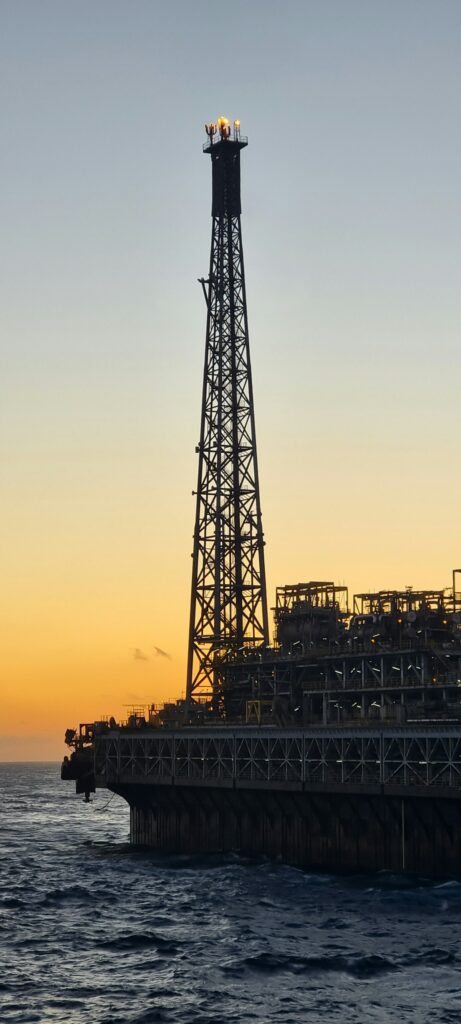
Turkey’s deep-sea drilling vessel Cagri Bey arrived off the coast of Mogadishu on Friday, marking the launch of Turkey’s first overseas deep-sea oil exploration project — a landmark moment for both Ankara’s expanding energy ambitions and Somalia’s long-stalled efforts to develop its own hydrocarbon resources.
The vessel, operated by Turkish energy company TPAO (Türkiye Petrolleri AO), docked at the port of Mogadishu amid tight security, with Somali government officials and Turkish diplomats on hand to witness the occasion. The drilling rig is expected to begin operations in the coming weeks at a site approximately 120 kilometres offshore in water depths exceeding 2,000 metres.
The project is governed by a bilateral agreement signed in 2024, which grants Turkey exclusive rights to explore and develop offshore oil blocks in exchange for a revenue-sharing arrangement that allocates 60 percent to Somalia and 40 percent to the Turkish consortium. The deal, approved by the Somali parliament, has been hailed by the government in Mogadishu as a transformative step toward economic independence.
“Somalia is opening a new chapter,” said Petroleum Minister Abdiasis Omar at a ceremony attended by Turkish Ambassador to Somalia Alpay Sevim. “For decades, our resources have remained in the ground while our people have remained in poverty. That ends today.”
The hydrocarbons beneath Somalia’s seabed are estimated by some international energy consultancies to hold reserves of up to 30 billion barrels of oil equivalent, though those figures remain highly speculative given the limited seismic data available. If even a fraction of those estimates proves accurate, the development could transform Somalia from one of the world’s poorest nations into a significant oil producer within a decade.
Turkey has positioned itself as a key strategic partner to Somalia in recent years, providing military training, infrastructure aid, and development financing. Ankara has also established a military base in Mogadishu, its largest overseas deployment, aimed partly at helping the Somali federal government combat Al-Shabaab insurgents.
The drilling project comes with considerable risks. Security concerns remain acute, with Al-Shabaab frequently carrying out attacks in areas near Mogadishu and along the coast. The jihadist group has previously threatened foreign workers in the country, though the heavy military presence around the port has thus far deterred any direct attacks on the vessel or its crew.
Environmental groups have raised concerns about the potential impact of deep-sea drilling on Somalia’s marine ecosystem, which supports a significant fishing industry and a network of coral reefs along the Indian Ocean coast. The Somali government has promised that environmental impact assessments will be conducted and published before any production phase begins.
TPAO’s international track record is mixed. The company has successfully developed several offshore fields in the Black Sea, but its exposure to high-risk environments is limited compared to major international oil companies. Some analysts believe Turkey’s involvement could serve as a stepping stone toward attracting larger multinational investors once initial exploration results are known.
The African Development Bank has indicated it could provide additional financing for the supporting infrastructure, including pipelines and processing facilities that would be needed if significant commercial discoveries are made. The first drilling phase is expected to last approximately 90 days, after which initial assay results would be released.
Can Africa’s informal economy become the continent’s next investment frontier?
Energy buyers pivot to Africa as Middle East tensions escalate