
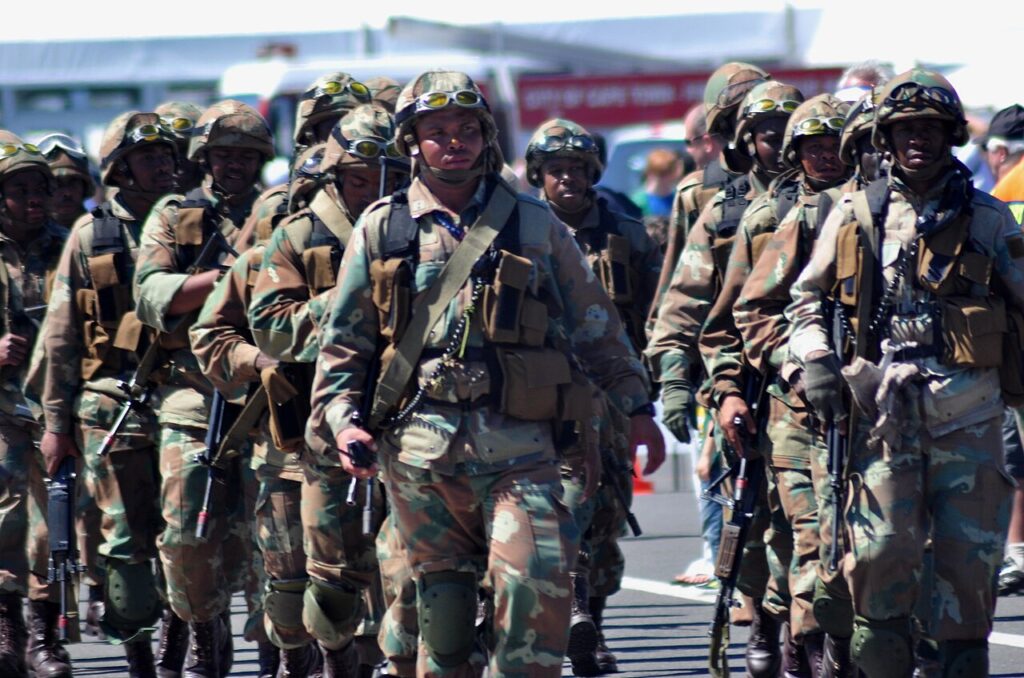
South Africa’s President Cyril Ramaphosa launched Operation Prosper in February 2026 — a military deployment targeting the gang-ridden, crime-scarred townships of Cape Town and surrounding provinces. Three months on, the operation has produced modest results, sparked fierce debate about civil liberties, and exposed the deep structural failures that have allowed organised crime to take root in some of the country’s most vulnerable communities.
The numbers behind the deployment are stark. The Western Cape, and particularly the townships of Khayelitsha, Mitchells Plain, and Gugulethu, has for years recorded homicide rates several times the national average. Drug trafficking, armed robbery, and gang violence are daily realities. In some neighbourhoods, young men are more likely to be murdered before age 25 than to finish school or find formal employment.
The army arrived with armoured vehicles and hundreds of troops. Checkpoints went up on major roads. Police raids increased in frequency. For a few weeks, crime statistics showed marginal improvements. Then the numbers plateaued. Critics had warned this would happen.
The army can hold territory, but it cannot hold a community, said Dr. Mignon du Plessis, a criminologist at the University of the Western Cape. What you are seeing in Khayelitsha is not simply a law enforcement problem. It is a failure of housing, education, economic opportunity, and social services going back decades. Throwing soldiers at it is a plaster on a haemorrhage.
Residents of affected townships have given the intervention a mixed reception. Some welcome the visible security presence, saying they can finally walk to the shops without fear. Others worry about heavy-handed tactics. Reports of soldiers degrading suspects, conducting searches without warrants, and verbally abusing residents have surfaced in local media. The Independent Police Investigative Directorate says it is looking into at least a dozen complaints.
The political dimensions of the deployment are hard to ignore. Ramaphosa’s government has been under sustained pressure over crime — one of the issues most consistently cited by South Africans as their primary concern. The Democratic Alliance, which governs the Western Cape, requested the military assistance and has used it as evidence of decisive leadership. But the national picture is grimmer. The country’s police service remains chronically understaffed, underpaid, and plagued by corruption scandals — most recently, the national police chief was implicated in a 20 million dollar corruption case involving government procurement contracts.
The underlying economics are grim. Unemployment in the Western Cape townships frequently exceeds 40 percent among young people. Gang membership, for many, is the only employer. Supply chains for the drug trade run through the same ports and roads that legitimate commerce depends on. Solving the problem permanently would require a generation of investment in education, jobs, and housing — resources that a government operating under severe fiscal pressure cannot easily commit.
For now, Operation Prosper continues. The soldiers are still on the streets. Crime has softened marginally, but the communities most affected know that marginal improvements are not the same as transformation. As one Khayelitsha resident told a local journalist: They come in with guns and vehicles, and for a while things feel better. But the guns come back, because the reasons for the guns never left.