
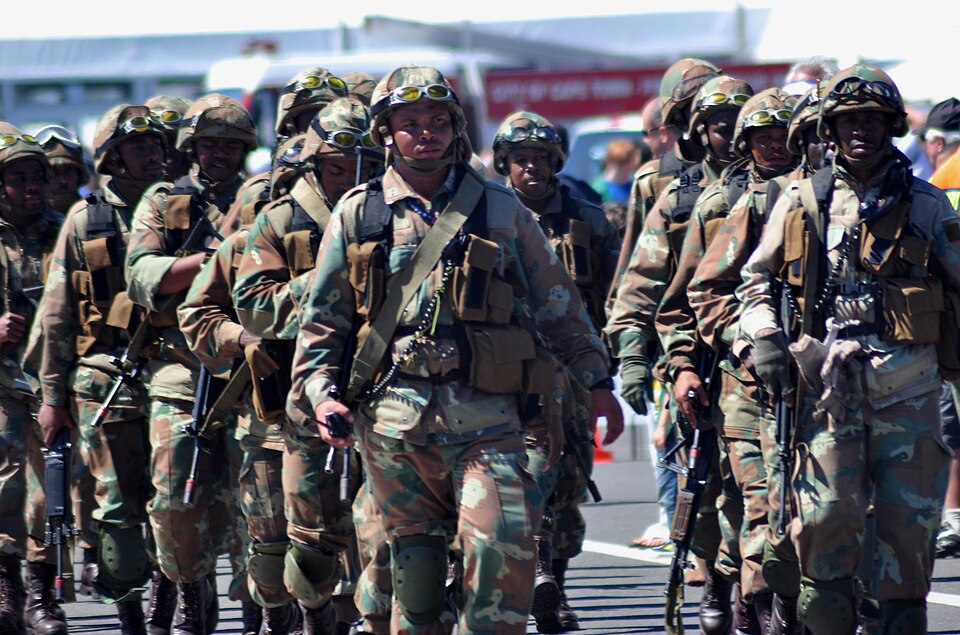
South Africa has formally deployed its military to combat spiraling crime in Cape Town’s most violence-plagued townships, as the government of President Cyril Ramaphosa escalates its response to a public security crisis that has seen tens of thousands of lives lost to violent crime in recent years.
The army arrived in crime hotspots across the Western Cape province this week, marking one of the most significant domestic military deployments in South Africa’s post-apartheid history. Soldiers were sent into communities including Khayelitsha, Mitchells Plain, and Gugulethu — areas that have long suffered from gang violence, drug trafficking, and inadequate police protection.
The deployment follows a sharp deterioration in security conditions across South Africa, where official statistics show that more than 27,000 murders were recorded in 2025 alone. In Cape Town’s townships, the situation has been particularly acute, with residents reporting almost daily shootings, armed robberies, and intimidation by organized criminal networks.
“We Cannot Wait Any Longer”
President Ramaphosa, speaking at a press conference in Pretoria, said the deployment was a direct response to overwhelming calls from communities and provincial authorities. “Our people have been crying out for help,” he said. “We cannot wait any longer while our communities are terrorized by criminal gangs.”
The military contingent, drawn from the South African National Defence Force (SANDF), is expected to work alongside the South African Police Service (SAPS) in joint patrol operations, intelligence gathering, and hotspot interventions. Officers will be empowered to make arrests and hand suspects over to civilian authorities for prosecution.
The deployment comes after months of failed attempts to curb violence through conventional policing. The Western Cape province, particularly Cape Town, has consistently recorded the country’s highest murder rates, with gang-related violence accounting for a substantial share of homicides. Drugs, especially methamphetamine (known locally as “tik”), have fueled much of the criminal activity, with young people in impoverished townships disproportionately affected.
A Controversial But Popular Move
While the deployment has drawn criticism from opposition parties and civil liberties groups who question the military’s suitability for domestic law enforcement, it has been broadly welcomed by residents of the affected townships. Community leaders say the army’s presence has already led to a noticeable reduction in gunfire at night.
“We are tired of burying our children,” said Nosipho Dlamini, a community activist in Khayelitsha. “If the army can save even one life, it is worth it.”
Others have urged caution. The Democratic Alliance, which governs the Western Cape, has stressed that military support is a temporary measure and called for long-term investment in community policing, job creation, and social programs to address the root causes of crime.
Historical Context and Concerns
South Africa has a complicated history with domestic military deployments. During apartheid, the security forces were used to suppress political dissent. Critics of the current deployment argue that without proper oversight and clear chains of command, soldiers may exacerbate tensions in communities already distrustful of authority.
Human rights organizations have called for transparent monitoring of the deployment, with regular public reporting on arrests, use of force incidents, and outcomes. The Independent Police Investigative Directorate (IPID), South Africa’s civilian oversight body, has said it is prepared to investigate any complaints arising from the military’s involvement.
For now, however, the Ramaphosa government has made clear that restoring safety to South Africa’s most vulnerable communities is its foremost priority. The army deployment is expected to continue for at least six months, after which an assessment will be made on whether to extend, scale down, or transition to a purely police-led operation.
South Africans, particularly those living in the country’s most dangerous neighborhoods, will be watching closely.