
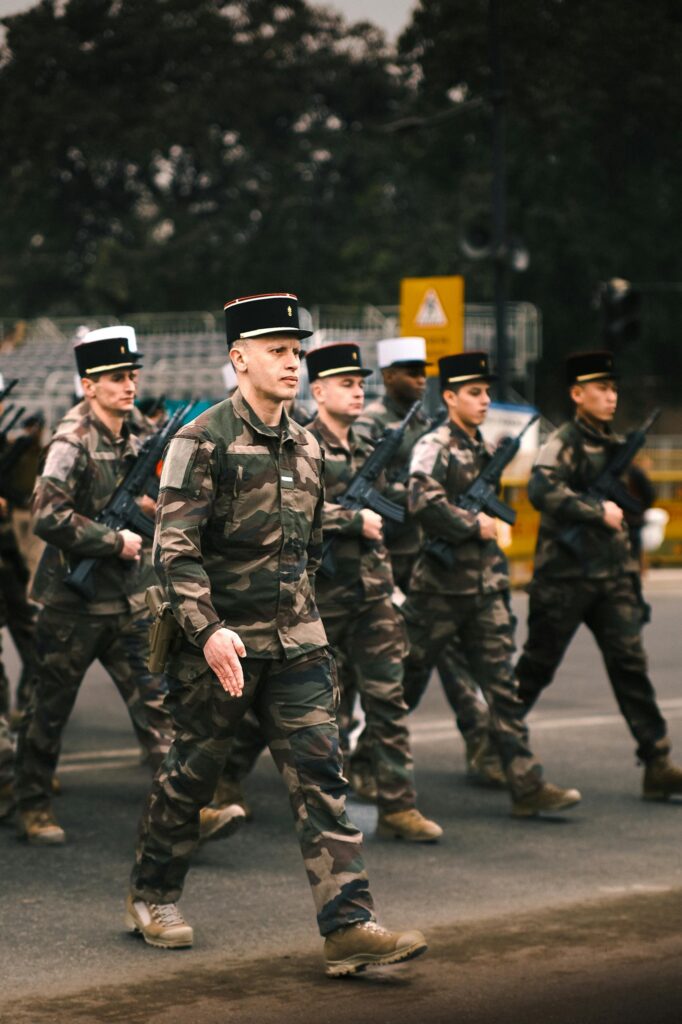
South Africa has deployed 2,200 members of the South African National Defence Force to five provinces effective April 1, 2026, in a year-long mission to support police in combating violent crime and gang activity. The operation, authorized by President Cyril Ramaphosa under Section 18 of the Defence Act, will run until March 31, 2027, and covers Gauteng, the Eastern Cape, the Free State, KwaZulu-Natal, and the Western Cape—representing the first sustained military deployment in Cape Town’s modern history.
Rooted in a security crisis
The decision to bring soldiers into city streets reflects the depth of South Africa’s public security crisis. In Cape Town’s townships—particularly Khayelitsha, Mitchells Plain, and Gugulethu—gang-related shootings have become a daily occurrence. Extortion networks have infiltrated informal businesses, demanding protection payments from spaza shop operators, taxi drivers, and small traders. The methamphetamine trade, locally known as “tik,” has devastated entire communities and is linked to a surge in violent crime across the Western Cape.
Similar dynamics play out in the mining provinces. In Gauteng’s townships, taxi violence has intensified, with turf wars between competing associations spilling over into residential areas. In the Eastern Cape, stock theft and farm attacks continue at levels that agribusiness groups describe as a crisis.
A targeted, temporary measure
Ramaphosa framed the deployment as a targeted, temporary measure. “The South African National Defence Force will plug gaps where the South African Police Service is stretched,” his office said in a statement. The operation is structured sequentially: soldiers will accompany police officers, provide logistical and operational support, and do not have independent arrest authority. The police remain the primary law enforcement agency.
Civil liberties concerns
Civil liberties organizations have expressed concern. The Democratic Governance and Rights Unit at the University of Cape Town noted that South Africa’s constitution provides strong protections against unreasonable search and seizure, and that military personnel operating alongside police could blur accountability lines. “Who investigates a soldier who assaults a civilian?” the unit asked in a briefing paper. “These are not hypothetical questions.”
The parallels to apartheid-era security force deployments are uncomfortable for a government that came to power promising constitutional democracy and civilian oversight of the security apparatus. The defence force has a mixed record in domestic operations: its interventions during the 2021 July unrest in KwaZulu-Natal and Gauteng were credited with helping restore order, but critics cited incidents of heavy-handedness and confusion about command responsibility.
Organised crime at scale
The scope of organized crime in South Africa has grown well beyond local turf battles. Interpol’s 2025 African Crime Report identified South Africa as a major hub for regional and international criminal networks, with links to drug trafficking, wildlife crime, and money laundering. The country’s geographic position, long coastlines, and sophisticated financial infrastructure make it attractive to criminal enterprises operating across the continent.
Community hopes and scepticism
South Africans in the affected townships have offered a cautious welcome. Community leaders in Khayelitsha told local media they hoped the soldiers would bring relief, but many noted that military presence has been tried before in different contexts and did not resolve underlying poverty, unemployment, and spatial inequality. “We need jobs and schools and clinics,” one Gugulethu resident said. “A soldier on the corner helps for tonight. It doesn’t help for next year.”
The deployment will be reviewed after its first six months. Whether soldiers on the streets will mark the beginning of a durable solution to South Africa’s security crisis, or merely another chapter in the country’s long struggle with violence and inequality, will be determined over the months ahead.