
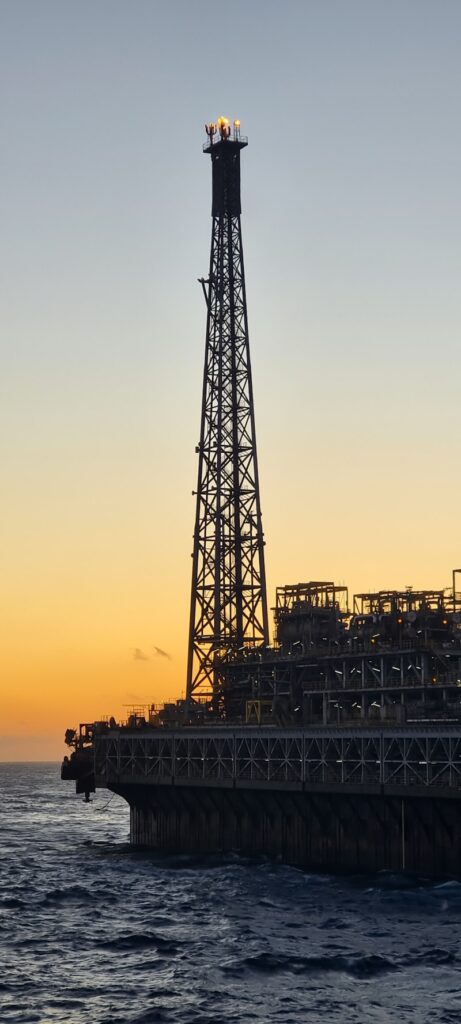
After decades of civil conflict, political instability, and legal disputes over maritime boundaries, Somalia has finally fired the starting gun on its most ambitious economic undertaking since independence: the launch of a full-scale offshore oil drilling campaign in its territorial waters.
Turkish energy giant Karakoyun Energy began towage of its deepwater drilling vessel—the Fatih Sultan Mehmet—into Somali waters last week, marking what the Somali government has called the beginning of a new economic chapter. The vessel, capable of drilling in water depths of up to 3,000 metres, is expected to spud the first well in the Hafun Basin by the end of April.
**Why Somalia’s Oil Moment Is Arriving Now**
The timing is not coincidental. Somalia’s path to oil production has been blocked by a combination of geopolitical, legal, and security obstacles that have only recently begun to dissolve.
The most significant breakthrough came in late 2025, when Somalia and Kenya signed a landmark maritime boundary agreement under African Union mediation, ending nearly a decade of disputes over their shared offshore oil blocks. With legal clarity now in place, international energy companies that had previously refused to commit capital found the regulatory environment suddenly investable.
Security conditions have also improved. While Al-Shabaab remains active in southern Somalia, the African Union peacekeeping mission ATMIS has consolidated control over key corridors between Mogadishu and the northern Puntland region, where most oil activity is concentrated. The federal government’s growing assertiveness in Nairobi and Ankara—which has provided diplomatic cover and direct military assistance—has further de-risked the investment environment.
**The Stakes: Billions in Revenue, Billions in Questions**
The Hafun Basin is estimated by independent assessors to contain reserves of between 1.5 and 3 billion barrels of recoverable oil, with additional natural gas potential that could exceed 5 trillion cubic feet. If those estimates hold, Somalia stands to generate annual revenues of $3–5 billion within a decade—roughly double its current GDP.
That prospect is staggering for a country where the average income remains below $500 a year and basic infrastructure is crumbling. But the scale of potential revenue also raises sharp questions about governance, transparency, and the risk of the resource curse that has blighted other oil-dependent African nations.
The Petroleum Authority of Somalia, established in 2023, has published a draft Petroleum Revenue Management Bill that would channel oil income into a sovereign wealth fund with mandatory allocations to development expenditure, stabilisation reserves, and a generational fund for future citizens. But the bill has yet to pass parliament, and critics—including the IMF—have warned that the enforcement mechanisms proposed are insufficient to prevent the kind of grand corruption that has devastated Nigeria’s Delta region, Angola’s Cabinda enclave, and South Sudan’s peacetime economy.
**The Players: Who’s Involved**
Karakoyun Energy, the Turkish firm contracted to lead initial drilling operations, is no stranger to difficult operating environments. The company has previously conducted exploration work in Iraqi Kurdistan and offshore Cyprus, navigating political sensitivities in both cases. It has partnered with state-owned Somali National Petroleum Company (SNPC) in a production-sharing agreement that gives Somalia a 60% take of extracted resources—an unusually favourable split that the government insists reflects its newly assertive posture in negotiations.
Chinese, Indian, and Gulf-based energy firms are closely watching the first well’s results. If Hafun proves productive at the volumes projected, industry sources suggest a second drilling vessel could be mobilised within 18 months.
**What This Means for the Horn of Africa**
Somalia’s entry into the list of African oil producers—joining Nigeria, Angola, Libya, Egypt, Sudan, South Sudan, Gabon, Equatorial Guinea, and recently Mozambique—is geopolitically significant for the Horn of Africa region. It adds a new energy actor to a sub-region already facing complex external pressures from the ongoing Iran conflict, Gulf power competition, and the steady expansion of Russian influence through Wagner-linked military contractors.
Djibouti, which hosts both American and Chinese military bases and processes the bulk of Ethiopian trade through its port, will be watching Somalia’s oil revenues closely. An economically resurgent Somalia could challenge Djibouti’s position as the dominant logistics hub for the Horn—a dynamic that regional strategists are already beginning to model.
For now, the focus is on the drill. The first results from Hafun will not be known for several months. But the symbolism of a Turkish vessel heading into Somali waters, under the flag of a government that has spent thirty years trying to rebuild itself from ruins, is already resonating across the region.