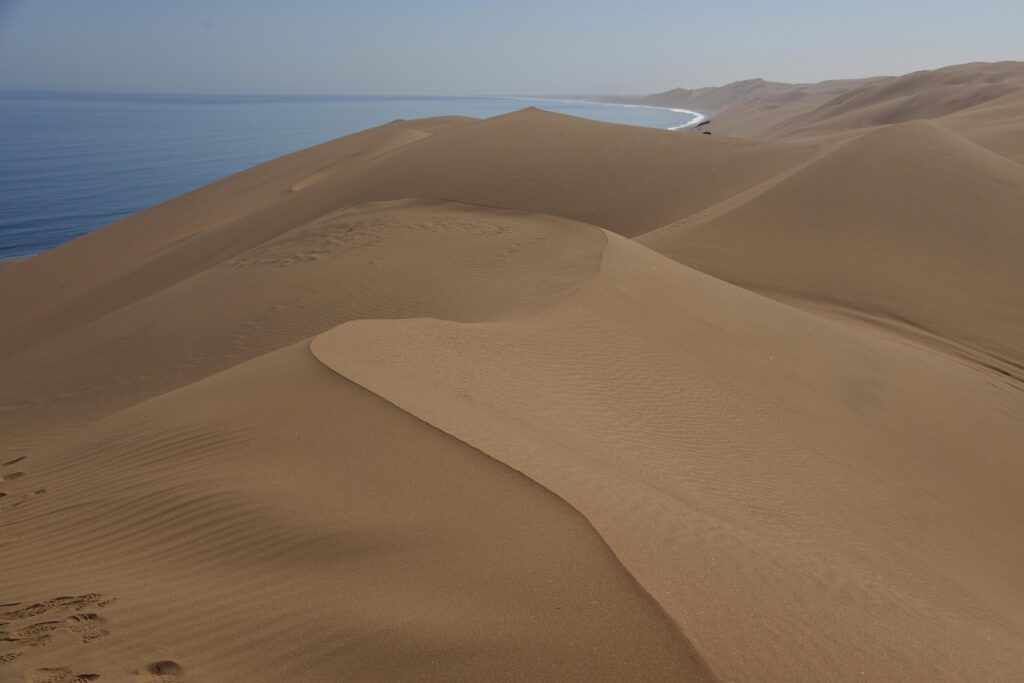
Namibia\x27s coastline stretches for over 1,500 kilometres along the South Atlantic, an area rich in marine biodiversity and, increasingly, the focus of a deliberate national strategy to harness what the government calls the Blue Economy, a concept that links ocean resources to sustainable development, job creation, and strategic geopolitical positioning.
The Namibia Ocean Cluster, launched under the auspices of the World Economic Forum\x27s Ocean Action Agenda and officially inaugurated in Windhoek in late 2025, represents the country\x27s most ambitious attempt yet to coordinate a fragmented sector and extract maximum value from its maritime endowment without repeating the overexploitation mistakes that have depleted fish stocks elsewhere on the continent.
What the Ocean Cluster Does
The cluster brings together the entire Namibian seafood value chain, from artisanal fishers and small-scale processors to large industrial operators, logistics companies, and financial institutions, in a coordinated framework designed to optimise the use of all marine resources. The guiding principle is sustainability: nothing is wasted, and growth is kept within scientifically determined safe biological limits.
Norwegian development cooperation has been central to the cluster\x27s establishment, providing technical expertise in fisheries management that Namibia\x27s own scientific institutes have built on using locally collected data. The result is a management approach that is specifically calibrated for Namibian conditions rather than imported wholesale from international templates.
The Economic Stakes
Fisheries already contribute approximately 3.5% of Namibia\x27s GDP, with the total marine value chain accounting for a significantly larger share when processing, logistics, and ancillary services are included. The government has set an ambitious target of tripling the sector\x27s contribution by 2035, achievable if value addition and market diversification strategies succeed.
Currently, the majority of Namibia\x27s catches are processed and packaged for export to European markets. The Blue Economy strategy aims to change this by developing local processing capacity that can command higher margins, creating the kind of domestic industrial base that keeps more of the value chain onshore.
Regional Dimensions
Namibia\x27s Blue Economy ambitions are not happening in isolation. South Africa, Mozambique, and Angola are all developing their own ocean strategies, and the Southern African Development Community (SADC) has been working to harmonise maritime regulations across the region. A coordinated approach to fisheries management, where countries avoid the race-to-the-bottom dynamics that have devastated global fish stocks, would benefit all coastal states.
African Business magazine highlighted the Namibia model in its latest survey of continental economic trends, noting that the country offers one of the more sophisticated examples of how African states can translate their natural resource endowments into inclusive economic growth when there is political will and institutional capacity.
For a country that has historically relied heavily on mining and tourism, the Ocean Cluster represents something of a strategic pivot. The outcomes, if the model works, will be closely watched by other coastal African states seeking to replicate its approach.