
Egypt has imposed a business curfew requiring shops, restaurants, and shopping malls to close by 9pm each night for an initial period of one month. On the surface, the measure — announced as part of a package of energy conservation measures — appears administrative. Look deeper, and it exposes a nation in the grip of a cascading economic emergency made dramatically worse by the Middle East conflict.
The curfew is not really about closing shops early. It is about keeping the lights on.
Fuel Costs Have More Than Doubled
The numbers driving the decision are stark. Egypt’s fuel costs have more than doubled since the escalation of the US-Israel war on Iran, driven by global oil price spikes, the disruption of shipping through the Strait of Hormuz, and the broader geopolitical premium that has pushed Brent crude to levels not seen in years.
Egypt, despite its role as a regional diplomatic player and recipient of significant IMF support, is structurally vulnerable to external energy shocks. It is a net energy importer despite having a domestic petroleum sector. When global prices spike, the government’s subsidy bill swells — or, as is now happening, the country is forced to make difficult choices about what it can actually afford to power.
The business curfew is one visible consequence. Behind it lies a wider rollback of state projects deemed too fuel-intensive, pressure on industrial users to reduce consumption, and a quieter struggle to manage electricity rationing without triggering social unrest.
The Toll on Business and Tourism
The timing could hardly be worse for Egypt’s private sector. The country’s tourism industry — a critical foreign currency earner — has been recovering steadily after years of post-pandemic rebuilding. Restaurant owners and shopkeepers in Cairo, Alexandria, and Luxor are now being asked to close before the evening rush that typically drives their best revenues.
The tourism sector has expressed particular alarm. Shop owners near the Pyramids and in historic districts depend heavily on late-opening hours when tour groups finish their daytime excursions. An 9pm closure mandate effectively ends the working day for much of the formal retail economy in a country where tips and informal arrangements often determine survival.
Restaurant owners in affluent neighbourhoods of Cairo say the curfew will gut revenues during what should be peak season. Several have begun circulating petitions demanding exemptions or compensation.
A Symptom of Deeper Fragility
Egypt’s energy crisis is a window into the country’s broader structural challenges. Despite major economic reforms in recent years — including an IMF-supported programme and currency devaluation — the economy remains brittle. External debt is high, foreign reserves are under pressure, and the government faces the impossible equation of trying to support a population already struggling with inflation while simultaneously absorbing the cost of a regional war it did not start.
The conflict has also complicated Egypt’s diplomatic positioning. Cairo maintains relations with multiple parties to the conflict and has sought to play a mediation role — an ambition made considerably harder when your own domestic energy situation is in crisis.
Looking Ahead
The one-month curfew is presented as temporary. But few analysts believe Egypt’s energy arithmetic will normalise quickly even if the Gulf conflict de-escalates. Global energy markets have been structurally reshaped by the war, and Egypt’s import dependency means it will take time to rebuild buffers.
The immediate concern is social cohesion. Egypt has a young, restless population with high expectations and limited patience for economic hardship. How the government manages the coming weeks — and whether it can deliver relief without triggering a currency crisis — will determine whether the curfew remains a footnote or becomes a flashpoint.
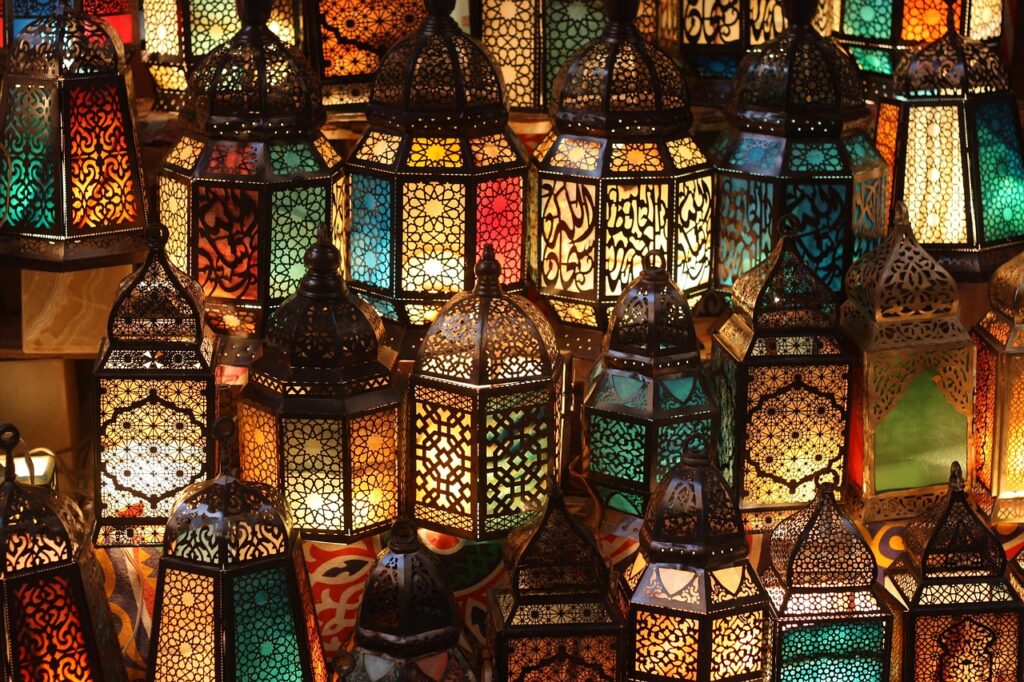
Image: Colourful lanterns and lamps in a Cairo market. Source: derMolf / Pixabay (free commercial use)